Two Manufacturing Giants: The Strategic Context
India and Indonesia are the world's first and fourth most populous nations, with combined populations exceeding 1.7 billion. Both are pursuing aggressive manufacturing strategies to absorb young workforces and reduce dependence on commodity exports (Indonesia) or services (India). For foreign manufacturers implementing China+1 strategies, the choice between these two economies has become one of the most consequential investment decisions of 2025-2026.
The numbers tell a story of scale and momentum. India's GDP reached USD 3.91 trillion in 2025, making it the world's fifth-largest economy. Indonesia's GDP stands at USD 1.4 trillion, ranking sixteenth globally. India's manufacturing FDI increased 18% in FY 2024-25 to USD 19.04 billion, while Indonesia attracted USD 13.67 billion in FDI (excluding banking and oil/gas) in Q1 2025 alone. Both countries have fundamentally reformed their FDI frameworks in the past five years, but the details matter enormously for investment structuring. For the China+1 perspective specifically, see our analysis of China Plus One manufacturing in India.
Market Size and Economic Fundamentals
The domestic market is a critical factor for manufacturers who want to serve local consumers alongside export operations.
| Economic Indicator | India | Indonesia |
|---|---|---|
| GDP (2025) | USD 3.91 trillion | USD 1.4 trillion |
| GDP per capita | USD 2,695 | USD 4,925 |
| GDP per capita (PPP) | USD 11,160 | USD 16,448 |
| Population | 1.44 billion | 280 million |
| Median age | 28.4 years | 29.7 years |
| Government debt (% of GDP) | 79.6% | 41% |
| Manufacturing share of GDP | ~17% | ~20% |
| GDP growth rate (2025) | ~6.5% | ~5.1% |
India's total GDP is 2.8 times larger, offering a correspondingly larger domestic market for manufactured goods. However, Indonesia's higher GDP per capita (both nominal and PPP) means higher average purchasing power. Indonesia also carries significantly less government debt — 41% of GDP versus India's 79.6% — giving it more fiscal headroom for future industrial policy interventions.
For manufacturers, the practical implication is: India offers unmatched scale (1.44 billion consumers), while Indonesia offers a wealthier-per-capita consumer base within the ASEAN bloc of 680 million people.

FDI Policy: Automatic Route vs Positive Investment List
Both countries have modernised their FDI frameworks, but they operate on fundamentally different models.
India's FDI Architecture
India follows a negative list approach: all sectors are open to 100% FDI under the automatic route except a small number of restricted or capped sectors (multi-brand retail at 51%, defence at 74%, media/broadcasting with various caps, and sectors prohibited entirely like gambling, real estate, and tobacco). Manufacturing is unrestricted — 100% FDI under the automatic route with no government approval required.
Key compliance steps for India entry: incorporate a private limited company via SPICe+ (7-10 days), appoint at least one resident director, obtain PAN/TAN/DSC, open a bank account, remit capital, and file FC-GPR with RBI within 30 days. Annual FLA Return filing is mandatory by July 15. All cross-border transactions must comply with FEMA regulations.
Indonesia's FDI Architecture
Indonesia follows a positive list approach under the Omnibus Law on Job Creation (2020): the government publishes a Positive Investment List identifying sectors open to 100% foreign ownership and eligible for incentives. Most manufacturing activities — including automotive, textiles, food processing, electronics, and chemicals — are now fully open to foreign investment following the Omnibus Law reforms.
Key compliance steps: register with the Ministry of Investment (previously BKPM), obtain a Business Identification Number (NIB) through the Online Single Submission (OSS) system, meet minimum capital requirements (total investment > IDR 10 billion, paid-up capital > IDR 2.5 billion), and obtain sector-specific licences as needed. Quarterly BKPM reports are required.
Structural FDI Comparison
| FDI Parameter | India | Indonesia |
|---|---|---|
| Approach | Negative list (everything open unless restricted) | Positive list (specified sectors open) |
| Manufacturing FDI limit | 100% automatic route | 100% (most sectors) |
| Minimum capital | INR 1 lakh (~USD 1,200) | IDR 10 billion (~USD 610,000) |
| Company formation time | 7-10 days | 4-8 weeks |
| FDI inflow (manufacturing, latest) | USD 19.04 billion (FY25) | ~USD 54 billion total FDI realization (2024) |
| Key reform legislation | Make in India (2014), PLI (2020) | Omnibus Law on Job Creation (2020) |
| Trade agreements pipeline | India-EFTA TEPA, India-UK FTA (pending) | RCEP, ASEAN FTAs |
India's minimal capital requirement (INR 1 lakh) and faster company formation make it structurally easier for smaller manufacturers to enter. Indonesia's IDR 10 billion minimum creates a meaningful threshold. For structuring advice, see our branch office vs subsidiary comparison and automatic vs government approval route comparison.
Labour Market: Cost, Scale, and Skills
Manufacturing competitiveness is fundamentally driven by labour economics. Both countries compete at the low end of global manufacturing wage scales, but their labour markets have distinct characteristics.
Wage Comparison
| Labour Metric | India | Indonesia |
|---|---|---|
| Manufacturing hourly wage | ~USD 1.00 | ~USD 1.20-1.50 |
| Monthly minimum wage (key metro) | INR 17,494 (Delhi) / INR 12,000 (Tamil Nadu) | IDR 5.07 million (Jakarta, ~USD 310) / IDR 2.94 million (Central Java, ~USD 180) |
| Total manufacturing workforce | 60+ million | 18+ million |
| Annual engineering graduates | 1.5 million | ~300,000 |
| Annual STEM graduates | 2.55 million | ~700,000 |
| Unemployment rate | ~7-8% | ~5.3% |
| Employer statutory costs above gross | 20-30% (EPF 13%, ESI 3.25%, gratuity) | ~15-20% (BPJS health + employment) |
India holds a 15-20% advantage in raw labour costs. But the decisive difference is scale: India's manufacturing workforce of 60+ million is more than three times Indonesia's 18 million. India produces 1.5 million engineering graduates and 2.55 million STEM graduates annually — critical for industries requiring technical skills at scale. Indonesia's employer statutory costs are marginally lower (15-20% vs India's 20-30% above gross salary).
Labour Law Framework
India is in the process of implementing four new Labour Codes (Wages, Social Security, Industrial Relations, and Occupational Safety), which consolidate 29 legacy labour laws. Full implementation varies by state. The new codes introduce fixed-term employment contracts and simplify compliance. Indonesia's Omnibus Law similarly reformed labour regulations, reducing severance pay calculations and introducing more flexible employment terms, though these changes remain politically contentious.
Both countries allow contract labour for manufacturing operations, subject to registration requirements. India's Contract Labour Act applies to establishments with 20+ contract workers; Indonesia requires similar registrations through the Manpower Ministry.

Tax Regime Comparison
Tax structure directly impacts manufacturing margins. Here is the complete comparison.
| Tax Parameter | India | Indonesia |
|---|---|---|
| Standard corporate tax rate | 22% (section 200 read with section 205(1) of the Income-tax Act, 2025 (section 115BAA of the Income-tax Act, 1961)) | 22% |
| Concessional manufacturing rate | None for new entrants — the 15% rate under section 201 (Table, Sl. No. 1) read with section 205(2) of the Income-tax Act, 2025 (section 115BAB of the Income-tax Act, 1961) closed to companies not manufacturing by 31 Mar 2024 | No separate manufacturing rate |
| Effective rate (new manufacturing) | ~25.17% (section 200, 22% base, incl. surcharge/cess) | ~22% |
| Tax holiday for large investments | None (PLI is production-linked) | 100% CIT reduction, 5-20 years (> IDR 500 billion) |
| Tax allowance (medium investments) | Not applicable | 50% CIT reduction, 5 years (IDR 100-500 billion) |
| R&D deduction | 100% weighted deduction | 300% super deduction (pioneer industries) |
| GST/VAT | 18% standard / 5% merit (40% luxury & sin goods; 12% and 28% slabs abolished from 22 Sep 2025) | 11% VAT |
| Withholding tax on dividends | Taxed in shareholder's hands | 20% (reducible under DTAA) |
| Transfer pricing compliance | Mandatory for related-party transactions | Mandatory for related-party transactions |
| DTAA network | 95+ countries | 71 countries |
India's headline manufacturing rate for new entrants is now 22% (section 200, ~25.17% effective) — the 15% concessional rate under section 201 closed to companies that did not begin manufacturing by 31 March 2024 and was not extended, leaving the two countries' standard rates broadly comparable. Indonesia counters with more generous R&D super deductions (300% for pioneer industries) and long-duration tax holidays for very large investments. For companies investing over IDR 500 billion (approximately USD 30.5 million), Indonesia's 100% CIT holiday for up to 20 years can be more valuable than India's production-linked incentives, depending on profit trajectory.
India's broader DTAA network (95+ countries vs Indonesia's 71) provides more options for international tax planning. For DTAA structuring, see our complete DTAA guide.
Manufacturing Incentives Beyond Tax
Both governments deploy non-tax incentives to attract manufacturing investment.
India's Incentive Stack
- Production Linked Incentive (PLI): 14 sectors covered with total outlay of INR 1.97 lakh crore. Electronics, automotive, pharmaceuticals, textiles, food processing, and more. Offers 4-8% on incremental sales
- Electronics Component Manufacturing Scheme (ECMS): INR 22,919 crore for component manufacturing. 25% capex incentive plus turnover-linked benefits
- Special Economic Zones: 276 operational SEZs with customs duty exemptions and simplified procedures. Recent reforms allow electronics SEZs on just 10 hectares (reduced from 50)
- State-level incentives: Individual states compete aggressively — Tamil Nadu, Karnataka, UP, Gujarat, and Telangana offer land subsidies, stamp duty exemptions, electricity tariff discounts, and SGST reimbursement
- India Semiconductor Mission: Up to 50% capital support for semiconductor fabs and ATMP facilities
For detailed incentive analysis, see our guide to government incentives beyond PLI.
Indonesia's Incentive Stack
- Tax holidays and allowances: As described above — scale-dependent CIT reductions
- Special Economic Zones: 19+ operational SEZs, including Batam (electronics), Sei Mangkei (palm oil processing), and Mandalika (tourism). Each SEZ offers specific fiscal and non-fiscal incentives
- EV battery supply chain incentives: Zero percent import duty and luxury goods tax on EVs and hybrids. Indonesia is the world's largest nickel producer, positioning it uniquely for battery manufacturing
- Downstreaming policy: Mandatory domestic processing of raw materials (nickel, bauxite, copper) before export. Creates captive demand for manufacturing capacity
- Vocational training subsidies: Government-subsidised workforce training programs for priority manufacturing sectors
Indonesia's unique advantage is its resource-backed industrialisation strategy. As the world's largest nickel producer, Indonesia has leveraged export bans on raw nickel ore to attract over USD 15 billion in nickel smelting and EV battery investment, primarily from Chinese companies like CATL and Tsingshan. No other ASEAN country can replicate this resource position.
Infrastructure and Logistics
Manufacturing efficiency depends on infrastructure reliability. Here's how the two countries compare across key metrics.
| Infrastructure Parameter | India | Indonesia |
|---|---|---|
| World Bank Logistics Performance Index | Rank 38 (2023) | Rank 46 (2023) |
| Road network | 6.4 million km (world's second largest) | ~500,000 km |
| Major ports | 13 major, 200+ minor | Key: Tanjung Priok, Tanjung Perak |
| Industrial power cost | USD 0.07-0.11/kWh | USD 0.08-0.12/kWh |
| Internet penetration | ~52% (5G rollout underway) | ~78% (4G dominant) |
| Key industrial corridors | DMIC, Chennai-Bengaluru, NIMZ | Java Industrial Belt, Batam FTZ |
| Geographic challenge | Contiguous land mass | 17,000+ islands (archipelagic) |
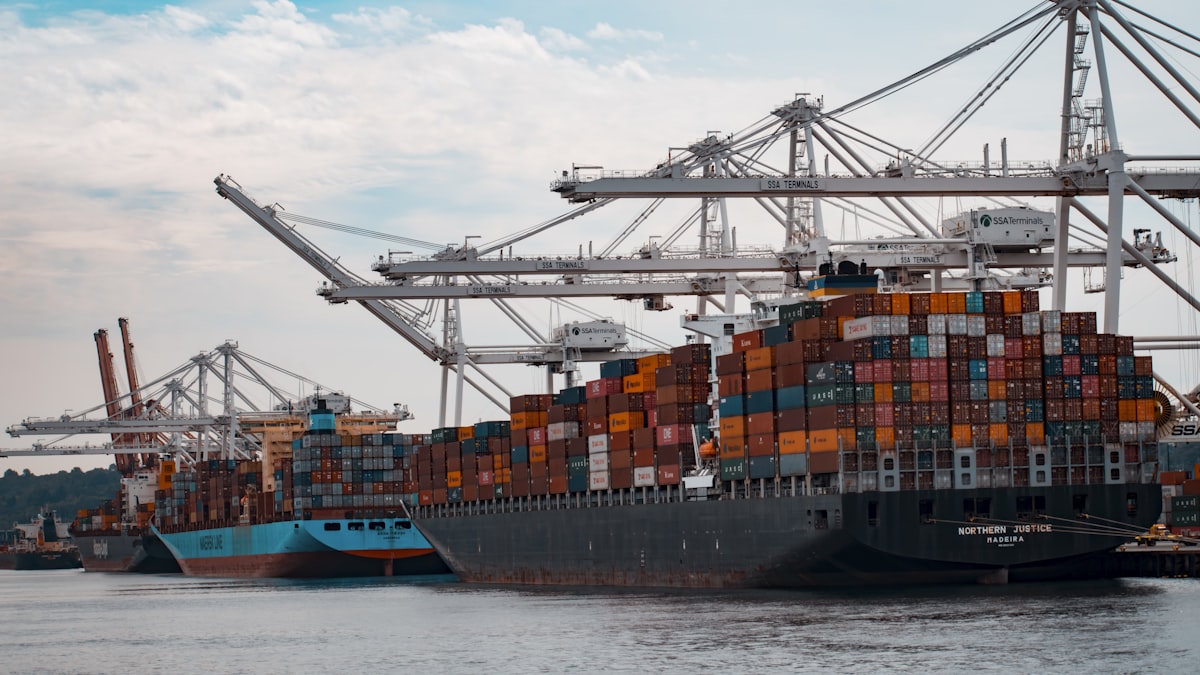
India's contiguous land mass is a structural advantage over Indonesia's archipelagic geography. Moving goods between Indonesian islands requires sea or air transport, adding cost and complexity. However, Indonesia's manufacturing is concentrated in Java (>60% of manufacturing GDP) and Batam, which have reliable infrastructure comparable to Indian industrial corridors.
India's ambitious infrastructure program — including the Delhi-Mumbai Industrial Corridor (DMIC), National Industrial Manufacturing Zones (NIMZ), and dedicated freight corridors — is transforming logistics capacity. But execution timelines remain a risk. Indonesia's infrastructure spending under President Prabowo focuses on expanding industrial estates and improving port connectivity.
Trade Agreements and Market Access
Trade agreements determine export competitiveness. The two countries have very different trade agreement portfolios.
India's Trade Agreement Network
- India-EFTA TEPA (effective October 1, 2025): Opens European markets with USD 100 billion investment commitment from Switzerland, Norway, Iceland, Liechtenstein over 15 years
- India-ASEAN FTA: Preferential access to ASEAN markets, though tariff reduction schedules are less aggressive than intra-ASEAN rates
- India-UAE CEPA: Covers 97% of tariff lines, effective since May 2022
- India-Australia ECTA: Covers 85% of Australian tariff lines
- India-UK FTA: Under advanced negotiation, expected to cover manufacturing, services, and digital trade
- India is NOT a member of RCEP — withdrew in 2019 due to concerns about Chinese goods flooding the Indian market
Indonesia's Trade Agreement Network
- RCEP membership: Provides preferential access to 15 Asia-Pacific economies including China, Japan, South Korea, Australia, and New Zealand
- Full ASEAN member: Zero-tariff access within the ASEAN Economic Community of 680 million consumers
- Indonesia-Australia CEPA: Reduces tariffs on manufactured goods, agriculture, and services
- No direct EU FTA: Indonesia-EU FTA negotiations are ongoing but incomplete
For manufacturers targeting the US market, India now holds a decisive post-tariff advantage. For ASEAN and broader Asia-Pacific markets, Indonesia's RCEP and ASEAN memberships provide superior access. For EU market access, neither country has a comprehensive FTA, though India's EFTA agreement covers four European economies. Country-specific market entry planning is available through our USA, Singapore, and Japan country guides.

Sector-Specific Advantages
Different manufacturing sectors favour different countries based on existing ecosystems and natural advantages.
| Sector | Advantage | Reason |
|---|---|---|
| Smartphone/electronics assembly | India | PLI incentives, Apple/Samsung ecosystem, US market access |
| EV batteries/nickel processing | Indonesia | World's largest nickel producer, downstreaming policy |
| Automotive (ICE vehicles) | Both competitive | India: Suzuki/Hyundai ecosystem; Indonesia: Toyota/Honda ecosystem |
| Textiles and apparel | India | Larger cotton base, more diverse textile clusters |
| Pharmaceuticals | India | World's pharmacy, 40% of US generic supply |
| Food processing | Both competitive | India: diverse agriculture; Indonesia: palm oil, seafood |
| Semiconductor ATMP | India | Semiconductor Mission, design capability in Bengaluru |
| Footwear | Indonesia | Established Nike/Adidas supply chains |
| Palm oil derivatives | Indonesia | World's largest producer |
Regulatory Environment and Ease of Doing Business
Day-to-day operational complexity affects manufacturing margins as much as incentives do.
India's regulatory requirements include FEMA compliance for all foreign exchange transactions, transfer pricing documentation for related-party dealings, BIS product certification for goods sold domestically, environmental clearances from State Pollution Control Boards, Factory Licence under the Factories Act, and monthly/quarterly GST filing. India's digital filing infrastructure (MCA21, GST Network) is mature but the sheer number of compliance obligations creates overhead.
Indonesia's regulatory requirements include BKPM investment reporting (quarterly), TKDN (local content) compliance, SNI product standards certification, environmental impact assessments (AMDAL), business licence renewals through the OSS system, and annual tax returns. Indonesia's compliance burden is lighter in volume but paper-based processes can be slower.
Both countries score in the middle range on global ease-of-doing-business indices. The practical advice: budget for competent local professional services in either country. For India compliance support, see our annual compliance services and FEMA/RBI compliance services.
Risk Factors
Investment decisions should weigh country-specific risks.
India Risks
- Retrospective tax policy changes (though improving under the new tax regime)
- Bureaucratic delays in land acquisition and environmental clearances
- State-level policy inconsistency (what works in Tamil Nadu may not work in UP)
- Currency volatility (INR has depreciated ~20% vs USD over 5 years)
- Component import dependency of 75%+ creating supply chain vulnerability
Indonesia Risks
- Archipelagic geography complicating logistics for multi-site operations
- Political risk from frequent regulatory changes (Omnibus Law was challenged constitutionally)
- Resource nationalism — downstreaming policies may shift to other sectors
- Smaller skilled labour pool constraining scaling beyond Java/Batam
- Weaker IP protection frameworks compared to India
Key Takeaways
- Market size favours India — at USD 3.91 trillion GDP and 1.44 billion consumers, India's domestic market is 2.8 times Indonesia's. For manufacturers wanting scale, India is unmatched
- Labour cost and scale favour India — 15-20% cheaper hourly rates and a manufacturing workforce more than three times larger. India produces 2.55 million STEM graduates annually vs Indonesia's 700,000
- Tax holidays favour Indonesia for large investments — 100% CIT exemption for up to 20 years for investments exceeding IDR 500 billion is more generous than India's PLI model for capital-intensive, long-gestation projects
- India wins on US market access — 10% tariff vs 55% from China, and India overtook China as the top smartphone exporter to the US in 2025
- Indonesia wins on ASEAN/RCEP access — full ASEAN membership and RCEP provide zero or preferential tariff access to 15 Asia-Pacific economies
- For EV batteries, Indonesia is uniquely positioned — world's largest nickel producer with mandatory downstreaming. No competitor can replicate this resource advantage
- Both countries offer 100% FDI in manufacturing — but India's minimal capital requirement and faster formation make it more accessible for smaller investments
For FDI advisory on structuring your manufacturing investment in India, or company registration to establish your subsidiary, our team guides foreign manufacturers through every step of the process.
Need help with India vs Manufacturing? Our team handles it.
India Entry StrategyFrequently Asked Questions
Which country has a larger manufacturing sector — India or Indonesia?
India's total manufacturing sector is larger in absolute terms, contributing to a GDP of USD 3.91 trillion (2025). However, manufacturing represents a higher share of Indonesia's GDP at approximately 20% compared to India's 17%. India ranks 6th and Indonesia 7th in the Asia Manufacturing Index 2026.
What is the minimum capital required for a foreign company to set up manufacturing in India vs Indonesia?
India requires only INR 1 lakh (~USD 1,200) as minimum paid-up capital for a private limited company — essentially a formality. Indonesia requires a total investment value exceeding IDR 10 billion (~USD 610,000) excluding land and buildings, with minimum paid-up capital of IDR 2.5 billion (~USD 153,000). This makes India significantly more accessible for smaller manufacturers.
How do manufacturing labour costs compare between India and Indonesia?
India offers approximately 15-20% lower hourly manufacturing wages at around USD 1.00 per hour compared to USD 1.20-1.50 in Indonesia. India also has a larger manufacturing workforce (60+ million vs 18+ million) and produces 2.55 million STEM graduates annually vs Indonesia's 700,000, providing deeper recruitment pipelines.
Does Indonesia offer better tax incentives than India for manufacturing?
It depends on investment size. India's new manufacturing companies now default to a 22% corporate tax rate under section 200 of the Income-tax Act, 2025 (effective ~25.17%) — the 15% concessional rate under section 201 (effective ~17.16%) closed to entrants that did not begin manufacturing by 31 March 2024. Indonesia offers 100% CIT holidays for up to 20 years for investments exceeding IDR 500 billion (~USD 30.5 million). For very large, capital-intensive investments, Indonesia's tax holiday can be more valuable over the project lifecycle.
Which country has better trade agreement access for exporters?
Indonesia has stronger ASEAN and Asia-Pacific access through full ASEAN membership and RCEP, covering 15 economies including China, Japan, South Korea, and Australia. India has better access to the US market (10% tariff vs 55% from China), the EFTA countries (TEPA effective October 2025 with USD 100 billion investment commitment), UAE (CEPA), and Australia (ECTA). India is not a member of RCEP.
Is it easier to set up a manufacturing company in India or Indonesia?
India's company formation process is faster (7-10 days via SPICe+) with lower capital requirements. Indonesia takes 4-8 weeks with higher minimum capital thresholds. Both require local directors. India's digital filing infrastructure (MCA21, GST Network) is more mature, while Indonesia relies more on paper-based processes.
Which country is better for EV battery manufacturing?
Indonesia is uniquely positioned for EV batteries as the world's largest nickel producer. Its downstreaming policy mandates domestic processing of raw nickel, attracting over USD 15 billion in battery investment from companies like CATL and Tsingshan. India is stronger in EV design and assembly but lacks comparable raw material advantages.