Why Sector-Level FDI Terms Matter More Than Headlines
The global narrative around FDI often focuses on aggregate numbers — total inflows, GDP growth, ease of doing business rankings. But for a CFO or general counsel evaluating where to place a USD 10 million investment, what matters is the sector-specific regulatory framework: ownership caps, approval requirements, incentive structures, and repatriation rules. For the full sector-by-sector FDI cap comparison, see how automatic-route sectors stack up against restricted ones.
India attracted USD 81.04 billion in FDI inflows in FY 2024-25 (a 14% increase) and surged 73% in calendar year 2025 to become the third-largest recipient of greenfield projects globally, surpassing Germany and the UK. Meanwhile, China saw FDI decline for the third consecutive year (down 8% to USD 107.5 billion), and Vietnam, while growing strongly in manufacturing, faces capacity and infrastructure constraints in advanced sectors.
This article identifies seven sectors where India's regulatory framework offers demonstrably better terms for foreign investors than China or Vietnam — not in theory, but in current policy as of March 2026.

1. Insurance: 100% Foreign Ownership (India) vs 51% Cap (China)
India's Union Budget 2025 raised the FDI cap in insurance from 74% to 100% under the automatic route, provided the entire premium is invested in India. This makes India one of the most open insurance markets in Asia for foreign investors.
How India compares:
| Parameter | India | China | Vietnam |
|---|---|---|---|
| FDI cap | 100% (automatic route) | 51% (life insurance) | 100% (non-life only since 2021) |
| Approval required | IRDAI license only | CBIRC approval + JV partner | MOF approval |
| Repatriation | Freely permitted | Restricted, requires SAFE approval | Permitted after tax |
| Local sourcing mandate | Entire premium invested in India | Various restrictions | None |
The India advantage is clear: 100% ownership with no mandatory joint venture partner, under the automatic route. China still requires a local partner for life insurance and caps foreign stakes at 51%. For insurers looking at Asia expansion, India now offers the most favorable entry structure. Vietnam allows 100% in non-life but remains restrictive in life insurance. India's insurance market is also vastly underpenetrated — insurance penetration stands at approximately 4% of GDP compared to 8-12% in mature markets — creating significant growth potential for foreign insurers willing to invest in distribution infrastructure. The condition that the entire premium must be invested in India is designed to ensure that policyholder funds stay within the country, which is a reasonable trade-off for full ownership.

2. Defence and Aerospace: 74% Automatic Route (India) vs Highly Restricted (China/Vietnam)
India raised the automatic route FDI cap in defence from 49% to 74% for companies seeking new industrial licenses, and allows up to 100% with government approval where access to modern or sensitive technology is involved.
How India compares:
| Parameter | India | China | Vietnam |
|---|---|---|---|
| FDI cap (automatic) | 74% | Effectively 0% (restricted) | 49% (with conditions) |
| FDI cap (with approval) | 100% | Not permitted | Case-by-case |
| PLI incentives | Yes (defence corridors in UP and TN) | State subsidies, but restricted to SOEs | Limited |
| Export permitted | Yes (India targets USD 5B defence exports) | State-controlled | Limited capacity |
India's defence manufacturing ecosystem is being actively built with two dedicated defence industrial corridors (Uttar Pradesh and Tamil Nadu), PLI incentives, and a strategic push to achieve USD 5 billion in defence exports by 2028. The defence corridors span over 60 industrial nodes and have attracted commitments exceeding INR 14,000 crore. India's defence imports — historically among the world's largest — are being deliberately redirected toward domestic manufacturing through a positive indigenization list covering over 500 items. China and Vietnam effectively shut foreign investors out of defence manufacturing. For global defence primes like Lockheed Martin, Boeing, Airbus, and Thales evaluating manufacturing diversification, India is the only viable option in the region that combines majority ownership, export permissions, and a growing domestic market.

3. IT Services and Digital Economy: 100% Automatic + Startup Ecosystem
India permits 100% FDI under the automatic route in computer software, hardware, and IT-enabled services — with no conditions, no local partner requirement, and no minimum investment threshold. This sector received FDI inflows worth USD 110,698 million cumulatively through FY25.
How India compares:
| Parameter | India | China | Vietnam |
|---|---|---|---|
| FDI cap | 100% (automatic) | Varies (VIE structures common) | 100% (some restrictions on telecom-adjacent) |
| Data localization | Partial (financial data, health data) | Comprehensive (PIPL, CSL) | Moderate |
| Talent pool | 5.8M+ IT professionals | Large but language barriers | Growing but limited scale |
| Startup ecosystem | 197,000+ DPIIT-recognized startups | Large but regulatory uncertainty | Emerging |
| English proficiency | High (business language) | Low | Moderate |
India's decisive advantage in IT services is the combination of 100% automatic-route FDI, a massive English-speaking talent pool of 5.8 million IT professionals, and the world's third-largest startup ecosystem with over 197,000 DPIIT-recognized startups creating over 2 million jobs. India's IT services exports exceeded USD 200 billion in FY25, demonstrating the sector's global competitiveness. China's Variable Interest Entity (VIE) structures — commonly used by tech companies to circumvent foreign ownership restrictions — face increasing regulatory scrutiny, and the country's comprehensive data localization requirements under PIPL (Personal Information Protection Law) add significant compliance costs. Vietnam is growing its IT sector rapidly but lacks India's scale — Vietnam has approximately 500,000 IT workers compared to India's 5.8 million, and most Vietnamese developers lack the English fluency needed for global client engagement. India also benefits from its time zone position, which enables 24/7 service delivery models when paired with US and European teams. See our company registration guide for foreign companies for setup details.
4. Pharmaceuticals: 100% Greenfield (India) vs Restricted Access (China/Vietnam)
India allows 100% FDI under the automatic route for greenfield pharmaceutical manufacturing and up to 74% for brownfield (existing) pharma companies under the automatic route. India is already the world's largest supplier of generic medicines, accounting for 20% of global generic supply by volume.
How India compares:
| Parameter | India | China | Vietnam |
|---|---|---|---|
| FDI cap (greenfield) | 100% (automatic) | Conditional, sector-specific | 100% (but licensing complex) |
| FDI cap (brownfield) | 74% (automatic), 100% (govt approval) | Varies | Case-by-case |
| PLI scheme | Yes (bulk drugs, medical devices, GLP-1) | State subsidies | Limited incentives |
| Patent regime | TRIPS-compliant, compulsory licensing available | TRIPS-compliant | TRIPS-compliant |
| FDA-approved facilities | Largest number outside the US | Growing | Few |
India's pharmaceutical sector received FDI inflows of USD 23,419 million cumulatively through FY25. The government announced new PLI incentives in 2026 specifically for GLP-1 obesity drugs production, capitalizing on expected US tariffs to expand pharma exports. India has the largest number of US FDA-approved facilities outside the United States — over 700 FDA-registered facilities — giving foreign pharma companies immediate access to a proven manufacturing and regulatory infrastructure. India also produces over 60,000 generic brands across 60 therapeutic categories and exports to over 200 countries. The cost of manufacturing in India is approximately 30-40% lower than in China for comparable pharmaceutical products, with well-established supply chains for Active Pharmaceutical Ingredients (APIs). For transfer pricing considerations in pharma, see our detailed guide.

5. Renewable Energy: 100% Automatic + USD 23B FDI Inflow
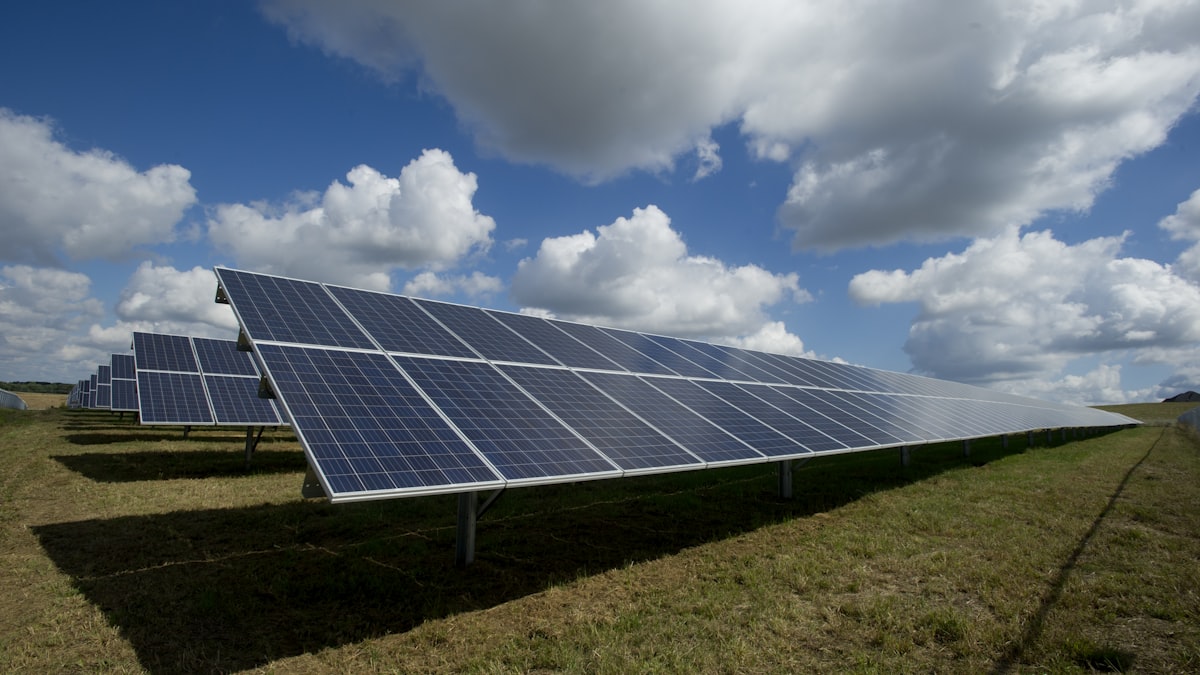
India permits 100% FDI under the automatic route for renewable energy generation and distribution. The sector has attracted USD 23 billion in foreign investment from April 2020 to June 2025, with clean energy investments soaring 7.7 times year-on-year to INR 84,309 crore (USD 9.8 billion) in Q1 2025 alone.
How India compares:
| Parameter | India | China | Vietnam |
|---|---|---|---|
| FDI cap | 100% (automatic) | Majority state-owned, foreign JVs common | 100% (but land access issues) |
| Solar capacity | 123 GW installed (42x growth since 2014) | 600+ GW (world leader) | 20+ GW |
| Target | 500 GW non-fossil by 2030 | 1,200 GW by 2030 | 31 GW solar by 2030 |
| Policy support | ISTS waiver, PLI for solar manufacturing, green corridors | Dominant domestic supply chain | Limited feed-in tariffs |
India's 500 GW non-fossil fuel capacity target by 2030, combined with 100% automatic-route FDI, makes it the most accessible large-scale renewable energy market for foreign investors. Solar capacity has grown 42-fold from 2.82 GW in 2014 to 123 GW by August 2025, and wind capacity stands at 52.68 GW. India has achieved its milestone of 50% non-fossil fuel power capacity. Policy incentives include waiver of inter-state transmission charges, standard bidding guidelines, a 50 GW annual renewable energy bidding trajectory, PLI schemes for solar module manufacturing, and large-scale investment in green energy transmission corridors. While China dominates in absolute capacity, its renewable energy sector is heavily state-controlled with projects typically steered toward state-owned enterprises, limiting opportunities for foreign majority ownership. Vietnam has attracted significant solar investment but faces land acquisition challenges and grid capacity constraints that have led to curtailment of renewable generation.
6. Space Technology: Up to 100% FDI (India) vs State Monopoly (China)
India opened its space sector to 100% FDI with a tiered automatic/government approval structure — a dramatic liberalization that positions India as the most FDI-friendly space economy in Asia.
Tiered FDI structure:
- 100% automatic route: Manufacturing of components and systems/sub-systems for satellites, ground segments, and user segments
- 74% automatic route: Satellite manufacturing and operation, satellite data products, ground segment
- 49% automatic route: Launch vehicles and associated systems, spaceport creation
How India compares:
| Parameter | India | China | Vietnam |
|---|---|---|---|
| FDI cap | Up to 100% (tiered) | State monopoly (CNSA/CASC) | Not applicable |
| Private sector access | Yes (IN-SPACe framework) | Limited (recent openings) | Not applicable |
| Launch cost advantage | ISRO cost: USD 37M (PSLV) | Higher | Not applicable |
India's space sector liberalization is unique in Asia. China's space program remains a state monopoly under CNSA/CASC, and Vietnam has no indigenous space program. India's IN-SPACe (Indian National Space Promotion and Authorization Centre) framework provides a regulatory sandbox for private and foreign companies, handling licensing, authorization, and facilitation through a single window. ISRO's proven cost advantage is remarkable — the Mangalyaan Mars mission cost USD 74 million (less than the budget of the movie Gravity), and the PSLV launch vehicle offers per-kilogram costs among the lowest globally. The Indian space economy is projected to reach USD 44 billion by 2033, driven by satellite broadband, earth observation, and navigation services. Over 200 Indian space startups are already operating, with companies like Skyroot Aerospace and Agnikul Cosmos developing indigenous launch vehicles. For foreign companies in satellite component manufacturing, India offers 100% automatic-route ownership, competitive engineering talent at one-third the cost of US engineers, and access to ISRO's testing and launch infrastructure.
7. Electronics Manufacturing: 100% Automatic + PLI Incentives Worth USD 21B
India permits 100% FDI under the automatic route for electronics manufacturing, backed by Production Linked Incentive (PLI) schemes that have attracted over USD 21 billion in realized investments across 806 approved applications in 14 strategic sectors. The electronics sector is at the heart of India's FDI growth story, with the government committed to making India a global electronics manufacturing hub by 2030.
How India compares:
| Parameter | India | China | Vietnam |
|---|---|---|---|
| FDI cap | 100% (automatic) | 100% (but regulatory burden high) | 100% (automatic) |
| PLI incentives | 4-6% of incremental sales for 5 years | Declining subsidies | Tax holidays |
| Mobile production growth | 146% increase to INR 5.25 trillion in FY25 | Declining share | Samsung/largest hub |
| Semiconductor projects | 10 approved (6 executing + 4 new) | Mature but US-restricted | Emerging |
| Labor cost advantage | 50%+ below China | Rising wages | Comparable to India |
India's electronics manufacturing story is the strongest China+1 case in Asia. Mobile device production under PLI has grown 146%, rising from INR 2.13 trillion in FY 2020-21 to INR 5.25 trillion in FY 2024-25. Mobile exports have increased over eightfold. The government has approved 10 semiconductor fabrication projects and launched a INR 22,919 crore PLI scheme specifically for non-semiconductor electronic components in March 2025. Vietnam competes effectively in electronics assembly (Samsung's largest manufacturing base), but India offers a combination of domestic market scale (1.4 billion consumers), PLI cash incentives, a growing semiconductor ecosystem, and the advantage of being the world's second-largest smartphone market. Global companies including Apple (through Foxconn and Tata Electronics), Samsung, and Xiaomi have significantly expanded their India manufacturing footprint. For companies evaluating where to place their next electronics manufacturing facility, India's combination of 100% automatic-route FDI, direct cash incentives, and domestic demand makes a compelling case. See our private limited company registration service for setting up a manufacturing entity, or explore our FDI advisory services for sector-specific compliance guidance.
Key Takeaways
- India's FDI framework is sector-specific and increasingly liberal. Unlike China's opaque approval system, India publishes clear sectoral caps, routes, and conditions — making pre-investment compliance analysis straightforward.
- The insurance and space sectors represent dramatic liberalizations. India moved from 74% to 100% in insurance and opened space to private/foreign investment — changes with no equivalent in China or Vietnam.
- PLI schemes are the differentiator in manufacturing. India's production-linked incentives (4-6% of incremental sales for 5 years) provide a direct financial return on investment that neither China nor Vietnam currently matches at comparable scale.
- Labour cost parity with Vietnam, scale advantage over both. India's manufacturing wages are comparable to Vietnam's and 50%+ below China's, but India adds a 1.4 billion consumer domestic market — a scale advantage no competitor offers.
- The "China+1" strategy is becoming "India first" in these 7 sectors. For insurance, defence, IT services, pharma, renewables, space, and electronics, India's regulatory terms are objectively more favorable than China's.
Need help with Listicles? Our team handles it.
India Entry StrategyFrequently Asked Questions
Which country receives more FDI — India or Vietnam?
India receives significantly more FDI than Vietnam. In FY 2024-25, India recorded USD 81.04 billion in FDI inflows. Vietnam's annual FDI disbursement is approximately USD 23-25 billion. India's FDI surged 73% in calendar year 2025, making it the third-largest greenfield FDI recipient globally.
Is India replacing China for manufacturing FDI?
India is not replacing China entirely, but is capturing an increasing share of manufacturing FDI through the China+1 strategy. India's PLI schemes have attracted USD 21 billion in realized investments, and mobile production has grown 146% under PLI. China's FDI declined 8% in 2025.
Can a foreign company own 100% of an Indian defence company?
Yes, with government approval. The automatic route allows up to 74% FDI in defence. Above 74%, government approval is required and is granted where the investment brings access to modern or sensitive technology. This is far more open than China (effectively 0% for foreigners) or Vietnam (49% cap).
What are PLI incentives and how do they work?
Production Linked Incentive (PLI) schemes provide direct cash incentives of 4-6% of incremental sales over a 5-year period to companies that meet production targets in 14 strategic sectors. As of 2025, 806 applications have been approved with realized investments exceeding INR 1.76 lakh crore.
Does India have lower labor costs than Vietnam?
India's manufacturing labor costs are comparable to Vietnam's — both are approximately 50% below China's. Vietnam's factory workers earn USD 294-321 per month. India's manufacturing wages are in a similar range but offer additional advantages: a larger English-speaking workforce and a 1.4 billion consumer domestic market.
What is the China+1 strategy and how does India benefit?
China+1 is a supply chain diversification strategy where companies maintain operations in China while establishing additional manufacturing or services capacity in another country. India is the leading China+1 beneficiary due to 100% FDI in manufacturing under the automatic route, competitive labor costs, PLI incentives, and a large domestic market.