India's Power Sector: Scale, Structure, and the Foreign Investment Opportunity
India's power sector is the third-largest electricity market globally, with total installed generation capacity reaching 505 GW as of October 2025 — crossing the half-million megawatt mark for the first time. Non-fossil fuel sources now account for over 51% of installed capacity at 259 GW, with solar alone at 130 GW (a 42-fold increase since 2014) and wind at 52 GW.
For foreign investors, the sector offers one of the most liberal FDI frameworks in the world: 100% foreign ownership under the automatic route for both power generation and distribution. No government approval is needed, no mandatory joint venture partner, and no minimum investment threshold. Between April 2020 and June 2025, the power sector attracted over USD 23 billion in foreign investment.
However, the regulatory architecture — dual-layered across central and state jurisdictions — is where most foreign entrants face friction. Understanding the Central Electricity Regulatory Commission (CERC), State Electricity Regulatory Commissions (SERCs), the Electricity Act 2003, and the evolving Renewable Consumption Obligation (RCO) framework is essential before committing capital.
The Electricity Act 2003: The Legislative Foundation
The Electricity Act 2003 is the primary legislation governing all aspects of India's power sector — generation, transmission, distribution, and trading. The Act replaced three earlier statutes and created a unified framework with several features that are directly relevant to foreign investors.
Generation: De-Licensed Activity
Power generation was de-licensed under the 2003 Act. Any company — including a 100% foreign-owned wholly owned subsidiary — can set up a generating station without obtaining a licence from any regulatory authority. The only exceptions are large hydroelectric projects above 25 MW, which require techno-economic clearance from the Central Electricity Authority (CEA) before construction.
This de-licensing has been the single most important factor driving private and foreign investment into India's generation segment, allowing capital deployment without the delays and uncertainties of a licensing process.
Distribution: Licensed Activity with Parallel Licensing
Unlike generation, electricity distribution requires a licence from the relevant State Electricity Regulatory Commission (SERC) under Section 14 of the Act. The Act permits multiple distribution licensees to operate in the same area through their own distribution networks — a provision designed to introduce competition in a segment historically dominated by state-owned distribution companies (DISCOMs).
For foreign investors interested in the distribution segment, this parallel licensing framework means it is legally possible to obtain a distribution licence and build a competing network. In practice, however, the capital intensity and regulatory complexity of distribution have concentrated foreign interest in technology solutions (smart metering, grid analytics) rather than direct distribution operations.
Transmission: CERC/SERC Licensing
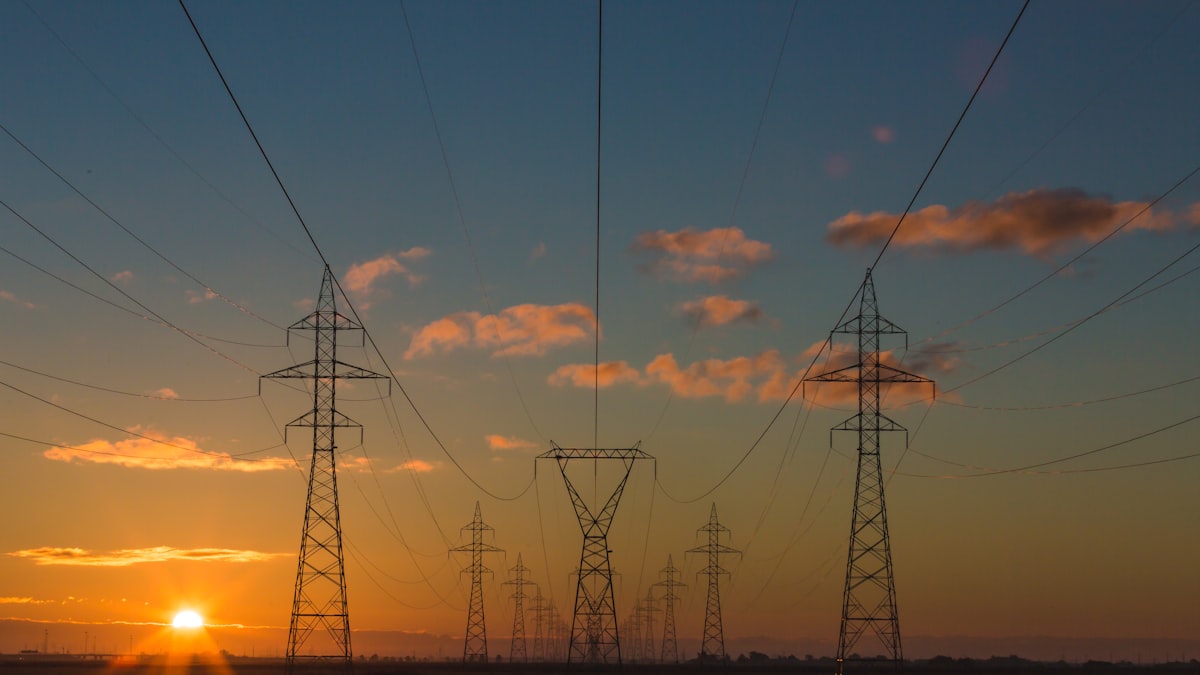
Transmission infrastructure requires a licence from CERC (for inter-state facilities) or the relevant SERC (for intra-state facilities). Foreign investors have entered India's transmission segment primarily through build-own-operate-transfer (BOOT) concessions awarded by Power Grid Corporation or through tariff-based competitive bidding (TBCB) conducted by CERC.
CERC: The Central Regulator's Role and Recent Actions
The Central Electricity Regulatory Commission is a statutory body with quasi-judicial authority over inter-state power activities. For foreign investors, CERC's actions directly impact project economics through tariff determination, transmission charges, market design, and grid access regulations.
Tariff Regulations
CERC sets the terms and conditions for tariff determination for central generating stations and inter-state transmission. The CERC Tariff Regulations 2024 (with second amendment in 2025) establish the financial parameters that determine investor returns, including a base return on equity (ROE) of 14% for thermal and hydro projects.
In December 2025, CERC issued a landmark draft regulation formally recognizing Integrated Energy Storage Systems (IESS) as regulated assets within the tariff framework. The regulation introduces supplementary capacity and energy charges for storage, with a normative plant availability factor of 90% and a 14% base ROE for additional capitalization in existing generating stations. This creates a clear revenue pathway for battery storage investments co-located with generation assets.
Market Coupling: January 2026 Reform
By a July 2025 order, CERC mandated the coupling of the day-ahead market (DAM) across India's three power exchanges in a round-robin mode, effective January 2026. Under market coupling, bids from all exchanges are centrally matched to determine a uniform market-clearing price, with Grid India serving as the fourth market coupling operator for backup and audit purposes.
For foreign investors in generation, market coupling means a more transparent and efficient wholesale price discovery mechanism, reducing arbitrage between exchanges and improving the predictability of merchant power revenues.
General Network Access (GNA)
CERC's GNA regulations replaced the earlier long-term access framework for inter-state transmission. Under GNA, generators and consumers can access the transmission network with greater flexibility, paying transmission charges based on their actual usage rather than contracted capacity. This is particularly relevant for renewable energy projects that have variable output patterns.
SERCs: State-Level Regulatory Complexity
Each of India's 28 states and 8 union territories has its own SERC (or shares a Joint Electricity Regulatory Commission with other UTs). SERCs regulate intra-state generation, transmission, distribution, and trading. For foreign investors, SERC regulations affect:
- Distribution tariffs: SERCs set the retail tariffs that determine revenue for distribution licensees
- Open access charges: SERCs determine the cross-subsidy surcharge and additional surcharge that open access consumers must pay, directly impacting the economics of captive power and commercial/industrial (C&I) open access projects
- Renewable energy tariffs: SERCs set state-specific feed-in tariffs and approve power purchase agreements (PPAs) for intra-state renewable projects
- Wheeling and banking charges: These state-specific charges affect the delivered cost of power from distributed generation
The State-Level Variability Problem
One of the most significant challenges for foreign investors is the wide variation in regulatory approaches across states. For example, as of 2025, open access charges for solar projects ranged from near-zero in states like Rajasthan to over INR 2 per kWh in states like Maharashtra, fundamentally altering project economics depending on location.
Similarly, the enforcement of Renewable Consumption Obligations varies dramatically. Some states (Gujarat, Karnataka) have robust enforcement mechanisms, while others have historically allowed DISCOMs to avoid compliance without meaningful penalties.
FDI Framework: 100% Automatic Route Across the Power Value Chain
India's FDI policy for the power sector, as notified by the Department for Promotion of Industry and Internal Trade (DPIIT), permits the following:
| Segment | FDI Cap | Route | Conditions |
|---|---|---|---|
| Power Generation (thermal) | 100% | Automatic | Subject to environmental clearances |
| Power Generation (renewable) | 100% | Automatic | No conditions |
| Power Distribution | 100% | Automatic | Subject to SERC licence |
| Power Transmission | 100% | Automatic | Subject to CERC/SERC licence |
| Power Trading | 100% | Automatic | Subject to CERC licence |
| Equipment Manufacturing | 100% | Automatic | No conditions |
The process for a foreign power company to establish operations involves incorporating a private limited company with the Ministry of Corporate Affairs using SPICe+ form, filing FC-GPR with the RBI within 30 days of receiving equity capital, and obtaining sector-specific approvals from CERC/SERC and the Ministry of Power as applicable. A resident director (an Indian citizen or resident) is mandatory.
Renewable Consumption Obligations: The Demand-Side Driver
The Ministry of Power's Renewable Consumption Obligation (RCO) framework — which replaced and subsumed the earlier Renewable Purchase Obligation (RPO) regime from FY 2024-25 — mandates progressively rising renewable energy consumption for distribution licensees, open access consumers, and captive power users.
The RCO Trajectory to 2030
| Financial Year | Overall RCO (%) | Wind RCO (%) | Hydro RCO (%) | Distributed RE (%) |
|---|---|---|---|---|
| 2024-25 | 29.91% | 0.81% | 0.66% | 1.50% |
| 2025-26 | 33.01% | 1.60% | 0.82% | 2.00% |
| 2026-27 | 35.95% | 2.31% | 1.16% | 2.50% |
| 2027-28 | 38.81% | 2.90% | 1.57% | 3.00% |
| 2028-29 | 41.36% | 3.37% | 2.05% | 3.50% |
| 2029-30 | 43.33% | 3.82% | 2.60% | 4.00% |
This RCO trajectory is the single most important demand-side driver for renewable energy investments in India. By mandating a 43.33% renewable share by FY 2029-30, the framework creates a guaranteed market for approximately 240 GW of additional non-fossil fuel capacity. For foreign investors in renewable generation, this eliminates the demand risk that exists in many other markets.
Technology-Specific Sub-Targets
The disaggregation of RCO into wind, hydro, and distributed RE sub-targets creates specific market segments. The wind RCO nearly quintuples from 0.81% (FY 2024-25) to 3.82% (FY 2029-30), requiring approximately 25-30 GW of new wind capacity. The distributed RE target doubling to 4% creates opportunities for rooftop solar, small-scale wind, and distributed storage — segments where foreign technology providers have competitive advantages.
Compliance and Enforcement
Obligated entities can meet their RCO through direct procurement of renewable energy, purchase of Renewable Energy Certificates (RECs) from power exchanges, or a combination of both. Non-compliance attracts penalties under the Energy Conservation Act 2001 (as amended), though enforcement effectiveness varies significantly across states.
CERC's 2025 amendment to the REC framework aligns the certificate mechanism with the new RCO structure, introducing technology-specific RECs that correspond to the wind, hydro, and distributed RE sub-obligations.

The Distribution Reform Opportunity: RDSS and Privatization
India's power distribution segment — historically the weakest link in the value chain due to state-owned DISCOM inefficiency — is undergoing structural reform that creates both opportunities and risks for foreign investors.
Revamped Distribution Sector Scheme (RDSS)
The RDSS, with a total outlay of INR 3.04 lakh crore (USD 36 billion) over FY 2021-26, aims to reduce aggregate technical and commercial (AT&C) losses from 22.6% (FY 2013-14) to 12-15% nationally and eliminate the gap between average cost of supply and average revenue realized. AT&C losses fell to 15.04% in FY 2024-25 — meaningful progress but still above target.
For foreign smart grid and metering companies, RDSS has been transformative. India targets deploying 250 million smart meters under the scheme, with Advanced Metering Infrastructure (AMI) contracts exceeding 180 million meters already awarded. Companies specializing in SCADA systems, grid analytics, demand-response platforms, and loss-reduction technologies are actively participating through Indian subsidiaries.
Privatization Push
The proposed Electricity Amendment Bill 2025 strengthens the privatization framework, with conditions requiring either a 51% equity sale or a 26% equity sale with private management control. Dadra and Nagar Haveli and Daman and Diu completed DISCOM privatization in 2022, and Chandigarh's privatization was upheld by the Supreme Court in December 2024.
However, foreign investors should note the structural challenge: despite 100% FDI being permitted, actual foreign investment in distribution operations remains minimal. The combination of politically sensitive tariff-setting, state government interference in DISCOM operations, and the accumulated DISCOM debt of over USD 70 billion creates an environment where foreign capital prefers technology provision over asset ownership.
Entry Strategy: How Foreign Companies Enter India's Power Sector
The entry process for a foreign power sector company follows a structured sequence, though timelines and complexity vary significantly based on the segment (generation vs. distribution vs. technology/services).
Step 1: Entity Incorporation (4-6 weeks)
Register a private limited company or LLP with the Ministry of Corporate Affairs. Most foreign power companies choose the private limited company structure for its ability to raise equity and provide clear governance. Minimum two directors required, including one resident director. Obtain Digital Signature Certificates for all directors.
Step 2: RBI Compliance (2-4 weeks)
File FC-GPR with the RBI within 30 days of receiving foreign equity capital. Comply with FEMA pricing guidelines for share issuance — the price must meet or exceed the fair value as determined by a SEBI-registered merchant banker or CA using a recognized valuation method.
Step 3: Tax and Regulatory Registrations (2-3 weeks)
Obtain PAN, TAN, GST registration (mandatory for all power companies), and Import Export Code (if importing generation equipment, smart meters, or other technology).
Step 4: Sector-Specific Approvals (4-12 weeks)
For generation: environmental clearance from MOEFCC (mandatory for thermal; required for large solar/wind depending on location), consent to establish from State Pollution Control Board, and connectivity approval from CTU/STU.
For distribution: apply for a distribution licence from the relevant SERC. This is the most time-intensive step — SERC licence applications involve public notice, objection hearings, and regulatory review, typically taking 3-6 months.
Step 5: Land and Infrastructure (varies)
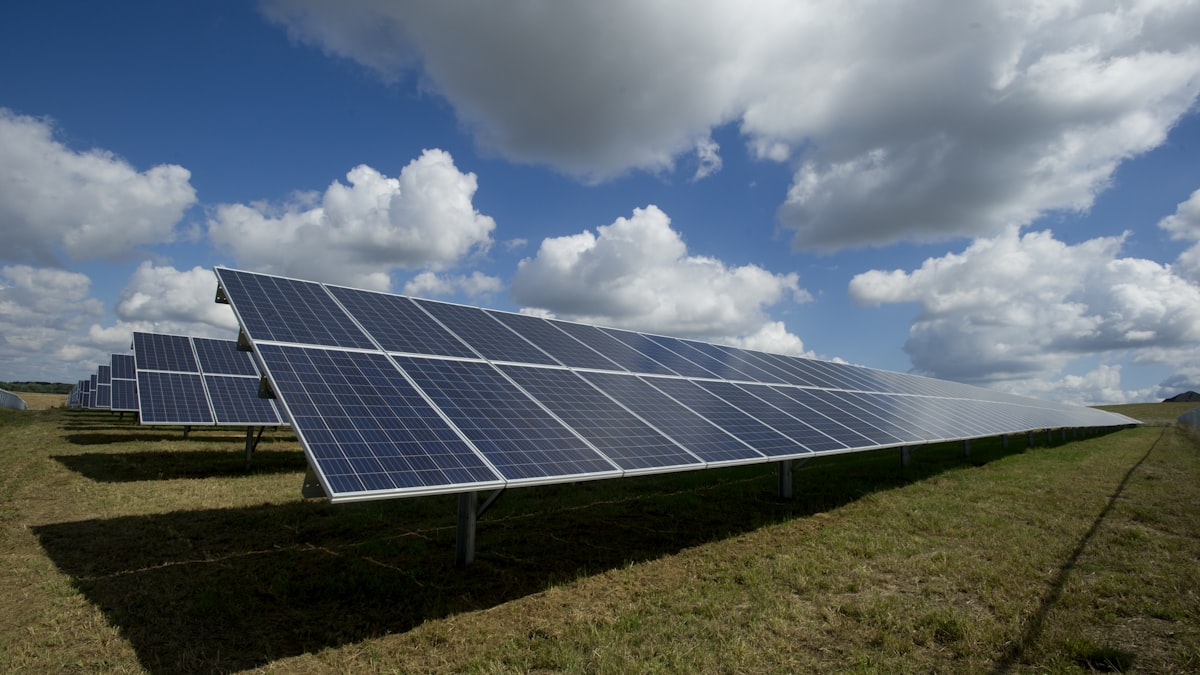
Generation projects require land acquisition or allocation — solar projects need 4-5 acres per MW, making a 100 MW project a 400-500 acre undertaking. Engage state industrial development corporations for pre-allocated land in solar parks or industrial zones. MNRE has sanctioned over 40 solar parks with 37.49 GW capacity.

Taxation and Financial Considerations
Foreign investors in India's power sector need to navigate a specific tax framework. The 15% rate under section 115BAB of the Income-tax Act, 1961 applied to new manufacturing companies (incorporated after October 2019) that commenced production on or before March 31, 2024 — a window that has now closed and not been extended, so power-equipment manufacturers setting up today cannot access it. The applicable concessional rate is now 22% — 25.17% effective — under section 200 read with section 205(1) of the Income-tax Act, 2025 (section 115BAA of the Income-tax Act, 1961) for companies forgoing specified exemptions.
Renewable energy generating companies can claim a 10-year income tax holiday under section 138 of the Income-tax Act, 2025 (section 80-IA of the Income-tax Act, 1961). Accelerated depreciation of 40% on wind energy equipment and 20% on solar equipment provides additional tax efficiency in early project years.
For inter-company transactions between a foreign parent and its Indian power subsidiary, transfer pricing documentation under the arm's length principle is mandatory. Common areas of TP scrutiny include management fees, technology licensing fees, and equipment import pricing. See our transfer pricing services for structuring guidance.
Dividend repatriation from Indian power companies to foreign parents is subject to withholding tax at rates determined by applicable Double Taxation Avoidance Agreements. The India-Singapore DTAA and India-Mauritius DTAA have historically been the most commonly used for routing power sector investments. See our branch office vs subsidiary comparison for optimal structuring.
State-Level Investment Landscape
The choice of state significantly impacts project economics, regulatory experience, and operational efficiency for foreign power sector investors. India's power sector federalism means that identical projects in different states face different tariff structures, land costs, approval timelines, and renewable energy policy frameworks.
Top States for Power Generation Investment
| State | Solar Capacity | Wind Capacity | Key Advantages | Key Challenges |
|---|---|---|---|---|
| Rajasthan | 25+ GW | 9+ GW | Highest irradiance, large land parcels, capital subsidy, SGST exemption | Sand ingress, water scarcity for cleaning |
| Gujarat | 18+ GW | 11+ GW | Dholera SIR (5,000 MW solar park), port access, strong SERC | High land costs near coast |
| Tamil Nadu | 12+ GW | 10+ GW | Established supply chain, wind-solar hybrid policy, skilled workforce | Grid curtailment in peak wind season |
| Karnataka | 15+ GW | 6+ GW | Progressive RE policy 2022-2027, land conversion exemptions | Open access charges relatively high |
| Maharashtra | 8+ GW | 5+ GW | Largest industrial consumer base, strong C&I open access demand | High cross-subsidy surcharge, complex SERC processes |
For foreign companies evaluating India from countries like the USA, UK, or Germany, state-level due diligence is as important as central policy analysis. Each state's SERC has its own track record on tariff disputes, open access facilitation, and renewable energy target enforcement.

Virtual Power Purchase Agreements: The 2025 Innovation
In 2025, CERC issued draft guidelines for Virtual Power Purchase Agreements (VPPAs) — financial contracts that allow large commercial and industrial buyers to procure renewable energy without physical delivery. Under a VPPA, the buyer and generator enter into a contract for difference based on a reference market price, with the generator selling power into the exchange and settling the difference with the buyer.
For foreign investors, VPPAs create a new category of off-taker risk management. A foreign-owned generator can sign VPPAs with multiple corporate buyers across different states, hedging against single-buyer concentration risk. The VPPA framework also enables buyers to meet their Renewable Consumption Obligations through the purchase of RECs linked to these agreements, creating a compliance-driven demand floor for VPPA-backed generation.
Key Risks for Foreign Investors
DISCOM Payment Risk
State-owned DISCOMs owed over USD 9 billion in unpaid dues to generators as of March 2025. Mitigation: structure PPAs with payment security mechanisms including letters of credit, late payment surcharge provisions (CERC framework), and tripartite agreements with state governments and RBI.
Regulatory and Policy Risk
Tariff revisions, retroactive duty changes, and shifting policy timelines create planning challenges. The Basic Customs Duty on solar modules (introduced 2022) and periodic ALMM deadline changes illustrate this risk. Mitigation: structure PPAs with change-in-law clauses and diversify revenue between government PPAs, corporate open access, and merchant market sales.
Currency and Repatriation Risk
INR/USD fluctuations affect returns denominated in foreign currency. Mitigation: use natural hedging through INR-denominated revenues, FEMA-compliant forward contracts, and consider India-domiciled holding structures. See our FEMA-RBI compliance services for repatriation structuring.
Grid Connectivity Delays
Transmission infrastructure lags behind generation capacity additions in some states. Mitigation: focus on states with established green energy corridors (Rajasthan, Gujarat, Tamil Nadu) and apply for ISTS connectivity during project development stage.
Cross-Border Structuring: Holding Company Considerations
Foreign investors in India's power sector frequently route investments through intermediate holding companies in treaty-favorable jurisdictions. The most common structures involve Singapore, Mauritius, or Netherlands holding companies that provide capital gains tax protection, reduced dividend withholding rates, and operational flexibility for multi-country energy portfolios.
However, following the Multilateral Instrument (MLI) implementation and India's General Anti-Avoidance Rules (GAAR), substance requirements in the intermediate jurisdiction have become critical. The holding company must demonstrate genuine economic activity — staff, office space, decision-making authority — beyond mere pass-through functions. See our FDI advisory services for holding structure optimization.
For power sector investments specifically, the choice of holding jurisdiction also affects the ability to access Export Credit Agency (ECA) financing, bilateral investment treaty protections, and international arbitration provisions — all of which are relevant for large infrastructure investments with 25-30 year asset lives.
Key Takeaways
- 100% FDI under the automatic route is permitted across the entire power value chain — generation, distribution, transmission, trading, and equipment manufacturing — with no government approval required.
- Generation is de-licensed under the Electricity Act 2003, but distribution requires an SERC licence — a critical distinction that determines entry speed and complexity.
- CERC's 2025-26 reforms — including energy storage tariff recognition, market coupling, and REC framework alignment — create clearer revenue pathways for foreign investors in generation and storage.
- The RCO trajectory mandates 43.33% renewable consumption by FY 2029-30, creating guaranteed demand for approximately 240 GW of new non-fossil fuel capacity over the next four years.
- The distribution segment is reforming through RDSS (INR 3.04 lakh crore) and privatization, with 250 million smart meters targeted — but foreign investors should prioritize technology provision over direct distribution operations due to structural and political risks.
Need help with Services Sectors? Our team handles it.
FDI AdvisoryFrequently Asked Questions
Can a foreign company set up a power plant in India without a licence?
Yes. Power generation was de-licensed under the Electricity Act 2003. Any foreign company can incorporate a wholly owned subsidiary and build a generating station without a licence, except for hydroelectric projects above 25 MW which require techno-economic clearance from the Central Electricity Authority. The entity must still obtain environmental clearances and grid connectivity approvals.
What is the difference between CERC and SERC for power sector investors?
CERC regulates inter-state activities including central generating stations, inter-state transmission, and power trading. SERCs regulate intra-state activities including distribution tariffs, open access charges, and state-level renewable energy procurement. A foreign investor generating and selling power across state borders deals with CERC; one selling within a single state deals with the relevant SERC.
What is India's Renewable Consumption Obligation (RCO) for 2025-26?
The overall RCO for FY 2026-27 is 33.01%, rising from 29.91% in FY 2024-25. This includes technology-specific sub-targets: 1.6% for wind, 0.82% for hydro, and 2.0% for distributed renewable energy. The trajectory reaches 43.33% by FY 2029-30, creating guaranteed demand for approximately 240 GW of additional renewable capacity.
How much FDI has India's power sector received?
India's power sector received over USD 23 billion in foreign investment between April 2020 and June 2025. Clean energy investments surged 7.7 times year-on-year to INR 84,309 crore (USD 9.8 billion) in Q1 2025 alone. The top investor countries include Singapore, the United Kingdom, and Mauritius.
What are the smart meter deployment targets in India?
India targets deploying 250 million smart meters under the Revamped Distribution Sector Scheme (RDSS) and the National Smart Grid Mission. Advanced Metering Infrastructure (AMI) contracts have already been awarded for over 180 million meters across multiple states, creating a major opportunity for foreign smart grid technology providers.
What tax benefits are available for power generation companies in India?
Renewable energy generation companies can claim a 10-year income tax holiday under section 138 of the Income-tax Act, 2025 (section 80-IA of the Income-tax Act, 1961). Accelerated depreciation of 40% on wind equipment and 20% on solar equipment is available. New power-equipment manufacturers that commenced production on or before March 31, 2024 could access the 15% rate under section 115BAB of the Income-tax Act, 1961, but that window has now closed; new entrants pay 22% — 25.17% effective — under section 200 of the Income-tax Act, 2025 (section 115BAA of the Income-tax Act, 1961). Inter-state transmission charges are waived for qualifying solar and wind projects.
Can a foreign company get a power distribution licence in India?
Yes. 100% FDI is permitted under the automatic route for power distribution, and the Electricity Act 2003 allows parallel licensing — meaning a new entrant can obtain a distribution licence even in areas where an existing licensee operates. However, the process involves applying to the relevant SERC, which includes public notice, objection hearings, and regulatory review, typically taking 3-6 months.