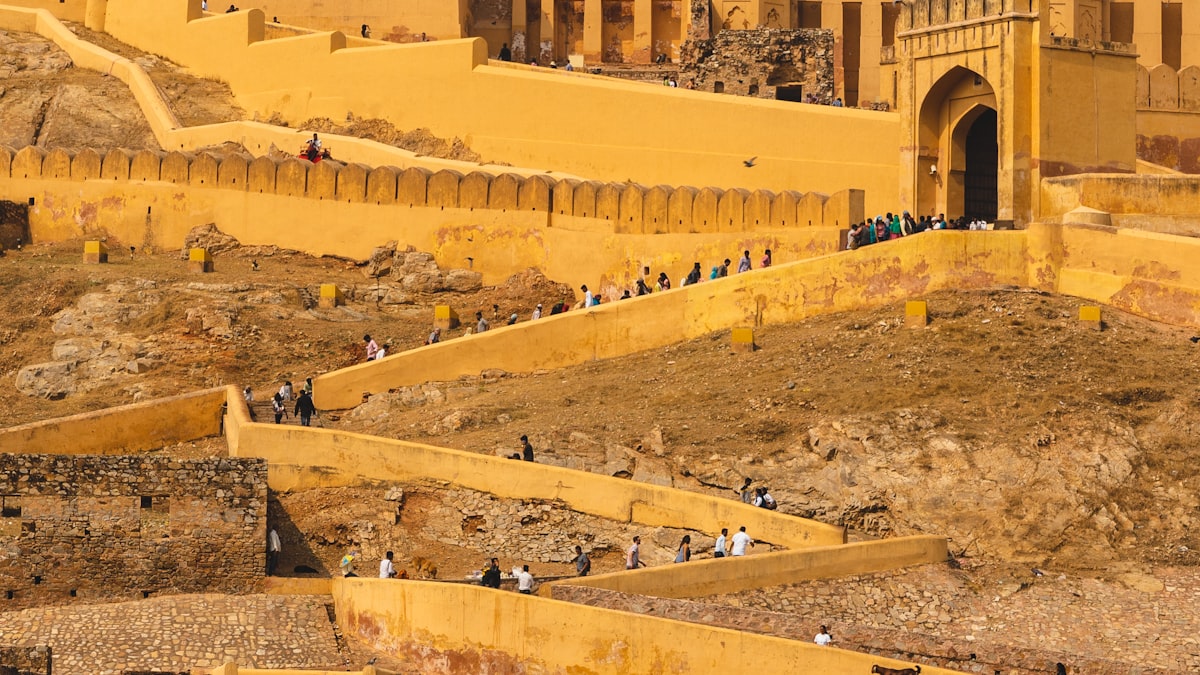
Rajasthan as a Business Destination
Rajasthan, India's largest state by area, has rapidly evolved from a tourism-centric economy into a diversified industrial powerhouse. With a projected GSDP of INR 19.89 lakh crore (US $232.88 billion) in FY26, the state's economy has grown at a CAGR of 11.31% between FY16 and FY26. The per capita GDP stands at approximately INR 1.67 lakh, with 17% year-on-year growth recorded between FY24 and FY25.
Foreign direct investment inflows into Rajasthan reached INR 28,688 crore (US $3.27 billion) between April 2000 and June 2025, according to DPIIT data. The state's merchandise exports touched US $10 billion in FY24, driven by engineering goods, gems and jewellery, textiles, and handicrafts. The industrial sector contributes 28% of the Gross State Value Added (GSVA), while services — including IT, financial services, and GST-registered trade — form the largest segment.
Rajasthan also benefits from its strategic position along the Delhi-Mumbai Industrial Corridor (DMIC), with nearly 40% of the corridor's route (approximately 553 km) passing through the state. This positions Rajasthan as a logistics and manufacturing bridge between India's political and financial capitals.
For foreign companies evaluating Indian states, Rajasthan stands out for its combination of large land availability, reform-oriented governance, competitive labour costs, and proximity to Delhi. The state is the leading producer of cement-grade limestone in India, holds 26% of the country's proven limestone reserves, and is a major hub for renewable energy with over 300 days of sunshine annually. These natural advantages, combined with a proactive policy environment, have driven significant investor interest from both domestic conglomerates and multinational corporations across sectors ranging from auto components to data centres.
Key Cities & Industrial Corridors
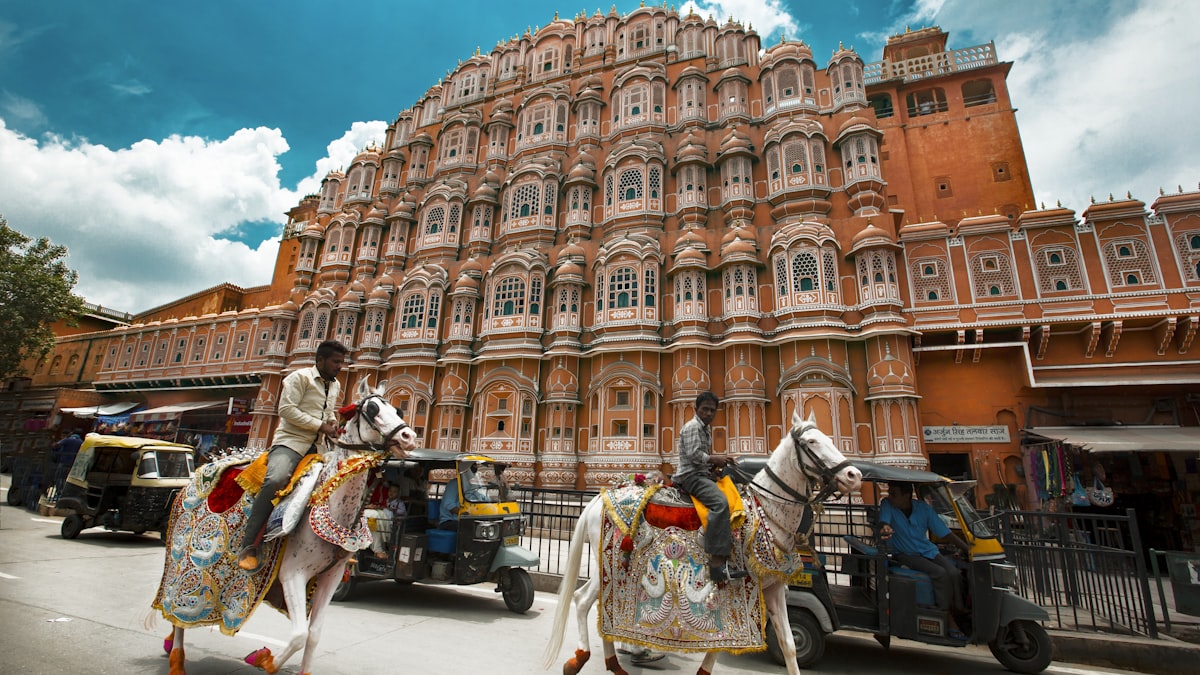
Jaipur is the undisputed commercial capital, hosting the Mahindra World City SEZ — the largest SEZ in north India — along with RIICO IT parks at Sitapura and Ramchandra Pura. The city is a hub for IT/ITES, gems and jewellery, and textiles. An integrated FinTech Park spread across 37 hectares is under development near Jodhpur International Airport's approach.
Jodhpur serves the handicrafts and engineering goods sectors, anchored by the Jodhpur-Pali-Marwar Industrial Area (JPMIA, 6,570 acres) along the DMIC. The state has allocated INR 427 crore for JPMIA's development. Jodhpur also hosts a Software Technology Park of India (STPI) centre.
Bhiwadi-Neemrana (Khushkhera-Bhiwadi-Neemrana Investment Region, 1,378 acres) is the state's manufacturing gateway bordering Delhi-NCR, hosting automotive and electronics companies. The proximity to Gurgaon and the Delhi-Mumbai Expressway makes it attractive for foreign subsidiaries seeking low-cost alternatives to NCR.
Udaipur is growing as a secondary IT and tourism services hub with an established RIICO IT Park, while Kota is emerging in chemicals and precision engineering. The Rajasthan Petro Zone (RPZ), located near the HPCL Refinery and Petrochemical Complex, covers 700 hectares with access to major ports.
The state has three STPI (Software Technology Parks of India) centres — at Jaipur, Jodhpur, and Bhiwadi — providing plug-and-play infrastructure for IT companies. For companies from the United States, the United Kingdom, or Japan evaluating cost-effective alternatives to Bangalore and Hyderabad, Rajasthan's combination of DMIC proximity, lower operating costs, and state-level incentives creates a compelling value proposition.
State Tax & Compliance
Companies operating in Rajasthan must navigate state-specific compliance requirements alongside central laws. Understanding these obligations is essential for annual compliance planning.
Professional Tax
Rajasthan levies professional tax under the Rajasthan State Tax on Professions, Trades, Callings and Employments Act, 1975:
- Exemption threshold: Employees earning below INR 7,500/month are exempt
- Maximum tax: INR 2,500/year per employee (the constitutional ceiling)
- Filing frequency: Monthly returns if liability exceeds INR 50,000/year; annual returns (by March 31) if below INR 50,000
- Payment due date: Last day of each month (monthly filers)
Stamp Duty
Stamp duty in Rajasthan is governed by the Rajasthan Stamp Act:
- Property sale: 5–6% of market value (varies by gender and area)
- Lease deeds: 1–2% depending on lease tenure; rental agreements under 11 months do not require registration
- Labour cess: 20% surcharge on the stamp duty amount
- Registration charge: 1% of market value
- PMAY concessional rate: 0.5% stamp duty for affordable housing projects
See Rajasthan's full stamp duty rates, DLC valuation, and RIPS reimbursement rules for a complete breakdown.
Labour Welfare Fund
Rajasthan mandates employer and employee contributions to the state labour welfare fund. Contribution rates and periodicity are prescribed by the Rajasthan Labour Welfare Board. For details on central labour law compliance, see our guide on India's Labour Codes.
GST Compliance
All companies operating in Rajasthan must register for Goods and Services Tax (GST) if their turnover exceeds the prescribed threshold (currently INR 40 lakh for goods, INR 20 lakh for services). GST registration in Rajasthan is state-specific, meaning companies operating in multiple Indian states need separate GSTIN registrations for each state. Rajasthan's commercial tax department has implemented an online portal for returns filing, e-way bills, and refund processing. Under RIPS 2024, eligible enterprises can claim reimbursement of up to 75% of State GST paid, making this a critical incentive to factor into your financial projections when evaluating Rajasthan as a business location.

State Startup & Investment Policy
The Rajasthan Investment Promotion Scheme 2024 (RIPS 2024) is the state's flagship incentive framework, valid until March 31, 2029. It covers manufacturing, services, renewable energy, MSMEs, startups, and sunrise sectors.
Key RIPS 2024 Incentives
- SGST reimbursement: Up to 75% reimbursement of State GST paid for a defined period
- Stamp duty reimbursement: Up to 100% reimbursement on stamp duty paid for land/lease transactions
- Capital subsidy: Available as an alternative to SGST reimbursement for eligible units
- Turnover-linked incentive: Alternative to SGST reimbursement, linked to annual turnover
- Women entrepreneurs: Enhanced incentives and reduced eligibility thresholds
- Thrust sectors: Additional incentives for semiconductors, aerospace and defence, data centres, and global capability centres (GCCs)
- Employment bonus: Area-based and employment-linked additional incentives
The Startup India registration applies in Rajasthan, and the state's iStart programme (istart.rajasthan.gov.in) provides additional incubation, mentorship, and seed funding. Companies setting up through a private limited company structure can avail of both central and state incentives simultaneously.
Rajasthan is actively planning new policies for semiconductor manufacturing, space and aerospace, green hydrogen, data centres, medical devices, and defence corridor manufacturing — signalling strong intent to attract high-tech FDI.
Land & Real Estate
Rajasthan offers competitive real estate costs compared to Tier 1 cities like Mumbai, Bangalore, and Delhi:
- Jaipur premium locations (C-Scheme, Vaishali Nagar): INR 45–150/sq ft/month for commercial office space
- Jaipur standard locations (Mansarovar, Sitapura IT Park): INR 25–40/sq ft/month
- Mahindra World City SEZ: Competitive rates with plug-and-play IT space, shared infrastructure, and SEZ tax benefits
- Industrial land (RIICO): Available at subsidised rates through the Rajasthan State Industrial Development and Investment Corporation
- Coworking spaces: Growing availability in Jaipur at INR 5,000–12,000/seat/month
The SEZ framework provides significant advantages including duty-free imports, income tax exemptions for the initial years, and simplified customs procedures for units within notified zones.
For manufacturing companies, RIICO (Rajasthan State Industrial Development and Investment Corporation) offers industrial plots across 300+ industrial areas at rates significantly below private market prices. RIICO also provides built-up factory sheds, flatted factory complexes, and plug-and-play manufacturing infrastructure. Land allotment timelines have been reduced to 30–45 days under the single-window clearance system, making it faster for a foreign subsidiary to establish manufacturing operations compared to many other states.

Labour & Employment Rules
Rajasthan has been a pioneer in labour reform among Indian states. Key state-specific provisions include:
- Industrial Disputes Act threshold: Rajasthan raised the retrenchment threshold to 300 workers (from 100 under central law), making it easier for manufacturing firms to manage workforce flexibility
- Factories Act relaxation: The state has relaxed overtime provisions and shift timings for IT/ITES and manufacturing units
- Contract labour: Simplified registration process for contract labour engagement
- Shops & Establishment Act: Rajasthan's version allows extended working hours for IT/ITES companies and provides flexibility in weekly off schedules
- Minimum wages: State-specific minimum wages apply across 72 scheduled employments
- EPF and Gratuity: Central laws apply uniformly, but the state provides facilitation through single-window clearance
For foreign companies setting up operations, a resident director must be appointed, and all employment contracts must comply with both central and Rajasthan state labour laws. Beacon Filing provides end-to-end support for payroll processing and labour compliance in Rajasthan, ensuring that your subsidiary or branch office meets all statutory obligations from day one.
Infrastructure
Rajasthan's infrastructure has seen substantial development driven by national-level projects:
- Delhi-Mumbai Expressway: This 1,386-km, 8-lane expressway passes through Rajasthan, reducing Delhi-Mumbai travel time by 50%. Major Rajasthan cities including Jaipur and Kota benefit directly.
- Airports: Jaipur International Airport (JAI) handles domestic and international flights. Jodhpur, Udaipur, Jaisalmer, and Bikaner have domestic airports. India aims for 200+ operational airports by 2030.
- Delhi-Mumbai Industrial Corridor: 553 km of the DMIC passes through Rajasthan, with dedicated industrial zones at Jodhpur-Pali-Marwar and Khushkhera-Bhiwadi-Neemrana.
- Railways: The Kota railway station is undergoing major redevelopment. Western Dedicated Freight Corridor passes through the state, boosting logistics.
- Power: Rajasthan is a renewable energy leader with significant solar and wind capacity. The state receives over 300 days of sunshine annually, making it ideal for solar manufacturing.
- Digital connectivity: Tier 2 cities in Rajasthan have high-speed broadband via BharatNet and private ISPs, supporting remote and hybrid work models.
- Water supply: The Eastern Rajasthan Canal Project (ERCP) is under development to address water scarcity in eastern Rajasthan by linking surplus rivers during monsoon with deficit areas. For water-intensive industries, Bhiwadi and the DMIC corridor cities benefit from proximity to Yamuna tributaries and municipal water systems.
The state government has prioritised infrastructure as a key enabler for industrial growth. Rajasthan's position at the intersection of multiple national corridors — DMIC, Western Dedicated Freight Corridor, Delhi-Mumbai Expressway, and NH-48/NH-8 — gives companies in the state unmatched multi-modal logistics connectivity to both Delhi-NCR and western Indian ports. For companies involved in cross-border transactions and import-export, this connectivity translates to shorter supply chain lead times and lower per-unit logistics costs.

Frequently Asked Questions
What are the main advantages of setting up a business in Rajasthan?
Rajasthan offers competitive real estate costs (30–50% lower than Delhi-NCR), a strategic location along the Delhi-Mumbai Industrial Corridor, generous state incentives under RIPS 2024 including up to 75% SGST reimbursement, labour law reforms that provide workforce flexibility, and a growing talent pool from 70+ universities. The state's proactive stance on sunrise sectors like semiconductors and data centres also signals long-term policy stability.
What is the professional tax rate in Rajasthan for foreign subsidiary employees?
Rajasthan levies professional tax at a maximum of INR 2,500 per year per employee. Employees earning below INR 7,500/month are exempt. The employer is responsible for deducting and remitting professional tax to the state government.
Can a foreign company set up in a Rajasthan SEZ?
Yes. Foreign companies can establish a wholly owned subsidiary or a branch office within Rajasthan SEZs like Mahindra World City in Jaipur. SEZ units benefit from duty-free imports, income tax holidays for the initial years, and simplified customs procedures. FDI sectoral caps apply based on the industry sector.
What incentives does Rajasthan offer to startups?
Under RIPS 2024, startups enjoy reduced eligibility thresholds, capital subsidies, SGST reimbursement, and 100% stamp duty refund. The state's iStart programme provides additional support including incubation space, mentorship, seed funding, and market access. DPIIT-registered startups can access both central Startup India benefits and state-level incentives.
How long does it take to register a company in Rajasthan?
Incorporating a private limited company in Rajasthan takes 10–15 business days through the MCA portal. Post-incorporation compliance — including GST registration, professional tax registration, and Shops & Establishment licence — typically adds another 2–3 weeks. Beacon Filing handles the entire process end-to-end.
What are the stamp duty rates for leasing office space in Rajasthan?
Stamp duty on lease agreements in Rajasthan ranges from 1% to 2% of the total lease value, depending on the tenure. Rental agreements under 11 months do not require registration. A 20% labour cess surcharge applies on stamp duty, plus a 1% registration fee on market value. Under RIPS 2024, eligible enterprises may claim 100% stamp duty reimbursement.
Which sectors receive additional incentives under RIPS 2024?
Thrust sectors with enhanced incentives include semiconductor manufacturing, aerospace and defence, data centres, global capability centres (GCCs), green hydrogen, and medical devices. These sectors receive additional SGST reimbursement, higher capital subsidies, and priority single-window clearance for land allocation and utility connections.