Why the Old Rankings No Longer Tell the Full Story
For foreign companies comparing India, China, Vietnam, and Thailand for ease of doing business, the numbers diverge sharply: India registers a company in 3-6 weeks for USD 240-660, China takes 3-6 months for USD 3,000-8,000, Vietnam takes 2-3 months for USD 1,500-4,000, and Thailand takes 2-4 weeks (non-BOI) for USD 2,000-5,000. India also permits 100% foreign ownership in over 90% of sectors. Beyond registration speed, manufacturers weighing India against Vietnam specifically should also look at how India and Vietnam compare on manufacturing costs and incentives.
The World Bank discontinued its Doing Business Index in 2021 after data irregularity concerns. Its replacement — B-READY (Business Ready) — is in a three-year rollout phase spanning 2024 to 2026, covering 101 economies in its 2025 interim report with full 180-economy coverage expected in 2026. Vietnam ranked 17th globally in the B-READY 2025 scores and was noted as the most improved economy.
But rankings only tell part of the story. For a foreign company evaluating where to set up operations, the real questions are practical: How long does incorporation take? What will I pay in taxes? Can I own 100% of my entity? What are the hidden compliance costs?
This article answers those questions for the four most commonly compared Asian investment destinations — India, China, Vietnam, and Thailand — using verified 2025-2026 data from government sources, PWC tax summaries, and direct operational experience.
Company Registration: Timeline and Complexity
India
India has fully digitised company registration through the MCA's SPICe+ (INC-32) portal. The integrated form handles name reservation, incorporation, DIN allotment, PAN, TAN, EPFO, ESIC, and optional GST registration in a single submission.
- Timeline: 3-7 business days for incorporation; 3-6 weeks end-to-end including bank account
- Government fees: INR 5,000-15,000 (USD 60-180)
- Professional fees: INR 15,000-40,000 (USD 180-480)
- Total first-year cost: USD 240-660
- 100% foreign ownership: Yes, in over 90% of sectors under the automatic route
India's key friction point is the resident director requirement — at least one director must have stayed in India for 182+ days in the previous financial year. This can be resolved using a nominee director service (INR 2-5 lakh/year).
China
China requires foreign companies to establish a Wholly Foreign-Owned Enterprise (WFOE) through a multi-step process involving the Administration for Market Regulation (AMR), tax bureau, and bank.
- Timeline: 3-6 months typically, depending on city, industry, and documentation readiness
- Setup cost: USD 3,000-8,000 (excluding capital investment)
- 100% foreign ownership: Yes, for sectors not on the Negative List (reduced from 117 to 106 items in 2025)
- Key challenges: Complex regulations vary by province, multi-step approvals, language barriers, capital requirements for specific sectors
China's revised Company Law (effective July 2024) introduced new requirements including a five-year paid-up capital timeline. The negative list, while shrinking, still prohibits foreign investment in publishing, certain media, and cultural sectors. The Press Note 3 equivalent does not exist — China instead uses a comprehensive negative list approach.
Vietnam
Vietnam uses an Investment Registration Certificate (IRC) plus Enterprise Registration Certificate (ERC) dual-step process for foreign-invested companies.
- Timeline: 4-8 weeks for IRC and ERC combined; 2-3 months with bank account
- Setup cost: USD 1,500-4,000
- 100% foreign ownership: Yes, in most sectors (conditional list shorter than China's)
- Key advantage: 16 active free trade agreements (EU-Vietnam FTA, CPTPP, RCEP) simplify trade access
Vietnam attracted USD 27.62 billion in registered FDI in 2025, a 9% year-on-year increase, with manufacturing accounting for 76.3% of inflows. The country ranked 17th globally in the World Bank's B-READY 2025 assessment.
Thailand
Thailand uses the Department of Business Development (DBD) for registration and offers the Board of Investment (BOI) track for promoted activities.
- Timeline: 2-4 weeks for standard registration; 2-4 months with BOI application
- Setup cost: USD 2,000-5,000
- 100% foreign ownership: Restricted under the Foreign Business Act (List 1, 2, 3) — but BOI-promoted companies can achieve 100% foreign ownership in promoted activities
- Key advantage: BOI incentives include CIT exemption for up to 13 years, duty-free machinery imports, and land ownership permits
| Parameter | India | China | Vietnam | Thailand |
|---|---|---|---|---|
| Registration timeline | 3-6 weeks | 3-6 months | 2-3 months | 2-4 weeks (non-BOI) |
| Total setup cost (USD) | 240-660 | 3,000-8,000 | 1,500-4,000 | 2,000-5,000 |
| 100% foreign ownership | 90%+ sectors | Sectors off Negative List | Most sectors | BOI-promoted only |
| Online registration | Fully digital | Partially digital | Partially digital | Partially digital |
India wins on speed and cost of initial setup. China is the slowest and most expensive. For a detailed walkthrough of setting up in India, see our step-by-step Indian subsidiary registration guide.

Corporate Tax Rates: The Real Numbers
| Tax Parameter | India | China | Vietnam | Thailand |
|---|---|---|---|---|
| Standard CIT rate | 25.17% | 25% | 20% | 20% |
| Concessional/new mfg rate | 17.16% | 15% (high-tech) | 10% (high-tech, renewable) | 0-20% (BOI tiers) |
| SME/small company rate | 25.17% (no SME rate) | 5-20% (tiered) | 15-17% (revenue-based tiers) | 0-15% (capital <THB 5M) |
| Minimum tax | 15% MAT on book profits | None | None | None |
| Global minimum tax (Pillar Two) | Under evaluation | Adopted principles | 15% from Oct 2025 | 15% from Jan 2025 |
Vietnam and Thailand offer the most competitive headline rates at 20%. India's standard rate of 25.17% is comparable to China's 25%, but India's concessional manufacturing rate of 17.16% (section 201, Table, Sl. No. 1, read with section 205(2) of the Income-tax Act, 2025; section 115BAB of the Income-tax Act, 1961) is globally competitive and lower than any standard rate in this group. The catch: India imposes Minimum Alternate Tax (MAT) at 15% of book profits, creating a tax floor even for loss-making companies.
Thailand's BOI incentives are the most generous: up to 13 years of complete CIT exemption plus import duty waivers. For companies willing to navigate the BOI application process, Thailand offers a near-zero effective tax rate during the incentive period.
For a deeper analysis of India's corporate tax framework, see our guide on 35 questions on Indian taxation for foreign companies.
FDI Openness and Ownership Restrictions
India: Automatic Route Dominance
India permits 100% FDI under the automatic route in over 90% of sectors. Key restrictions:
- Multi-brand retail: 51% cap (government approval)
- Defence: 74% under automatic, beyond requires approval
- Insurance: 100% (with conditions per Insurance Amendment Act 2025) (raised from 49% in 2021)
- Press Note 3: All investments from countries sharing a land border with India (including China) require prior government approval
China: Negative List Approach
China's 2025 Negative List contains 106 restricted/prohibited items (down from 117). Outside the list, foreign investors can establish WFOEs freely. However:
- Publishing, broadcasting, and certain media remain prohibited
- Financial services face ownership caps in some segments
- Technology transfer requirements have been officially removed but remain a practical concern
- Variable Interest Entity (VIE) structures remain in a legal grey area
Vietnam: Conditional List
Vietnam maintains a conditional investment list that is shorter than China's negative list. Most manufacturing, technology, and services sectors are fully open to 100% foreign ownership. Key restrictions include banking (30% foreign ownership cap for a single investor), media, and specific natural resources.
Thailand: Two-Track System
Thailand's Foreign Business Act restricts foreign majority ownership in three lists of activities. The BOI provides an alternative pathway: BOI-promoted companies can achieve 100% foreign ownership even in restricted sectors, plus additional benefits like land ownership permits and work permit facilitation.
For a comparison of how FDI routes work in India, see our automatic route vs. government approval comparison.

Regulatory Reform Momentum
India: 47,000 Compliance Reductions
As of November 2025, India has reduced over 47,000 compliance requirements: 16,108 simplified, 22,287 digitised, 4,458 decriminalised, and 4,270 redundant compliances removed. The Jan Vishwas Act (2023) decriminalised 183 provisions across 42 acts, with the 2025 bill proposing to decriminalise 288 more. The eighth edition of the Business Reforms Action Plan (BRAP 2026) was formally rolled out in November 2025.
Key reforms include:
- Retrospective taxation abolished (2021)
- Faceless tax assessments and appeals
- Four Labour Codes implemented (effective November 2025)
- E-invoicing mandatory for businesses above INR 5 crore turnover
China: Selective Liberalisation
China's reforms have been incremental and strategically targeted. The shortened negative list signals openness, but provincial implementation varies significantly. Data localisation requirements (Personal Information Protection Law), cybersecurity reviews for tech companies, and the Anti-Foreign Sanctions Law create compliance layers that do not exist in the other three countries.
Vietnam: Steady FTA-Driven Opening
Vietnam's participation in 16 free trade agreements (including EU-Vietnam FTA, CPTPP, and RCEP) drives consistent regulatory improvement. The revised Corporate Income Tax Law (effective October 2025) introduced new SME rates and expanded incentivised sectors. However, Vietnam's legal system remains less transparent than India's common law framework — contract enforcement can be slower and less predictable.
Thailand: BOI-Centric Reform
Thailand's investment climate improvements are concentrated in the BOI pathway. Outside BOI-promoted activities, the Foreign Business Act remains restrictive. The Eastern Economic Corridor (EEC) initiative provides additional incentives for targeted industries in three eastern provinces.
Infrastructure and Operational Reality
| Factor | India | China | Vietnam | Thailand |
|---|---|---|---|---|
| Power reliability | Varies by state; metros stable | Excellent nationwide | Good in industrial zones | Reliable |
| Internet infrastructure | Strong in Tier 1; growing in Tier 2 | Excellent, but Great Firewall | Adequate, improving | Good |
| Port and logistics | Improving (Sagarmala project) | World-class | Good, especially Hai Phong/HCMC | Strong, especially Laem Chabang |
| Talent availability | Massive STEM pool (1.5M+ engineers/year) | Large, competitive | Growing, younger workforce | Smaller, more expensive |
| English proficiency | High (business language) | Low (Mandarin dominant) | Moderate, improving | Moderate |
| Legal system | Common law, English | Civil law, Mandarin | Civil law, Vietnamese | Civil law, Thai |
India's advantages are in talent pool depth (1.5 million+ STEM graduates annually), English proficiency, and common law legal system. China leads in physical infrastructure and logistics. Vietnam offers the youngest workforce with rapidly improving capabilities. Thailand provides the most reliable infrastructure among the four but has the smallest talent pool.
China+1 Strategy: Where India Stands
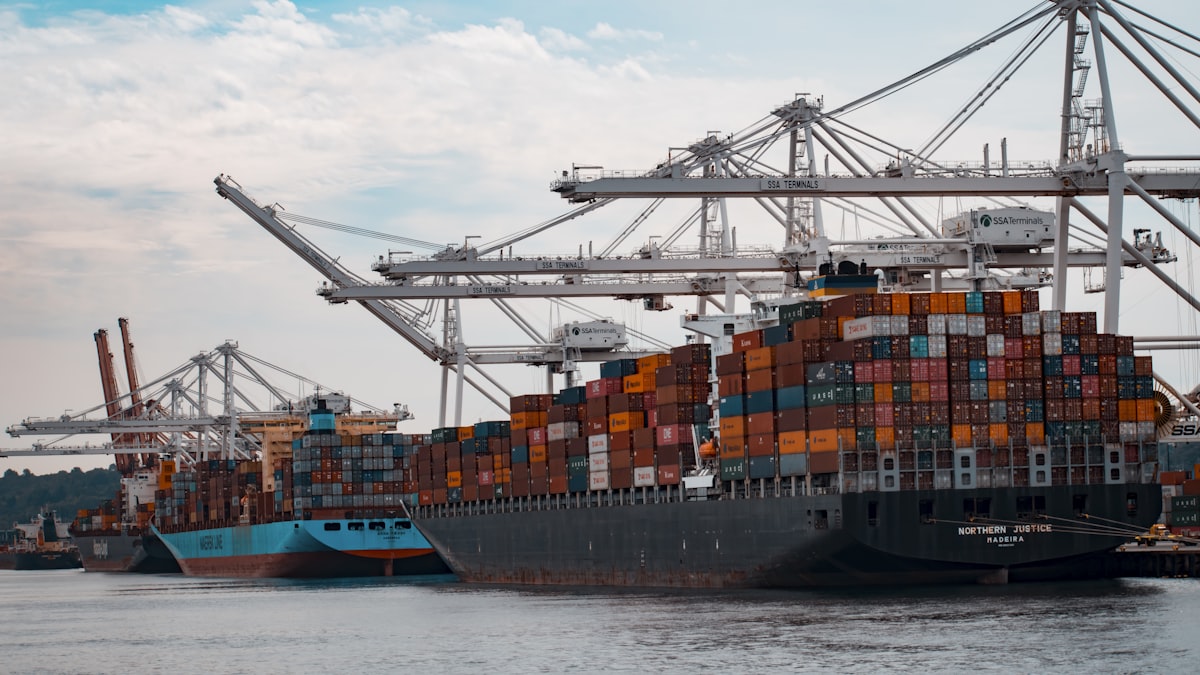
The China+1 strategy — diversifying supply chains away from concentrated China dependence — has accelerated since 2020. The primary beneficiaries have been:
- Vietnam: FDI inflows reached USD 27.62 billion in 2025 (up 9% YoY), with manufacturing at 76.3%. Apple, Samsung, Intel, and dozens of electronics manufacturers have established or expanded Vietnamese operations.
- India: FDI inflows hit USD 81.04 billion in FY 2024-25 (up 14% YoY). Manufacturing FDI grew 18% to USD 19.04 billion. Major wins include Apple supplier Foxconn, Tesla component suppliers, and semiconductor commitments.
- Thailand: Positioned as an EV manufacturing hub with BOI incentives targeting 30% zero-emission vehicle production by 2030.
India's scale advantage is unmatched — its FDI inflows are 3x Vietnam's. However, Vietnam has been more effective at capturing export-oriented electronics manufacturing, while India attracts more services-sector and domestic-market-oriented investment.
For a detailed analysis of India's position in the China+1 landscape, see our article on China+1 manufacturing strategy for India. You can also review our comparison of India vs China for manufacturing.
Annual Compliance Burden Compared
| Requirement | India | China | Vietnam | Thailand |
|---|---|---|---|---|
| Tax filings per year | 12+ (monthly GST, quarterly TDS, annual CIT) | Monthly CIT prepayments, annual settlement | Quarterly CIT, monthly VAT | Semi-annual CIT, monthly VAT |
| Annual compliance cost (USD) | 3,600-9,600 | 5,000-12,000 | 2,000-5,000 | 2,500-6,000 |
| Transfer pricing documentation | Mandatory for related-party transactions | Mandatory above thresholds | Mandatory, simplified for SMEs | Mandatory for related-party |
| Foreign exchange controls | FEMA (regulated, not restricted) | Strict SAFE controls | SBV controls (moderate) | BOT controls (relatively open) |
| Annual audit required | Yes (statutory audit mandatory) | Yes | Yes | Yes (above thresholds) |
India's compliance volume is the highest — primarily driven by monthly GST filings and FEMA/RBI reporting requirements for foreign-owned entities. China's compliance is expensive due to language barriers and the need for local expertise. Vietnam offers the lowest ongoing compliance costs. For details on Indian compliance deadlines, see our guide on 12 compliance deadlines foreign companies miss.

Labour Market and Employment Flexibility
The cost and flexibility of hiring is often the deciding factor for services companies. Key differences:
| Factor | India | China | Vietnam | Thailand |
|---|---|---|---|---|
| Minimum wage (monthly, USD) | 85-250 (varies by state) | 200-400 (varies by city) | 180-250 (varies by region) | 260-320 |
| Employer social contributions | ~17% (EPF + ESI) | ~30-40% of salary | ~23.5% (incl. 2% union fee) | ~5% |
| Termination difficulty | Moderate (Labour Codes 2025 simplified) | Difficult (strict legal requirements) | Moderate | Relatively easy |
| Notice period (typical) | 1-3 months | 1 month (legal minimum) | 15-45 days | 1 pay period |
| Severance requirement | 15 days per year (retrenchment) | 1 month per year | 0.5 months per year (12+ months) | 30-300 days based on tenure |
China has the highest mandatory employer social contributions at 30-40% of salary — significantly above India's 17% and Thailand's 5%. This hidden cost dramatically affects total employment cost calculations. India's four Labour Codes, effective November 2025, have simplified but not necessarily reduced employment costs — the 50% wage-to-CTC ratio requirement has actually increased EPF and gratuity bases for many employers.
Thailand stands out as the most employer-friendly among the four, with low social contributions (~5%), straightforward termination procedures, and short notice periods. However, its smaller talent pool limits scalability for large operations.
Dispute Resolution and Legal Enforceability
Contract enforcement and dispute resolution quality directly impact business risk:
- India: Common law system with commercial courts and dedicated arbitration framework (Arbitration and Conciliation Act, 1996, amended 2019). The India International Arbitration Centre (IIAC) in New Delhi and the Mumbai Centre for International Arbitration (MCIA) are growing in stature. Court timelines remain long — 3-5 years in High Courts — but arbitration awards are increasingly enforceable. India is a signatory to the New York Convention on recognition and enforcement of foreign arbitral awards.
- China: Civil law system with specialised commercial and IP courts. The China International Economic and Trade Arbitration Commission (CIETAC) is well-established. However, enforcing judgments against Chinese parties, particularly state-owned enterprises, remains challenging. Local courts may show bias toward domestic parties.
- Vietnam: Civil law system undergoing modernisation. The Vietnam International Arbitration Centre (VIAC) handles commercial disputes but is less developed than Indian or Chinese equivalents. Contract enforcement timelines can be unpredictable, and the legal framework for complex commercial disputes is still maturing.
- Thailand: Civil law system with the Thai Arbitration Institute (TAI) and a relatively efficient judicial process for commercial cases. Thailand's courts are generally seen as more neutral toward foreign parties than China's or Vietnam's.
India's common law system and English-language courts give it a structural advantage for foreign investors accustomed to Anglo-Saxon legal traditions. For companies concerned about dispute resolution, India and Thailand offer the most reliable frameworks.

Foreign Exchange Controls Compared
Profit repatriation and intercompany fund flows are critical for foreign investors. Here is how the four countries compare:
- India (FEMA): Current account transactions (trade payments, dividends, royalties) are freely permitted but require documentation (Forms 145 and 146 (formerly Forms 15CA and 15CB)). Capital account transactions (equity, loans) require RBI compliance. Pricing must meet transfer pricing arm's length standards. The system is regulated but not restrictive — compliant companies face no practical barriers to profit repatriation.
- China (SAFE): The most restrictive system among the four. All capital account transactions require State Administration of Foreign Exchange (SAFE) approval. Converting RMB to foreign currency for profit repatriation requires tax clearance certificates and detailed documentation. Dividend payments are subject to withholding tax and SAFE registration. Many foreign companies report 3-6 week delays for routine remittances.
- Vietnam (SBV): Moderate controls. Foreign investors can remit profits, dividends, and proceeds from investment liquidation after fulfilling tax obligations. The State Bank of Vietnam (SBV) requires documentation but processes are typically faster than China's.
- Thailand (BOT): Relatively open. The Bank of Thailand allows free repatriation of investment capital, profits, and loan repayments for registered foreign investments. BOI-promoted companies receive additional guarantees on fund remittance.
China's SAFE system is the biggest operational headache for foreign treasuries — multiple approvals, long processing times, and documentation requirements that do not exist elsewhere. India's FEMA framework is well-documented and predictable once you have a qualified compliance advisor.
The Real Assessment: Which Country for What
Choose India When:
- You need a large English-speaking talent pool (technology, engineering, shared services)
- You want access to a 1.4 billion consumer domestic market
- You are building a Global Capability Centre (GCC) for engineering, finance, or customer support
- You need a common law legal system for contract enforceability
- You can access manufacturing-linked incentives such as PLI (the 17.16% concessional rate in section 201, Table, Sl. No. 1, of the Income-tax Act, 2025 closed to companies commencing production after 31 March 2024 and has not been extended)
Choose China When:
- Your primary market is China's domestic consumer base
- You need world-class manufacturing infrastructure and supply chain depth
- Your industry requires proximity to existing Chinese supplier ecosystems
- You can navigate Mandarin-language regulatory environment
Choose Vietnam When:
- You need low-cost, export-oriented manufacturing (electronics, textiles, footwear)
- You want access to 16 FTAs including EU-Vietnam and CPTPP
- Your production volumes suit Vietnam's mid-scale capacity
- You prefer the lowest compliance costs among the four
Choose Thailand When:
- You are in BOI-promoted sectors (EV, automotive, aerospace, medical devices)
- You need Southeast Asia's most reliable infrastructure
- You want up to 13 years of CIT exemption through BOI
- You need a stable, predictable regulatory environment
For companies entering India, our foreign subsidiary registration service handles the entire process from DSC to bank account. Explore our FDI advisory services for sector-specific guidance.
DTAA and Treaty Networks: Tax Efficiency for Cross-Border Operations
The quality and breadth of a country's double taxation avoidance agreement (DTAA) network affects how efficiently you can move profits, dividends, and royalties between jurisdictions:
- India: 85+ comprehensive DTAAs covering most major economies. The India-Singapore, India-Netherlands, and India-Mauritius treaties are the most commonly used for FDI routing. Withholding tax rates on dividends, interest, and royalties typically range from 10-15% under treaty. India's withholding tax framework requires Forms 145 and 146 certification for all cross-border payments.
- China: 100+ DTAAs but with higher default withholding rates (10% on dividends and interest, 6-10% on royalties). China's SAFE controls add friction to treaty benefit claims — the documentary burden is heavier than India's.
- Vietnam: 80+ DTAAs. The EU-Vietnam FTA provides additional trade benefits. Withholding rates are typically 5-10% on dividends and 10% on interest and royalties under treaty.
- Thailand: 60+ DTAAs. Thailand's BOI regime can effectively override treaty rates by providing additional tax exemptions during the incentive period.
For companies planning a multi-country Asian structure, the DTAA landscape favours India and China for breadth, while Thailand's BOI incentives can make the treaty network less relevant during the exemption period. See our comprehensive DTAA guide for foreign companies for India-specific treaty planning.
Key Takeaways
- India is the fastest and cheapest country for company registration (3-6 weeks, USD 240-660) — China is the slowest (3-6 months, USD 3,000-8,000).
- Vietnam and Thailand offer the lowest standard CIT rates at 20%; India's headline concessional rate is 22% (25.17% effective). India's 17.16% manufacturing rate under section 201, Table, Sl. No. 1, of the Income-tax Act, 2025 (section 115BAB of the Income-tax Act, 1961) closed to companies commencing production after 31 March 2024, so new entrants should plan around the 22% regime plus PLI incentives.
- India has reduced 47,000+ compliance requirements since 2014 and abolished retrospective taxation — the regulatory trajectory is strongly positive.
- China leads in infrastructure quality but imposes strict foreign exchange controls (SAFE) and the most restrictive data localisation requirements.
- Vietnam has captured the electronics manufacturing wave (76.3% of FDI in manufacturing) while India dominates in services, GCCs, and domestic-market investment.
- The optimal strategy for many multinationals is India + Vietnam or India + Thailand — using India for services/domestic market and a Southeast Asian base for export manufacturing.
Need help with India vs Business Environment? Our team handles it.
India Entry StrategyFrequently Asked Questions
How does the cost of registering a company compare across India, China, Vietnam, and Thailand?
India is the cheapest at USD 240-660 total first-year setup cost. Vietnam costs USD 1,500-4,000, Thailand USD 2,000-5,000, and China is the most expensive at USD 3,000-8,000 excluding capital investment. India's fully digital SPICe+ registration process also makes it the fastest.
Can foreign companies own 100% of a business in all four countries?
India allows 100% FDI in over 90% of sectors under the automatic route. China permits full ownership in sectors not on the Negative List (106 restricted items in 2025). Vietnam allows 100% in most sectors with a shorter conditional list. Thailand restricts foreign majority ownership under the Foreign Business Act, but BOI-promoted companies can achieve 100% foreign ownership.
India vs China vs Vietnam vs Thailand: which has the lowest corporate tax rate for foreign companies?
Vietnam and Thailand both have a standard 20% CIT rate. However, India offers a concessional 17.16% rate for new manufacturing companies, and Thailand's BOI incentives can provide complete CIT exemption for up to 13 years. China's standard rate is 25%, with a 15% rate for qualifying high-tech enterprises.
India vs Vietnam: which is better for manufacturing under the China+1 strategy?
It depends on the sector. Vietnam has captured most China+1 electronics manufacturing — 76.3% of its FDI goes to manufacturing, with Apple, Samsung, and Intel operating major facilities. India attracts more services-sector investment and domestic-market manufacturing. India's FDI inflows (USD 81 billion in FY25) are 3x Vietnam's, but Vietnam is more effective at export-oriented assembly.
What are the biggest challenges for foreign companies operating in China?
China's primary challenges include: complex regulations that vary by province, strict SAFE foreign exchange controls, data localisation requirements under the Personal Information Protection Law, Mandarin-language regulatory environment, WFOE registration taking 3-6 months, and annual compliance costs of USD 5,000-12,000. The Great Firewall also restricts access to many global business tools.
How has India improved its ease of doing business since 2014?
India has reduced over 47,000 compliance requirements — 16,108 simplified, 22,287 digitised, 4,458 decriminalised, and 4,270 removed. Key reforms include abolishing retrospective taxation (2021), launching faceless tax assessments, implementing the Jan Vishwas Act (decriminalising 183 provisions), reducing corporate tax to 22-25.17%, and implementing the four Labour Codes in November 2025.
Does Thailand's BOI incentive really offer tax-free operations?
Yes, for qualifying activities. The Thailand Board of Investment can grant complete corporate income tax exemption for 3-8 years, extendable up to 13 years for priority sectors. Additional benefits include import duty waivers on machinery, land ownership permits for foreign companies, and streamlined work permits. The minimum investment requirement is THB 1 million (approximately USD 28,000).