Spain-India Economic Corridor: Scale and Opportunity
Around 230 Spanish companies operate in India, and nearly 80 Indian companies are active in Spain, according to India's Ministry of External Affairs; bilateral trade reached approximately USD 9.9 billion in 2023. Spain ranks as the 16th largest foreign investor in India, with cumulative FDI stock of USD 4.2 billion from April 2000 to June 2024.
The Spanish presence in India is concentrated in sectors where Spain holds global competitive advantages: renewable energy, infrastructure, metallurgical industries, automotive, and ceramics. Companies like Zelestra Energy (with a multi-gigawatt project pipeline in India, anchored by its 435 MW Gorbea solar plant) and Acciona (which describes itself as the world's largest 100% renewable energy company) illustrate the depth of Spanish renewable-energy capability being directed at the Indian market, while global majors such as Iberdrola continue to evaluate it.
The landmark EU-India Free Trade Agreement, concluded on January 27, 2026, is set to further accelerate Spanish investment. The FTA covers a combined market of nearly 2 billion people and will reduce or eliminate tariffs on over 96% of EU goods exports to India, including Spanish machinery, chemicals, and automotive components. For Spanish companies considering India entry, the timing has never been better.
Renewable Energy: Spain's Sweet Spot in India
India's Renewable Energy FDI Framework
India permits 100% FDI under the automatic route for renewable energy generation and distribution projects. No prior government approval is required. The sector attracted USD 23 billion in foreign investment from April 2020 to June 2025, per Invest India, and renewable energy's share of India's total FDI inflows rose from about 1% in FY21 to around 8% in FY25 (IBEF).
India's renewable energy targets are among the most ambitious globally:
- 500 GW of non-fossil fuel capacity by 2030
- 50% of installed power capacity from non-fossil sources — achieved in June 2025, five years ahead of the 2030 target (Press Information Bureau)
- Wind energy capacity projected to reach about 100 GW by 2031-32 under the National Electricity Plan, up from the 50 GW milestone crossed in March 2025 (about 54 GW by November 2025, per MNRE)
- Record additions of 22 GW of renewable capacity in the first half of 2025 alone (Rystad Energy)
Spanish Companies Leading India's Renewable Transition
Several major Spanish companies have established significant operations in India:
| Company | Sector | India Operations |
|---|---|---|
| Zelestra Energy | Solar, Wind | Multi-GW India pipeline; 435 MW Gorbea solar plant in Rajasthan reached full operations July 2025 |
| Siemens Gamesa's India wind business (now Vayona Energy) | Wind | 12+ GW installed base; rebranded as Vayona Energy in December 2025 after acquisition by a TPG/MAVCO-led consortium |
| Acciona Energia | Wind, Solar, Hydro | Global renewables operator active across five continents, with India among its target growth markets |
| Iberdrola | Offshore/Onshore Wind, Solar | Global renewables major; evaluating Indian opportunities rather than operating a large Indian portfolio to date |
Hybrid Wind-Solar Projects
India's hybrid wind-solar projects represent a particularly relevant opportunity for Spanish companies. Siemens Gamesa developed India's first large commercial hybrid project, connecting a 28.8 MW solar facility to an existing 50 MW wind farm. These hybrid projects receive priority grid connectivity and are eligible for additional incentives under India's national solar mission and wind energy policy.
State-Level Opportunities for Spanish Renewable Energy Companies
India's renewable energy landscape varies significantly by state, and Spanish companies should evaluate locations carefully based on resource availability, state policy incentives, and grid infrastructure:
| State | Strength | Incentive Highlights |
|---|---|---|
| Rajasthan | Solar (highest irradiance) | Single-window clearance and electricity-duty concessions under the state renewable energy policy |
| Gujarat | Solar and Wind | Land allocation priority, transmission infrastructure investment |
| Tamil Nadu | Wind (highest installed capacity) | Established wind ecosystem, skilled workforce availability |
| Karnataka | Solar and Wind hybrid | Aggressive procurement targets, strong PPA framework |
| Madhya Pradesh | Solar parks | Ultra mega solar parks with pre-approved land and connectivity |
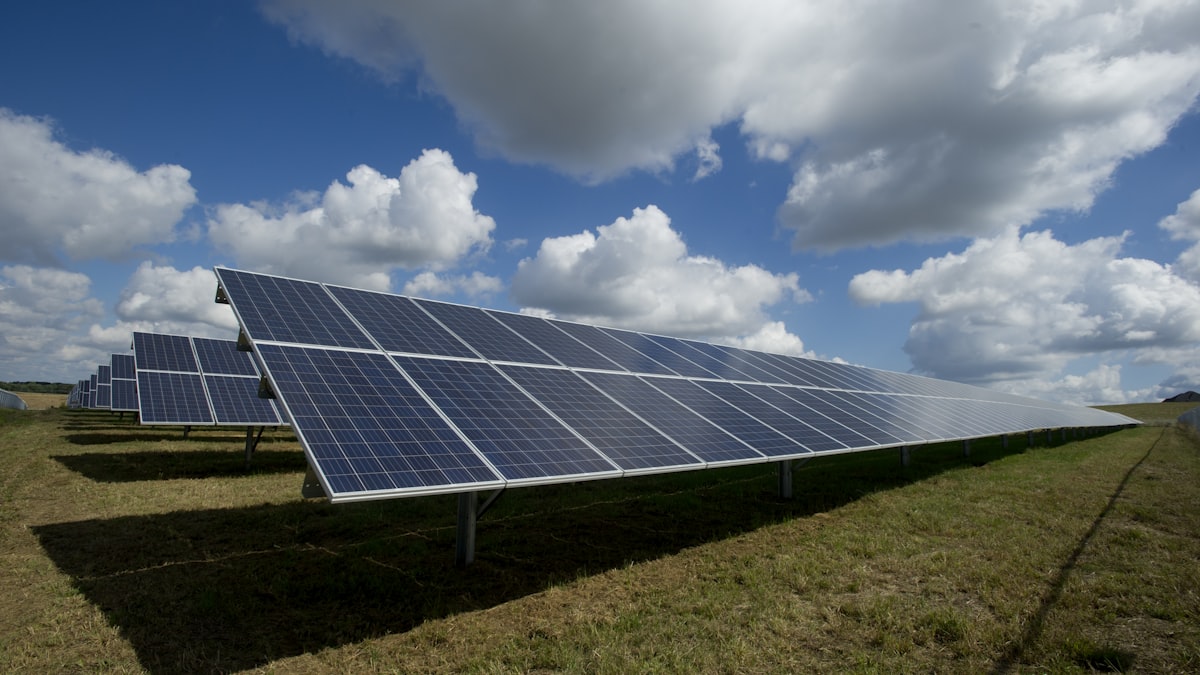
Zelestra Energy's Gorbea solar plant in Rajasthan, which commenced commercial operations in July 2025, demonstrates the viability of Spanish-led utility-scale projects in India. The plant benefits from Rajasthan's high solar irradiance exceeding 5.5 kWh per square meter per day and the state's supportive renewable energy policy framework.
Infrastructure Sector: Beyond Renewable Energy
FDI Rules for Infrastructure
India permits 100% FDI under the automatic route for construction development projects (townships, housing, built-up infrastructure, and commercial premises). The old minimum floor-area (20,000 sq. metres) and minimum-capitalization conditions were removed by Press Note 12 of 2015, though each tranche of foreign investment remains subject to the FDI policy's exit and lock-in conditions. For other infrastructure categories:
- Roads, highways, and bridges: 100% FDI under automatic route
- Ports and harbors: 100% FDI under automatic route
- Urban infrastructure: 100% FDI under automatic route
- Power generation and distribution: 100% FDI under automatic route
Key Spanish Infrastructure Players in India
Spanish infrastructure companies bring world-class capabilities in high-speed rail, metro systems, water treatment, and smart city development. The Indian government's Smart Cities Mission (targeting 100 smart cities) and Bharatmala Pariyojana (targeting 83,677 km of roads) create substantial opportunities for Spanish EPC contractors and technology providers.
Notable Spanish infrastructure companies active in or exploring India include Ferrovial (toll roads, airports), ACS Group (construction, energy), Sacyr (concessions, engineering), and Indra (IT and defence systems). These companies benefit from Spain's established track record in public-private partnership (PPP) models, which India increasingly favors for infrastructure development. The National Infrastructure Pipeline (NIP) projected INR 111 lakh crore (approximately EUR 1.2 trillion) of infrastructure investment over FY 2020-25, an indication of the scale of the addressable market for Spanish firms with PPP expertise.
India-Spain DTAA: Tax Treaty Deep Dive
Treaty Structure and Key Provisions
The DTAA between India and Spain was signed on February 8, 1993, with instruments of ratification exchanged on January 12, 1995. The treaty covers all forms of income including business profits, dividends, interest, royalties, fees for technical services, and capital gains.
Withholding Tax Rates Comparison
| Income Type | DTAA Rate | India Domestic Rate | Effective Savings |
|---|---|---|---|
| Dividends | 15% | 20% | 5 percentage points |
| Interest | 15% | 20% (foreign-currency loans; rupee-denominated debt is taxed higher) | 5+ percentage points |
| Royalties | 10% | 20% | 10 percentage points |
| Fees for Technical Services | 10% | 20% | 10 percentage points |
A significant development came in 2024 with Notification No. 33/2024 from India's Income Tax Department, which formally confirmed that the tax rate on royalties and FTS under the India-Spain DTAA shall not exceed 10%, aligning with the Most Favoured Nation (MFN) clause referencing the India-Germany DTAA. This is particularly beneficial for Spanish technology companies licensing renewable energy IP to Indian subsidiaries.
Permanent Establishment Rules
Spanish companies must be aware of permanent establishment (PE) thresholds under the India-Spain DTAA. A PE is typically created when:
- A fixed place of business is maintained in India, including offices, factories, or construction sites
- A building site, construction, installation or assembly project — or supervisory activities connected with it — continues for more than six months in any twelve-month period (Article 5(2)(k)), aggregating other such sites or projects of the company. A special limb catches even shorter installation work that is incidental to a sale of machinery or equipment where the charges exceed 10% of the sale price
- A dependent agent habitually concludes contracts in India on behalf of the Spanish company, or maintains a stock of goods from which he regularly delivers
For renewable energy companies, the construction phase of solar and wind farms must be carefully managed. If construction, installation, or connected supervisory activity exceeds six months in a twelve-month period, the Spanish company triggers a PE in India, making its project profits taxable in India as business income. Notably, the India-Spain treaty has no service PE clause — standalone service assignments without a fixed place or construction site do not create a PE.
Tax Residency Certificate Requirements
To claim DTAA benefits, Spanish companies must obtain a Certificado de Residencia Fiscal from the Agencia Tributaria (Spanish Tax Agency) and provide it along with Form 41 (formerly Form 10F) and a declaration of beneficial ownership to the Indian withholding agent.

Entity Structuring for Spanish Companies in India
Spanish SL vs Indian Pvt Ltd
Spanish companies typically operate through a Sociedad Limitada (SL) at home, which shares several structural similarities with the Indian private limited company. A detailed comparison is available in our Spanish SL vs Indian Pvt Ltd comparison. Key differences include:
| Feature | Spanish SL | Indian Pvt Ltd |
|---|---|---|
| Minimum capital | EUR 1 (since the 2022 "Crea y Crece" law; EUR 3,000 previously) | No statutory minimum (INR 1 lakh practical) |
| Directors | 1 minimum | 2 minimum (1 must be resident) |
| Shareholders | 1-50 | 2-200 |
| Audit requirement | Revenue-dependent | Mandatory for all |
| Annual filings | Registro Mercantil | MCA (ROC) + Income Tax + GST |
Registration Process from Spain
The step-by-step process for Spanish companies to register a company in India from Spain includes:
- Obtain Digital Signature Certificate: All proposed directors need a DSC
- Reserve company name: Through MCA's RUN service
- Apostille Spanish documents: Spain is a Hague Convention member; documents must be apostilled at the Ministerio de Justicia
- File SPICe+ form: Submit incorporation application with MoA and AoA
- Open bank account: With an authorized dealer bank
- Remit capital and file FC-GPR: Within 30 days of share allotment
Resident Director Requirement
At least one resident director must have stayed in India for 182+ days in the financial year. Spanish companies can meet this by appointing a local professional director or by relocating a Spanish executive to India on an employment visa.
Compliance Framework for Spanish-Owned Indian Subsidiaries
Key Annual Filings
Spanish-owned Indian subsidiaries must comply with filings across multiple regulators:
- FLA Return to the RBI by July 15 annually, reporting all foreign liabilities and assets
- Annual Return (MGT-7) to the MCA within 60 days of the Annual General Meeting
- Financial Statements (AOC-4) to the MCA within 30 days of the AGM
- Income Tax Return by November 30 for companies with international transactions requiring transfer pricing certification (October 31 for other companies)
- GST returns monthly (GSTR-1, GSTR-3B) or quarterly depending on turnover
FEMA Compliance
All FDI-related transactions must comply with FEMA regulations. Key requirements include:
- Share pricing as per FEMA valuation rules (any internationally accepted pricing methodology on an arm's length basis for unlisted companies — typically DCF — certified by a Chartered Accountant, SEBI-registered merchant banker, or practising Cost Accountant)
- Downstream investment reporting if the Indian subsidiary makes further investments
- ECB (External Commercial Borrowing) compliance if the parent extends loans to the subsidiary
Non-compliance penalties under FEMA can reach up to three times the transaction value or INR 2 lakh, with additional penalties of INR 5,000 per day for continuing violations.

Cost Breakdown: Spanish Company Setting Up in India
The prescribed government fees aside, the professional and other costs below are illustrative planning ranges, not published survey data.
| Item | Approximate Cost (INR) | Approximate Cost (EUR) |
|---|---|---|
| Company incorporation | INR 50,000 - 1,00,000 | EUR 550 - 1,100 |
| Government fees and stamp duty | INR 15,000 - 50,000 | EUR 170 - 550 |
| Registered office (annual, metro city) | INR 5,00,000 - 12,00,000 | EUR 5,500 - 13,200 |
| Resident director appointment | INR 3,00,000 - 6,00,000/year | EUR 3,300 - 6,600/year |
| Annual compliance (CA/CS fees) | INR 2,50,000 - 6,00,000 | EUR 2,750 - 6,600 |
| GST registration and monthly filing | INR 1,00,000 - 2,00,000/year | EUR 1,100 - 2,200/year |
Banking, Capital Flows, and Profit Repatriation
Capital Remittance from Spain
When a Spanish SL invests in an Indian subsidiary, the capital must flow through the banking channel. The process involves wiring funds from the Spanish parent's bank to the Indian subsidiary's designated bank account with an authorized dealer bank. Key compliance steps include:
- The authorized dealer bank issues an inward remittance certificate upon receipt of funds
- Shares must be allotted within 60 days of receiving the capital
- FC-GPR must be filed with the RBI within 30 days of share allotment, not from the date of receiving funds
- Share pricing must comply with FEMA valuation guidelines (an internationally accepted pricing methodology for unlisted companies, typically DCF)
Spanish companies should note that while there are no capital controls on outward investment from Spain within the EU framework, the Indian side has strict timelines and documentation requirements. Missing the FC-GPR deadline is regularised first by paying the Late Submission Fee — INR 7,500 plus 0.025% of the amount involved for each year of delay, available for up to three years from the due date. Only beyond that window does it reach FEMA compounding proceedings, where penalties run up to three times the transaction value.
Profit Repatriation Mechanisms
Spanish companies can repatriate profits from their Indian subsidiaries through multiple channels:
- Dividends: No RBI approval required. Withholding tax of 15% under the India-Spain DTAA. The Indian company must file Forms 145 and 146 (formerly Forms 15CA and 15CB) before remitting
- Royalties: Capped at 10% withholding under the DTAA (per Notification 33/2024). Royalty remittances are freely permitted under the automatic route — the old 5%/8%-of-sales caps were abolished in 2009 — subject to arm's length pricing under transfer pricing rules
- Technical service fees: Also capped at 10% withholding under the DTAA. Must be supported by a genuine service agreement with arm's length pricing
- Intercompany loan interest: Withholding at 15% under the DTAA. The loan must comply with India's ECB norms under FEMA
Common Mistakes Spanish Companies Make in India
Based on common issues observed with European companies entering India, Spanish businesses should be aware of these frequent pitfalls:
- Assuming EU standards apply: India has its own Bureau of Indian Standards (BIS) certification requirements for many products including electronics, steel, chemicals, and cement. Spanish companies must obtain BIS certification before importing or manufacturing regulated products in India
- Underestimating compliance volume: A typical foreign-owned Indian subsidiary has over 40 annual compliance filings across MCA, Income Tax, GST, RBI, and state-level authorities. This is significantly more than what a Spanish SL faces in Spain
- PE risk on project sites: Spanish EPC companies executing renewable energy projects in India must carefully track project duration. If construction, installation, or connected supervisory work exceeds six months in any twelve-month period under the India-Spain DTAA (aggregating the company's other sites and projects), it creates a permanent establishment, making project profits taxable in India
- Transfer pricing on technology licenses: When licensing renewable energy technology from a Spanish parent to an Indian subsidiary, the royalty rate must be at arm's length. The Indian Tax Department actively benchmarks technology royalties against comparable uncontrolled transactions, and excessive rates will be adjusted with penalties
- Ignoring state-level approvals: India's renewable energy sector involves state-level power purchase agreements, land acquisition, and grid connectivity approvals. These processes vary significantly by state and can add 3-6 months to project timelines
Renewable Energy Incentives and Government Schemes
Production-Linked Incentive for Solar Modules
The Indian government's PLI scheme for solar PV module manufacturing offers incentives for companies establishing domestic manufacturing. Spanish companies with solar manufacturing capabilities can access incentives covering high-efficiency solar modules, cells, wafers, and polysilicon production. The scheme allocates INR 24,000 crore (approximately EUR 2.6 billion) in incentives.
Green Energy Corridor
India's Green Energy Corridor project involves constructing approximately 10,750 circuit km of intra-state transmission lines to evacuate renewable power. This creates substantial infrastructure opportunities for Spanish companies with expertise in transmission line engineering and power grid management.
Accelerated Depreciation Benefits
Companies investing in renewable energy equipment in India have been able to claim accelerated depreciation on wind energy equipment and solar energy systems — 40% under the depreciation schedule of the Income-tax Rules, 1962, which continues to govern tax years through FY 2025-26; for tax year 2026-27 onwards the applicable rates are those prescribed in Appendix I of the Income-tax Rules, 2026 — reducing the effective tax burden in the initial years of operation. Combined with the concessional 22% corporate tax regime (an effective rate of about 25.17%) available to domestic companies under section 200 read with section 205(1) of the Income-tax Act, 2025 (section 115BAA of the Income-tax Act, 1961), this makes India's effective tax environment competitive for Spanish renewable energy manufacturers. (The special 15% rate for new manufacturing companies under section 115BAB of the 1961 Act was open only to companies that commenced production by March 31, 2024.)

Key Takeaways
- 100% FDI under automatic route applies to renewable energy, infrastructure, and most sectors where Spanish companies operate, eliminating the need for government approval
- The India-Spain DTAA caps royalties and FTS at 10% (per Notification 33/2024 MFN clause), saving 10 percentage points versus domestic rates, which is critical for technology licensing structures
- The EU-India FTA concluded on January 27, 2026 will reduce or eliminate tariffs on over 96% of EU goods exports to India, directly benefiting Spanish manufacturers and infrastructure companies
- Zelestra Energy's multi-gigawatt pipeline and the Vayona Energy (ex-Siemens Gamesa) transition demonstrate the scale of Spanish commitment to India's renewable sector
- Spanish SL structure maps well to the Indian Pvt Ltd, but companies must account for India's mandatory audit, FEMA compliance, and annual compliance requirements that exceed typical Spanish regulatory obligations
Need help with European Markets? Our team handles it.
Foreign Subsidiary Registration in IndiaFrequently Asked Questions
Is 100% FDI allowed in India's renewable energy sector?
Yes. India permits 100% FDI under the automatic route for renewable energy generation and distribution, including solar, wind, biomass, and small hydro projects. No prior government approval is required. The sector attracted USD 23 billion in foreign investment between April 2020 and June 2025, per Invest India.
What is the withholding tax on royalties from India to Spain under the DTAA?
The withholding tax on royalties and fees for technical services is capped at 10% under the India-Spain DTAA, as confirmed by Notification No. 33/2024. This is a reduction from the domestic rate of 20%, based on the Most Favoured Nation clause referencing the India-Germany DTAA.
How will the EU-India FTA affect Spanish companies in India?
The EU-India FTA, concluded on January 27, 2026, will eliminate or reduce tariffs on over 96% of EU goods exports to India. For Spanish companies, this means reduced duties on machinery, chemicals, automotive components, and renewable energy equipment. The FTA is expected to double EU goods exports to India by 2032.
What is the PE threshold for construction projects under the India-Spain DTAA?
Under Article 5(2)(k) of the India-Spain DTAA, a permanent establishment is created when a building site, construction, installation or assembly project — or supervisory activities connected with it — continues for more than six months in any twelve-month period, aggregating the company's other such sites and projects. Spanish renewable energy EPC companies must carefully manage project timelines.
Can a Spanish SL directly invest in India or does it need a holding structure?
A Spanish Sociedad Limitada (SL) can directly invest in an Indian private limited company under the automatic route. No intermediate holding structure is required. However, some companies use a Netherlands or Singapore holding company for additional treaty benefits or operational flexibility.
What documents must Spanish companies apostille for India registration?
Key documents requiring apostille include the certificate of incorporation of the Spanish company, board resolution authorizing the India investment, passport copies of directors, memorandum and articles of association, and the bank reference letter. Apostille is obtained from the Ministerio de Justicia in Spain.
What are the annual compliance costs for a Spanish-owned Indian subsidiary?
Annual compliance costs typically range from INR 2.5 lakh to INR 6 lakh (EUR 2,750 to EUR 6,600) for CA/CS professional fees alone. This covers statutory audit, annual filings with MCA, income tax return, GST compliance, and RBI reporting including the FLA Return due by July 15 each year.