Why Green Hydrogen Is India's Next Big FDI Opportunity
India's green hydrogen ambition is not aspirational rhetoric — it is backed by INR 19,744 crore (approximately USD 2.3 billion) in committed government funding, a 5 million metric tonnes per annum (MTPA) production target by 2030, and 100% foreign direct investment permitted under the automatic route. The renewable energy sector has already attracted USD 23 billion in FDI between April 2000 and June 2025, and green hydrogen is the next frontier.
For foreign investors, the opportunity is threefold: manufacturing electrolysers (the hardware that splits water into hydrogen and oxygen using electricity), producing green hydrogen using renewable power, and building the downstream value chain — green ammonia, green methanol, and hydrogen-based steel reduction. The Indian government has structured incentives across all three layers through the Strategic Interventions for Green Hydrogen Transition (SIGHT) programme.
This guide covers the regulatory framework, financial incentives, entity setup process, and state-level policies that foreign companies need to evaluate before committing capital to India's green hydrogen ecosystem.
FDI Framework: 100% Automatic Route
Green hydrogen falls under the renewable energy sector in India's FDI sectoral caps framework. The key regulatory facts for FY 2026-27:
- FDI cap: 100% under the automatic route — no prior government approval required
- Regulatory filing: Post-investment reporting via FC-GPR to the RBI within 30 days of share allotment
- Annual reporting: FLA return to the RBI by 15 July each year
- Entity options: Wholly owned subsidiary (most common), joint venture with Indian partner, or branch office for liaison activities
- Pricing compliance: Share pricing must follow FEMA pricing guidelines — fair market value determined by a SEBI-registered merchant banker for unlisted companies
The automatic route approval means foreign companies can invest without filing an application with the government approval route (FIPB successor). This significantly reduces the time-to-market — typically 4-8 weeks from entity incorporation to operational readiness, compared to 4-6 months for sectors requiring government approval.
Entity Structure Options for Foreign Investors
| Structure | Best For | Key Considerations |
|---|---|---|
| Wholly Owned Subsidiary (Private Limited) | Full-scale manufacturing, maximum control | Requires at least 2 directors (1 must be Indian resident), minimum 2 shareholders, INR 1 lakh authorised capital |
| Joint Venture | Leveraging Indian partner's land, permits, and grid access | Shareholder agreement critical — see our guide on essential shareholder agreement clauses |
| Liaison Office | Initial market exploration only | Cannot undertake manufacturing or earn revenue in India — suitable only for preliminary feasibility assessment |
The SIGHT Programme: India's Green Hydrogen Incentive Architecture
The SIGHT programme (Strategic Interventions for Green Hydrogen Transition) is the financial backbone of the National Green Hydrogen Mission. With a total outlay of INR 17,490 crore, it operates through two components targeting different parts of the value chain.
Component I: Electrolyser Manufacturing Incentives (INR 4,440 Crore)
This is effectively a production-linked incentive (PLI) scheme for electrolyser manufacturers. The incentives are structured on a per-kW basis and decline over five years to encourage early capacity buildout:
| Year | Base Incentive (INR/kW) | Approximate USD/kW |
|---|---|---|
| Year 1 (FY 2025-26) | 4,440 | ~53 |
| Year 2 (FY 2026-27) | 3,700 | ~44 |
| Year 3 (FY 2027-28) | 2,960 | ~36 |
| Year 4 (FY 2028-29) | 2,220 | ~27 |
| Year 5 (FY 2029-30) | 1,480 | ~18 |
The average realisable base incentive across five years is approximately INR 2,960/kW. The programme targets 3 GW of cumulative electrolyser manufacturing capacity.
Implementation: The Solar Energy Corporation of India (SECI) is the nodal agency. Under Tranche II, SECI received bids for over 3,328 MW from 21 bidders against a target of 1,500 MW — indicating strong industry interest. Eleven companies received Letters of Award (LoAs) for a cumulative 1,500 MW.
Key Winners of SIGHT Tranche II (Electrolyser Manufacturing)
| Company | Capacity Awarded (MW) |
|---|---|
| Reliance Electrolyser Manufacturing | 300 |
| John Cockerill Green Hydrogen Solutions | 300 |
| Jindal India | 300 |
| Waaree Energies | 300 |
| Matrix Gas and Renewables | 237 |
| NewAge Green Electro | 300 (two allocations) |
| Ohmium Operations | 137 |
| Advait Energy Transitions | 200 |
| GH2 Solar | 105 |
For context on India's broader PLI scheme ecosystem, the SIGHT programme follows the same competitive bidding model used in electronics, pharmaceuticals, and automotive sectors — see our analysis of PLI scheme results across sectors.
Component II: Green Hydrogen Production Incentives (INR 13,050 Crore)
This component directly subsidises green hydrogen production on a per-kg basis:
| Year | Incentive (INR/kg) | Approximate USD/kg |
|---|---|---|
| Year 1 | 50 | ~0.60 |
| Year 2 | 40 | ~0.48 |
| Year 3 | 30 | ~0.36 |
The production incentive runs for three years per project. Eligibility requires the hydrogen to be produced using renewable energy — solar, wind, or hybrid — and the electrolyser must meet minimum domestic value addition norms.
India's current green hydrogen production cost is approximately USD 4-5/kg. The production incentive, combined with declining renewable energy costs and ISTS charge waivers, aims to bring the cost down to USD 1-1.50/kg by 2030, making Indian green hydrogen globally competitive.
Additional Policy Incentives for Foreign Investors
Inter-State Transmission System (ISTS) Charge Waiver
Green hydrogen and green ammonia plants commissioned on or before 31 December 2030 using renewable energy receive a 25-year exemption from ISTS charges from the date of commissioning. This is a substantial benefit — ISTS charges can represent 15-20% of the delivered cost of renewable power for hydrogen production.
Customs Duty Benefits
Import of capital goods for green hydrogen manufacturing may qualify for concessional customs duty under project import regulations. Specific exemptions have been notified for electrolyser components and balance-of-plant equipment. Check the latest Central Board of Indirect Taxes and Customs (CBIC) notifications for the current list.
Renewable Energy Park Access
The government has facilitated land allotment in designated renewable energy parks and Special Economic Zones (SEZs) for green hydrogen projects. These parks offer pre-approved environmental clearances, dedicated power evacuation infrastructure, and plug-and-play connectivity.
Concessional Corporate Tax
The 15% concessional corporate tax rate for new manufacturing companies — section 201 (Table, Sl. No. 1) read with section 205(2) of the Income-tax Act, 2025 (section 115BAB of the Income-tax Act, 1961), plus surcharge and cess, effective rate ~17.16% — required production to commence on or before 31 March 2024. That sunset date was not extended, so companies that did not begin manufacturing by then are no longer eligible to opt into the 15% regime. New manufacturing units commencing production now are instead taxed under the standard concessional regime — section 200 read with section 205(1) of the Income-tax Act, 2025 (section 115BAA of the Income-tax Act, 1961) at 22% (effective ~25.17%) — and should plan project economics on that basis rather than assuming the 15% new-manufacturing rate is available.
State-Level Incentive Landscape
Beyond the central government's SIGHT programme, several Indian states offer supplementary incentives that can significantly improve project economics. According to CEEW analysis, state-level policies embed approximately INR 5.05 lakh crore in potential incentives, with seven states accounting for over 90% of this ecosystem.
| State | Key Incentives | Strategic Advantage |
|---|---|---|
| Gujarat | 80-100% SGST reimbursement under industrial policy, land in Dholera SIR and GIFT City | Largest refinery cluster (Jamnagar), port access, Adani's green hydrogen pilot in Kutch |
| Rajasthan | Land at 50% concessional rates, 100% electricity duty exemption for 10 years, free banking of renewable power up to 33% | Best solar irradiance in India, 2 MTPA state production target, lowest projected costs by 2030 |
| Andhra Pradesh | 100% exemption on electricity duty and transmission charges, port-proximate industrial corridors | Export-focused green ammonia projects, Kakinada and Krishnapatnam port access |
| Tamil Nadu | Capital subsidy up to 30% on fixed assets, stamp duty exemption | Established automotive and chemicals supply chain, Tuticorin port cluster |
| Odisha | Interest subvention on loans, 100% electricity duty exemption | Steel industry offtakers (Tata Steel, JSPL), Paradip port proximity |
For foreign investors considering specific Indian states competing for foreign investment, the choice of location should weigh renewable energy availability, proximity to offtakers (refineries, fertiliser plants, steel mills), port access for export, and the cumulative value of state incentives.
Key Electrolyser Technologies and India's Manufacturing Landscape
Understanding India's evolving electrolyser manufacturing ecosystem is critical for FDI positioning — whether as a manufacturer, technology licensor, or component supplier.
Technology Overview
| Technology | India Status | Key Players |
|---|---|---|
| Alkaline Electrolysis (AEL) | Most mature, bulk of SIGHT allocations | L&T, Advait, John Cockerill |
| PEM (Proton Exchange Membrane) | Growing, higher efficiency but costlier | Ohmium (Bengaluru Gigafactory, 500 MW scalable to 2 GW), Reliance |
| Solid Oxide (SOEC) | R&D stage in India | Limited domestic players, opportunity for technology transfer |
| Anion Exchange Membrane (AEM) | Early pilot stage | Emerging technology with potential cost advantages |
Current capacity: As of early 2025, India has approximately 3 GW of approved electrolyser manufacturing capacity per annum and 12,000 TPA of green hydrogen production capacity. Key milestones include Ohmium's Bengaluru Gigafactory (India's first, 500 MW initial capacity), Reliance's Jamnagar Gigafactory plans (part of a USD 10 billion renewables push), and Adani's commissioning of India's first off-grid 5 MW green hydrogen pilot plant in Kutch, Gujarat.
Step-by-Step: Setting Up a Green Hydrogen Manufacturing Entity in India
- Pre-entry feasibility: Identify technology (AEL/PEM/SOEC), target state, and whether to set up a wholly owned subsidiary or joint venture. Assess land, power, water availability, and proximity to offtakers.
- Entity incorporation: Register a Private Limited Company via the MCA's SPICe+ portal. Requires Digital Signature Certificate, Memorandum of Association, and Articles of Association. Timeline: 7-10 business days.
- FDI inflow and reporting: Remit investment from the foreign parent's bank to the Indian subsidiary's designated AD bank. File FC-GPR with the RBI within 30 days of share allotment. Ensure pricing complies with FEMA pricing guidelines.
- Regulatory approvals: Apply for GST registration, Import Export Code (IEC) for importing electrolyser components, environmental clearance from the State Pollution Control Board, and applicable power purchase agreements.
- SIGHT programme application: Apply through SECI for electrolyser manufacturing incentives (Component I) or green hydrogen production incentives (Component II) during the next open bidding window. Prepare a detailed project report (DPR) with capacity, timeline, and technology specifications.
- State incentive application: Apply to the state industrial development corporation (e.g., iNDEXTb in Gujarat, RIICO in Rajasthan) for state-level subsidies, land allotment, and duty exemptions.
- Ongoing compliance: Maintain annual compliance including FLA return, corporate tax filing, GST returns, and MCA annual filings (AOC-4, MGT-7).
Demand Side: Who Will Buy India's Green Hydrogen?
For foreign investors, securing offtake agreements before committing capital is arguably the most critical success factor. India's green hydrogen demand landscape is shaped by four primary sectors:
Petroleum Refining
India's refining sector currently consumes approximately 6 million tonnes of grey hydrogen annually for desulphurisation and hydrocracking. The Ministry of Petroleum and Natural Gas has mandated that refineries progressively blend green hydrogen into their operations. Indian Oil Corporation (IOC), Bharat Petroleum (BPCL), and Hindustan Petroleum (HPCL) have all announced green hydrogen procurement plans. This represents the largest near-term domestic offtake opportunity for green hydrogen producers.
Fertiliser Industry
India's fertiliser plants consume approximately 3 million tonnes of hydrogen annually for ammonia production. The transition to green ammonia is being driven by both environmental mandates and the export opportunity — European markets increasingly require carbon-neutral ammonia. National Fertilizers Ltd and Rashtriya Chemicals & Fertilizers are piloting green hydrogen integration at existing plants.
Steel Industry
The Indian steel industry accounts for approximately 7% of India's total carbon emissions. Green hydrogen-based direct reduced iron (DRI) technology is being evaluated by Tata Steel, JSW Steel, and Steel Authority of India Limited (SAIL). While full-scale adoption is still 5-8 years away, pilot projects are underway, and the demand trajectory is clear as India targets net-zero emissions by 2070.
Export Markets
India's geographic advantage — proximity to energy-hungry Asian markets and competitive renewable energy costs — positions it as a potential green hydrogen and green ammonia exporter. The EU's Carbon Border Adjustment Mechanism (CBAM) and similar regulations in Japan, South Korea, and Australia are creating import demand for certified green hydrogen and its derivatives. Port-proximate production facilities in Gujarat, Andhra Pradesh, and Tamil Nadu are best positioned for export-oriented projects.
FEMA and RBI Compliance for Green Hydrogen FDI
Foreign investors in green hydrogen must navigate India's FEMA compliance framework for foreign direct investment. Key obligations specific to this sector include:
- FC-GPR filing: Within 30 days of share allotment to foreign investors. The form is filed electronically through the RBI's FIRMS portal by the authorised dealer (AD) bank.
- FLA return: Annual Foreign Liabilities and Assets return filed by 15 July covering data as of 31 March. This is mandatory for all Indian entities that have received FDI.
- Downstream investment reporting: If the Indian subsidiary makes further investments in other Indian entities (e.g., project SPVs for individual hydrogen plants), additional downstream investment reporting under FEMA is required.
- ECB compliance: If the project is partially financed through external commercial borrowings from the foreign parent, ECB regulations including end-use restrictions, all-in cost ceilings, and quarterly reporting apply.
- Transfer pricing: For joint ventures or projects involving inter-company transactions (technology licensing, management fees, equipment supply from the foreign parent), transfer pricing documentation and arm's length pricing compliance are mandatory under Section 161 of the Income-tax Act, 2025 (section 92 of the Income-tax Act, 1961).
For comprehensive regulatory support, Beacon Filing's FDI advisory team provides end-to-end assistance from entity structuring through ongoing FEMA compliance for green energy projects.
International Partnerships and Recent FDI Deals
India's green hydrogen sector has attracted significant international capital and technology partnerships:
- Adani Group + TotalEnergies (France): Joint venture with EUR 46 billion planned investment over the next decade for green hydrogen production, targeting 1 MTPA capacity by 2030 from the Kutch complex in Gujarat
- Reliance Industries: USD 10 billion renewables push including the Jamnagar Gigafactory for electrolysers, targeting 3 MTPA green hydrogen production by 2032
- Ohmium International (US-India): Bengaluru Gigafactory — India's first electrolyser manufacturing facility, 500 MW initial capacity scalable to 2 GW
- John Cockerill (Belgium): 300 MW electrolyser manufacturing capacity under SIGHT Tranche II, alkaline technology
- ACME Group + various international partners: Green ammonia export project in Rajasthan targeting European and Asian buyers
- EFTA-India TEPA: The trade and economic partnership agreement with EFTA nations (Switzerland, Norway, Iceland, Liechtenstein) includes commitments for USD 100 billion in investment, with clean energy and green hydrogen identified as priority sectors — see our analysis of the EFTA-India USD 100B FDI pledge
These partnerships demonstrate that foreign investors are not entering an untested market — the regulatory framework, incentive architecture, and domestic demand are all in place. The question is not whether India will become a green hydrogen hub, but how quickly production costs will reach global competitiveness.
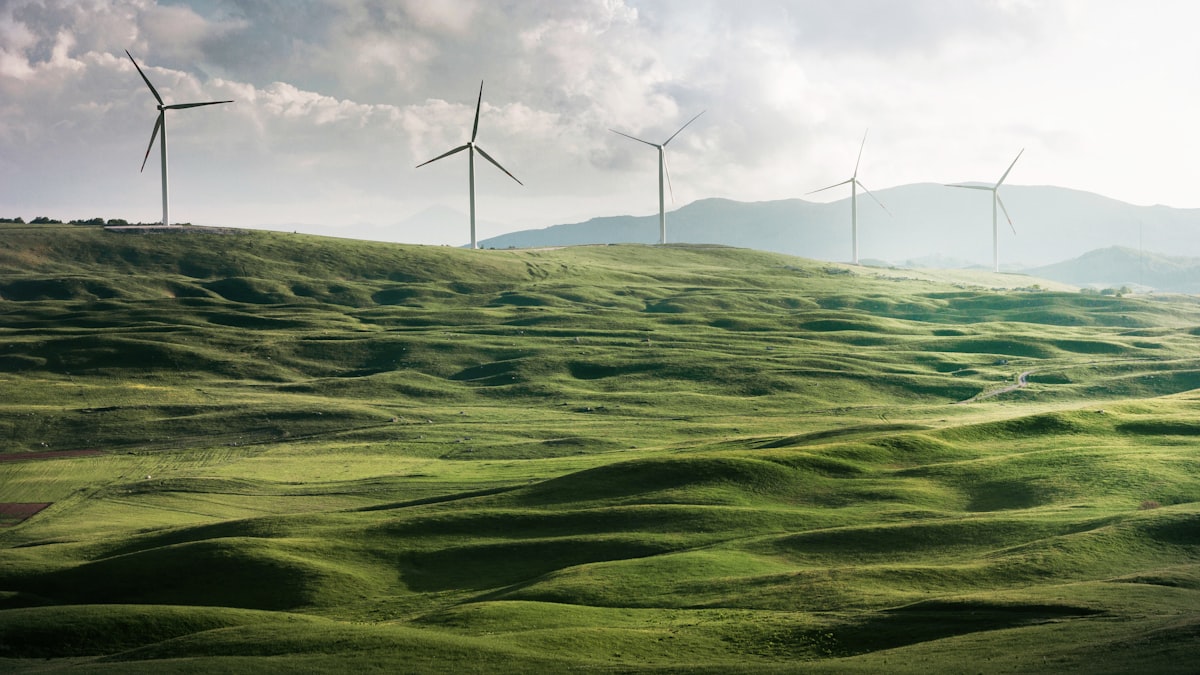
Risks and Challenges for Foreign Investors
- Renewable power availability: Green hydrogen requires 50-55 kWh of renewable electricity per kg. Securing long-term renewable power purchase agreements at competitive rates (below INR 3/kWh) is critical to cost competitiveness. Round-the-clock (RTC) renewable power supply remains a challenge.
- Water availability: Electrolysis requires approximately 9-10 litres of purified water per kg of hydrogen. Water stress in states like Rajasthan (high solar, low water) may require investment in desalination for coastal projects.
- Offtake certainty: Green hydrogen is currently 3-4x more expensive than grey hydrogen. Long-term offtake agreements with refineries, fertiliser plants, or export buyers are essential for project bankability.
- Technology localisation requirements: SIGHT incentives may include domestic value addition thresholds. Foreign manufacturers should plan for progressive localisation of membrane electrode assemblies, bipolar plates, and balance-of-plant components.
- Land acquisition timeline: Securing industrial land, especially in high-demand states, can take 3-6 months. Using state industrial development corridors or SEZs accelerates this process.
Cost Benchmarks for Green Hydrogen Projects in India
| Component | Estimated Cost |
|---|---|
| Alkaline electrolyser (1 MW) | INR 5-7 crore (USD 600K-840K) |
| PEM electrolyser (1 MW) | INR 8-12 crore (USD 960K-1.44M) |
| Renewable power (solar, per MW) | INR 3.5-5 crore capex, INR 2.5-3.5/kWh LCOE |
| Green hydrogen production cost (current) | USD 4-5/kg |
| Green hydrogen production cost (2030 target) | USD 1-1.50/kg |
| Green ammonia production (per tonne) | USD 700-900 (current), USD 350-500 (2030 target) |
Key Takeaways
- Green hydrogen manufacturing permits 100% FDI under the automatic route — no government approval needed, only post-investment RBI reporting via FC-GPR
- The SIGHT programme offers INR 4,440/kW in Year 1 for electrolyser manufacturing and INR 50/kg in Year 1 for green hydrogen production, with total outlay of INR 17,490 crore
- 25-year ISTS charge waiver for plants commissioned before 31 December 2030 substantially reduces renewable power costs
- Seven states offer supplementary incentives worth INR 5+ lakh crore — Gujarat, Rajasthan, and Andhra Pradesh are the top three destinations
- India targets 5 MTPA green hydrogen production and USD 1-1.50/kg cost by 2030, positioning it as one of the world's most cost-competitive production locations
- Foreign investors should secure renewable power agreements, offtake contracts, and state-level incentives before committing capital — project bankability depends on all three
Need help with Manufacturing Sectors? Our team handles it.
FDI AdvisoryFrequently Asked Questions
Is 100% FDI allowed in green hydrogen manufacturing in India?
Yes. Green hydrogen falls under the renewable energy sector, which permits 100% FDI under the automatic route. No prior government approval is needed — only post-investment reporting to the RBI via FC-GPR within 30 days of share allotment. The entity can be structured as a wholly owned subsidiary or a joint venture with an Indian partner.
What incentives does the SIGHT scheme offer for electrolyser manufacturing?
The SIGHT Component I offers production-linked incentives starting at INR 4,440 per kW in Year 1, declining to INR 1,480 per kW in Year 5, with an average realisable incentive of approximately INR 2,960 per kW. The programme is implemented through SECI via competitive bidding, with Tranche II allocating 1,500 MW across 11 companies including Reliance, Waaree, and John Cockerill.
What is the per-kg incentive for green hydrogen production in India?
Under SIGHT Component II, green hydrogen producers receive INR 50/kg in Year 1, INR 40/kg in Year 2, and INR 30/kg in Year 3 per project. The total outlay for production incentives is INR 13,050 crore. Eligibility requires that the hydrogen is produced using renewable energy and that electrolysers meet minimum domestic value addition norms.
Which Indian states offer the best incentives for green hydrogen projects?
Gujarat offers 80-100% SGST reimbursement under its industrial policy, with access to the Dholera Special Investment Region. Rajasthan provides land at 50% concessional rates, 100% electricity duty exemption for 10 years, and targets 2 MTPA state-level production. Andhra Pradesh offers 100% exemption on electricity duty and transmission charges with port-proximate corridors for export-focused projects.
What is India's green hydrogen production cost target for 2030?
India targets a green hydrogen production cost of USD 1-1.50 per kg by 2030, down from the current USD 4-5 per kg. This reduction is expected through a combination of SIGHT production incentives, declining solar and wind power costs (currently INR 2.5-3.5/kWh), the 25-year ISTS charge waiver, and economies of scale from the 5 MTPA national production target.
How long does it take to set up a green hydrogen manufacturing entity in India?
Entity incorporation via the SPICe+ portal takes 7-10 business days. Including FDI capital inflow, RBI reporting, GST and IEC registrations, environmental clearance, power purchase agreements, and SIGHT programme application, the total setup timeline is typically 4-8 months from initial decision to operational readiness. Using state industrial parks with pre-approved clearances can accelerate this process.
What is the ISTS charge waiver for green hydrogen projects?
Green hydrogen and green ammonia plants commissioned on or before 31 December 2030 using renewable energy receive a 25-year exemption from Inter-State Transmission System (ISTS) charges from the date of commissioning. This is a significant cost benefit — ISTS charges can represent 15-20% of the delivered cost of renewable power for hydrogen production, directly improving the levelised cost of hydrogen.