Why Punjab Matters for Foreign Manufacturers
For foreign companies evaluating Indian manufacturing locations, Punjab offers an established industrial base centred on Ludhiana (often called the Manchester of India), road and rail connectivity to the national capital region, and the Integrated Check Post at Attari — historically India's only land trade route with Pakistan, although that route has been closed to goods and passengers since April 2025.
Chief Minister Bhagwant Singh Mann launched the Industrial & Business Development Policy 2026 at Ludhiana on 7 March 2026. Its central feature is a flexible incentive framework: an investor can select up to 20 incentives and assemble a package around its own project rather than accept a fixed basket. The quantum and duration of each incentive are governed by the policy document and the Operational Guidelines 2026 issued by the Department of Industries, so treat the headline terms below as the shape of the offer rather than as a quotation for your project.
This guide examines why foreign companies—particularly those in manufacturing—should consider Punjab, how to navigate the FDI process through the state's single-window portal, and what the actual costs and timelines look like.
The Punjab Industrial & Business Development Policy 2026
Customizable Incentive Framework
Instead of prescribing a fixed incentive basket, the policy allows an investor to select up to 20 incentive options and build its own package. Incentives are available up to 100% of Fixed Capital Investment (FCI), which the state defines to include land, buildings, plant and machinery, R&D facilities and effluent treatment plant.
Key Fiscal Incentives
The major fiscal incentives available under the policy include:
- SGST Reimbursement: Up to 100% net SGST reimbursement on goods manufactured and sold within India
- Stamp Duty Exemption: Up to 100% exemption on stamp duty for land and building registration for industrial purposes
- Electricity Duty Exemption: Exemption from electricity duty for the period specified for the investor's category in the policy
- Employment Generation Subsidy: Continued subsidies tied to direct employment creation in the state
- Capital Subsidy: Available for eligible manufacturing investments in priority sectors
Extended Eligibility Period
Incentive support under the 2026 policy runs for up to 15 years, a longer runway than the state's earlier framework offered. That matters for capital-intensive manufacturing, where payback on a greenfield plant commonly runs well beyond the life of a shorter incentive window.
Thrust Sectors with Additional Incentives
The policy designates nine thrust sectors that receive a 25% additional incentive above the standard package. The sectors named in the state government's launch announcement include information technology and IT-enabled services, Global Capability Centres, electric vehicles, electronics system design and manufacturing, semiconductors, film-making and tourism. Check the policy document for the complete list before assuming a particular activity qualifies.
The same 25% additional incentive applies to industries setting up in the border districts — Pathankot, Gurdaspur, Amritsar, Ferozepur and Fazilka — and in the Kandi region.
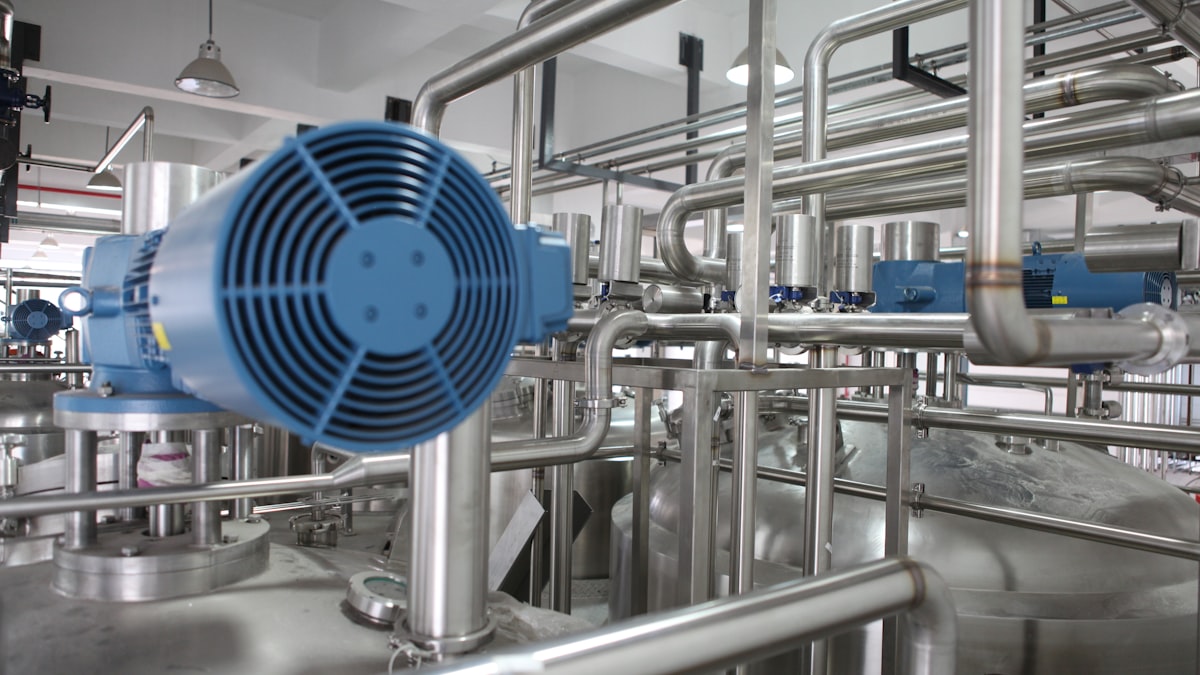
Ludhiana: India's Manufacturing Powerhouse
Industrial Scale and Legacy
Ludhiana is Punjab's largest industrial hub and India's leading manufacturing centre for several product categories. The city hosts thousands of manufacturing units ranging from small-scale to large industrial operations. Key statistics include:
- Bicycles: Industry estimates place the great majority of India's bicycle and bicycle-component output in Ludhiana. Hero Cycles, one of the world's largest bicycle manufacturers, was founded here.
- Hosiery and Textiles: Ludhiana is the largest manufacturer of hosiery goods in India, producing woollen fabrics, knitwear, and garments exported globally.
- Auto Components: A significant cluster of automobile component manufacturers supplies parts to major OEMs across India.
- Machine Tools: Industrial machinery and precision engineering form a substantial segment of Ludhiana's output.
Investment Volume
Ludhiana is consistently among the largest recipients of industrial investment in Punjab, alongside SAS Nagar (Mohali). Foreign investment into the district has come from Switzerland, the United States, Japan and Germany, among others.
Infrastructure for Manufacturing
Ludhiana offers established manufacturing infrastructure including:
- Modern highways connecting to Delhi NCR (approximately 300 km via NH-44)
- Dedicated industrial parks and focal points with ready-to-use plots
- Inland Container Depots (ICDs) and Container Freight Stations (CFSs) for export logistics
- Proximity to Chandigarh International Airport (approximately 100 km)
For foreign companies evaluating multiple Indian states, our analysis of which Indian state suits US companies and 8 Indian states competing for foreign investment provides comparative frameworks.
Other Key Industrial Hubs in Punjab
SAS Nagar (Mohali)
Mohali is emerging as Punjab's technology and pharmaceutical hub. The Mohali IT Park and proximity to Chandigarh make it attractive for foreign companies in IT/ITeS, pharmaceutical manufacturing, and R&D operations. Mohali consistently attracts the highest investment volumes in the state.
Jalandhar
Jalandhar is globally recognized for sports goods manufacturing, exporting to over 100 countries. Foreign brands seeking contract manufacturing for sports equipment will find an established supply chain and skilled labour pool here.
Amritsar
Amritsar combines textile and handicraft industries with its strategic position near the Attari border crossing. The city specializes in carpets, shawls, and artisanal textiles, making it relevant for foreign companies in the home furnishing and fashion sectors.
The Punjab Government is establishing three world-class exhibition centres at Ludhiana, New Chandigarh (Mohali), and Amritsar to boost industry visibility and facilitate foreign buyer engagement.
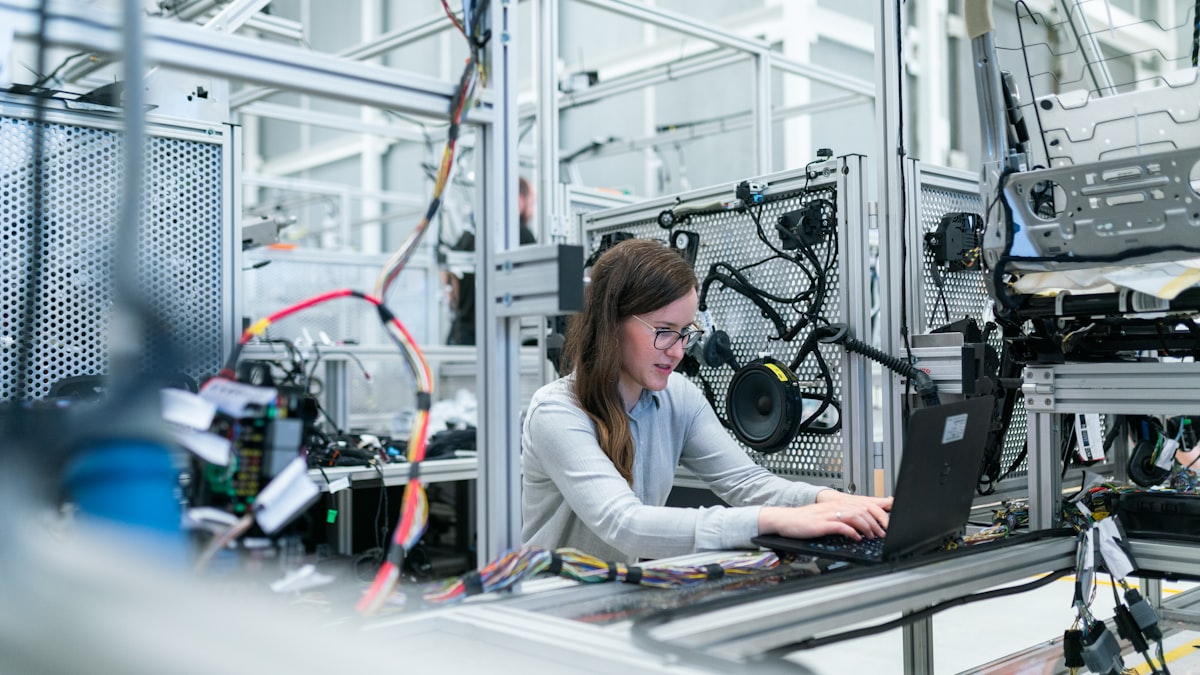
Border Trade: The Attari Advantage
India's Land Route to Pakistan, and Why It Is Shut
The Integrated Check Post (ICP) at Attari, about 28 kilometres from Amritsar, is India's first Land Port and the only permitted land route for bilateral trade with Pakistan. It is not India's only land port — Petrapole, Raxaul, Jogbani and Moreh, among others, handle trade with Bangladesh, Nepal and Myanmar — but it is the only one on the Pakistan border. In 2023-24 it handled trade of roughly Rs 3,886 crore.
Attari has been closed since 26 April 2025. A Customs instruction of that date closed the ICP to all incoming and outgoing passengers and to the movement of goods, and it had not reopened as at 2026; the government has indicated that any resumption would be considered within the same national-security framework under which the closure was ordered.
What This Means for Manufacturers
When it was open, Attari carried Indian exports of soybean products, chicken feed, vegetables, chemicals, plastic raw materials and textiles. A foreign manufacturer planning a Punjab plant today should build no part of its logistics case on that route: it is closed, no reopening date has been announced, and its status turns on the bilateral relationship rather than on trade policy. Treat Punjab's border position as optionality that may or may not return, not as live market access.
Export Infrastructure Beyond Attari
Punjab's export infrastructure extends beyond the border crossing. The state has a robust network of ICDs and CFSs in key industrial areas including Ludhiana, Mohali, Jalandhar, and Ahmadgarh. Foreign companies manufacturing in Punjab for export can leverage:
- Direct rail connectivity to major Indian ports (Mundra, JNPT)
- Air cargo facilities at Chandigarh and upcoming facilities at Ludhiana
- Dedicated freight corridors improving transit times to ports
Understanding Import Export Code (IEC) requirements is essential for any foreign company planning to export from Punjab.
Invest Punjab: Single Window Clearance System
How the Portal Works
The Invest Punjab Business First Portal is the state's integrated single-window system providing all regulatory clearances, services, and fiscal incentives from a unified digital platform. Key features include:
- Regulatory clearances and services across departments applied for and tracked in one place
- Fiscal incentive applications under the industrial policy filed through the same system
- Status tracking and departmental escalation for pending approvals
Fast Track Punjab Portal
The Fast Track Punjab portal is a recent enhancement that commits to delivering all necessary industry permissions within 45 days from the date of application. This is particularly relevant for foreign companies that need to move quickly on investment decisions.
Punjab Bureau of Investment Promotion
The Punjab Bureau of Investment Promotion (PBIP) serves as the single point of contact for foreign investors. PBIP provides:
- Pre-investment advisory and sector-specific guidance
- Land identification and allocation assistance
- Regulatory clearance facilitation across departments
- Post-investment handholding for the first 2–3 years

Step-by-Step: Setting Up a Manufacturing Unit in Punjab
Step 1: Entity Registration
Register a Private Limited Company or Wholly Owned Subsidiary through the MCA portal using the SPICe+ form. This typically takes 7–15 business days. Foreign companies must also file the FC-GPR form with the RBI within 30 days of share allotment.
Step 2: Register on Invest Punjab Portal
Create an account on the Invest Punjab Business First Portal and submit your project proposal. Include details of proposed investment, employment generation, land requirements, and sector classification.
Step 3: Land Acquisition
Punjab offers industrial land through multiple channels:
- PSIEC (Punjab Small Industries and Export Corporation): Manages focal points and industrial estates across the state
- Private industrial parks: Several developers offer ready-built factory shells and plots
- Direct purchase: With state government facilitation for larger projects
Step 4: Apply for Incentives
Submit your incentive application through the single-window portal. Under the 2026 policy, you select your preferred combination of 20 incentive options. Approval timelines are typically 30–60 days.
Step 5: Obtain Clearances
Key clearances required include:
- Factory license from the Labour Department
- Pollution Control Board consent (establishment and operation)
- Fire safety clearance
- GST Registration
- Electricity connection (industrial tariff)
- Building plan approval
Step 6: Commence Operations
Total timeline from entity registration to commencement of production is typically 6–9 months for greenfield projects and 3–4 months for brownfield (existing premises). Ensure ongoing compliance with FLA Return filing requirements and annual compliance obligations.
Comparing Punjab with Other States
Foreign manufacturers usually shortlist Punjab against Haryana, Rajasthan and Gujarat. Run that comparison against each state's current policy document rather than a published table: industrial land rates differ by estate and even by plot, and every state revises its incentive terms, so cross-state figures printed in a guide like this one go stale quickly.
What is distinctive about Punjab's 2026 offer is its structure rather than any single number — the ability to assemble up to 20 incentives into a project-specific package worth up to 100% of fixed capital investment, support running for up to 15 years, and a 25% uplift for thrust sectors and for units in the border districts and the Kandi region. For a deeper comparison, see our guide on Gujarat's industrial policy and Andhra Pradesh's sunrise sectors.

FDI Process and FEMA Compliance
Foreign companies investing in Punjab must comply with FEMA regulations and the automatic route or government approval route for FDI, depending on the sector. Most manufacturing sectors permit 100% FDI under the automatic route, meaning no prior government approval is required.
Key compliance requirements include:
- Filing FC-GPR within 30 days of share allotment to the foreign investor
- Annual FLA Return filing with the RBI by July 15 each year
- Transfer pricing documentation if the Punjab entity transacts with the foreign parent or affiliates
- Withholding on payments to the foreign parent under section 393(2) of the Income-tax Act, 2025 (Table, Sl. No. 17; section 195 of the Income-tax Act, 1961)
For a comprehensive understanding of FEMA and RBI compliance requirements, foreign manufacturers should engage specialized advisors before committing capital.
Labour and Workforce Considerations
Skilled Labour Availability
Punjab's manufacturing heritage—spanning over six decades in Ludhiana alone—has created a deep pool of skilled workers in metalworking, textiles, precision engineering, and machine operation. Unlike newer industrial states where companies must invest heavily in workforce training, Punjab offers ready access to experienced operators, tool-and-die makers, welders, and CNC machine operators. This legacy workforce is a significant but often underappreciated advantage for foreign manufacturers.
The state's Industrial Training Institute network turns out skilled tradespeople every year across the trades manufacturing needs, and engineering colleges and polytechnics in Ludhiana, Jalandhar and Mohali add technically trained graduates.
Wage Competitiveness
Punjab notifies minimum wages by skill category and revises them periodically, so build the cost model on the current notification from the Punjab Labour Department rather than on a published range. Wage levels sit broadly in line with the northern industrial states, and the higher productivity of Punjab's established clusters often offsets a differential against lower-wage states. Total employment cost also includes Provident Fund (12% employer contribution), ESI (3.25% employer contribution) and a gratuity provision.
Labour Law Compliance
Foreign manufacturers must comply with both central and state labour law. The four Labour Codes — the Code on Wages, 2019, the Industrial Relations Code, 2020, the Code on Social Security, 2020 and the Occupational Safety, Health and Working Conditions Code, 2020 — were notified into force on 21 November 2025, consolidating 29 central labour enactments, but several central and state subordinate rules were still being finalised after that date, so confirm the Punjab rules actually in force before fixing a compliance calendar. In practice a manufacturing unit registers its factory under the occupational safety regime, registers with ESIC and the EPFO, and follows the industrial relations regime for notice, retrenchment and layoff.

Progressive Punjab Investors' Summit
The Punjab Government hosts the Progressive Punjab Investors' Summit to attract domestic and international investment. The summit is a practical opportunity for foreign companies to engage directly with state officials, identify sites and negotiate a project-specific incentive package under the customisable framework.
Foreign companies considering Punjab should time their entry to coincide with or follow the summit, as this is when the state government is most responsive to fast-tracking clearances and customizing incentive packages for anchor investors.
Tax Considerations for Foreign Manufacturers in Punjab
Corporate Tax Structure
Foreign-owned manufacturing companies in Punjab are subject to the standard Indian corporate tax framework. The concessional 15% corporate tax rate (effective rate approximately 17.16% including surcharge and cess) under section 201 (Table, Sl. No. 1) of the Income-tax Act, 2025 read with section 205(2) (section 115BAB of the Income-tax Act, 1961) was open only to new manufacturing companies incorporated on or after 1 October 2019 that commenced production on or before 31 March 2024. That window has closed, so a company incorporating in Punjab today cannot elect into it. Companies not eligible for this concessional rate are taxed at 22% (effective rate approximately 25.17%) under the standard new regime, or 30% under the old regime with deductions.
GST and Input Tax Credit
Manufacturing operations attract GST at rates ranging from 5% to 28% depending on the product category. The SGST component (typically half of the total GST rate) is what Punjab reimburses under its industrial policy. For example, if a product attracts 18% GST (9% CGST + 9% SGST), the state reimburses up to 100% of the 9% SGST paid. This effectively reduces the manufacturer's tax burden by up to 9 percentage points on goods sold domestically. Input tax credit on raw materials and capital goods purchased for manufacturing is available in full, ensuring no tax cascading.
Transfer Pricing Obligations
Foreign-owned subsidiaries manufacturing in Punjab will inevitably engage in related-party transactions with their parent companies—whether for raw material supply, technology licensing, management services, or product sales. All such transactions must comply with India's transfer pricing regulations and be documented in the annual transfer pricing report. The arm's length principle applies, and the Indian entity must maintain contemporaneous documentation. Failure to comply can result in significant adjustments and penalties during tax assessments.
Key Takeaways
- Punjab's 2026 policy offers customisable incentives worth up to 100% of fixed capital investment across up to 20 incentive options, with support running for up to 15 years.
- Ludhiana is an established manufacturing hub with deep supply chains in textiles, bicycles, auto components and machine tools, and has attracted investment from the US, Japan, Germany and Switzerland.
- The Invest Punjab single-window portal consolidates departmental clearances and incentive applications, with a Fast Track commitment of 45 days for industry permissions.
- Nine thrust sectors receive an additional 25% incentive — those named at launch include IT/ITeS, Global Capability Centres, EVs, electronics system design and manufacturing and semiconductors.
- Border districts and the Kandi region receive the same 25% uplift, but the Attari land port has been closed to trade since April 2025 and should not be counted on in a logistics plan.
Need help with State Industrial Policy? Our team handles it.
FDI AdvisoryFrequently Asked Questions
What incentives does Punjab offer foreign manufacturing companies?
Punjab's Industrial & Business Development Policy 2026, launched on 7 March 2026, lets an investor select up to 20 incentives and build a package worth up to 100% of Fixed Capital Investment. The menu includes net SGST reimbursement, stamp duty exemption, electricity duty exemption, employment generation subsidy and capital subsidy. Nine thrust sectors, and units in the border districts and the Kandi region, receive a 25% additional incentive.
How long does it take to set up a factory in Punjab?
A greenfield manufacturing project in Punjab typically takes 6-9 months from entity registration to commencement of production. Brownfield projects using existing premises can be operational in 3-4 months. The Fast Track Punjab portal commits to delivering all necessary permissions within 45 days.
Is 100% FDI allowed in Punjab manufacturing?
Yes, most manufacturing sectors in India permit 100% FDI under the automatic route, meaning no prior government approval is required, and this applies uniformly across all Indian states including Punjab. Defence manufacturing permits 74% under the automatic route and up to 100% under the government approval route where the investment is likely to result in access to modern technology; a few other sectors carry their own conditions.
What makes Ludhiana attractive for foreign manufacturers?
Ludhiana is India's leading manufacturing centre for bicycles and bicycle components, hosiery goods and a large auto-component cluster. It offers established supply chains, highway connectivity to Delhi NCR, inland container depots for export logistics, and a skilled labour pool built over decades of industrial activity.
Can foreign companies access land in Punjab's industrial areas?
Yes. Industrial land in Punjab is available through PSIEC (Punjab Small Industries and Export Corporation) focal points, private industrial parks, and direct purchase with state government facilitation. Rates vary widely by estate and location, so ask PSIEC or the Punjab Bureau of Investment Promotion for current allotment rates rather than working from a published range. The Invest Punjab portal assists with land identification and allocation.
What is the Attari border trade port and can manufacturers use it?
The Integrated Check Post at Attari, 28 km from Amritsar, is India's only land trade route with Pakistan; India has other land ports on its Bangladesh, Nepal and Myanmar borders. It handled trade of roughly Rs 3,886 crore in 2023-24, but it has been closed to all goods and passenger movement since 26 April 2025 and had not reopened as at 2026, so manufacturers should not build a logistics plan around it.