Understanding India's Trade Deficit: The 2025-26 Picture
India's merchandise trade deficit reached US$310.60 billion during April-February 2025-26, up from US$261.80 billion in the corresponding period of FY25.
Yet this headline number obscures a more nuanced reality. India's services trade surplus offsets a large part of the goods gap, which is why the overall current account deficit stays far smaller than the merchandise figure alone suggests. Take the current services surplus and current account position from the RBI's latest quarterly balance-of-payments release rather than inferring either from the goods number. For foreign manufacturers evaluating India as a production base, the trade deficit is not a warning sign — it is a signal of massive domestic demand and an invitation to build export-oriented capacity.
Why the Trade Deficit Matters for Foreign Manufacturers
The composition of India's imports reveals precisely where foreign manufacturers can create value. India imports heavily in categories where it lacks domestic production capacity — and these are the same categories where the government is actively courting foreign direct investment through production incentives.
Top Import Categories Creating Manufacturing Opportunities
| Import Category | Nature of the domestic gap | PLI Scheme Available |
|---|---|---|
| Petroleum & crude oil | Domestic crude production covers only a fraction of refining demand | No (but refinery FDI open) |
| Electronics & components | Final assembly has localised far faster than the component layer — displays, batteries and semiconductors are still largely imported | Yes — IT Hardware, Electronics |
| Gold & precious metals | Almost entirely imported; demand is investment and jewellery-led rather than industrial | No |
| Machinery & equipment | Capital goods for process industries and high-precision tooling are largely imported | Yes — Capital Goods |
| Chemicals & plastics | Petrochemical feedstock and specialty grades are imported; commodity grades are made locally | Yes — Specialty Chemicals |
| Pharma intermediates (APIs) | Key starting materials and fermentation-based APIs remain concentrated in China | Yes — Bulk Drugs |
The import values and dependence percentages that usually accompany a table like this are not reproduced here: the widely circulated versions are unsourced. For a board paper, take category-level import values from the Department of Commerce trade statistics for the specific HS chapters you care about.
For a foreign manufacturer in any of these sectors, the logic is clear: set up production in India, serve the massive domestic market, and simultaneously access export incentives to ship globally from India.

High-Growth Export Sectors: Where the Opportunities Are
India's total merchandise and service exports reached US$790.86 billion during April-February 2025-26, growing 5.79% year-on-year. But certain sectors are growing far faster than the average, presenting strategic opportunities for foreign manufacturers considering setting up an Indian subsidiary.
Electronics: The Breakout Sector
Electronics has emerged as India's fastest-growing export category, rising from the 7th-largest export category in FY22 to the 3rd-largest in FY25. Electronics exports surged 40.63% in April-August 2025 compared to the prior period. India's electronics exports crossed INR 4.15 lakh crore (approximately US$47 billion) in 2025, with nearly two-thirds coming from smartphone shipments under the PLI scheme.
Apple's iPhone production in India exemplifies the opportunity: exports to the US rose 76% year-on-year in April 2025. Foxconn is investing US$1.5 billion in a new display module plant near Chennai. For foreign electronics manufacturers, India offers a combination of PLI incentives (up to 6% of incremental sales), lower labour costs, and preferential market access through FTAs.
Pharmaceuticals: From API Importer to Exporter
India's pharmaceutical sector has undergone a structural shift. Under the PLI scheme, pharma sales crossed INR 2.66 lakh crore, including exports worth INR 1.70 lakh crore. India transitioned from a net importer of bulk drugs (INR 1,930 crore deficit in FY22) to a net exporter (INR 2,280 crore surplus in FY25). Foreign pharma companies can leverage India's 68% API import dependence on China as both a domestic market opportunity and an export manufacturing base.
Gems and Jewellery
Gems and jewellery gross exports were US$25.73 billion in FY25, close to 6% of India's merchandise exports. Exports registered 27.8% growth in November 2025. Demand is concentrated in the United States, UAE, Hong Kong, and Europe. Foreign companies with cutting, polishing, or design capabilities can tap India's skilled workforce and established trade networks.
Engineering Goods and Auto Components
India's auto components sector is benefiting from the PLI scheme, with budget allocations jumping from INR 346.87 crore to INR 2,818.85 crore. German, Japanese, and Korean auto parts manufacturers are expanding Indian operations to serve both domestic OEMs and global supply chains.
Agriculture and Food Processing
India's farm and processed-food exports are among its larger merchandise categories and have been growing; the market-size and growth projections that circulate for organic spices and processed foods are consultancy estimates rather than official data, so source any figure you plan to put in an investment case from APEDA or the Department of Commerce directly. Foreign food processing companies can access raw materials at competitive prices and leverage India's FTAs for preferential market access.
Government Incentives for Export-Oriented Manufacturing
India's government has deployed a comprehensive incentive architecture to attract foreign manufacturers focused on exports. Understanding these incentives is critical for FDI planning.
Production Linked Incentive (PLI) Scheme
As of September 2025, the PLI scheme has attracted actual investments of INR 1.82 lakh crore across 14 sectors, generating incremental production of over INR 18.7 lakh crore and creating 12.6 lakh jobs. Incentive rates are set sector by sector and run from about 4% to 20% of incremental sales over a base year, typically over five years — the 4-6% band applies to the large-volume electronics schemes, not across the board.
| Sector | PLI Budget (FY26) | Incentive Rate | Duration |
|---|---|---|---|
| Electronics & IT Hardware | INR 9,000 crore | 4-6% | 5 years |
| Automobiles & Auto Components | INR 2,818.85 crore | Up to 18% | 5 years |
| Textiles | INR 1,148 crore | Up to 15% | 5 years |
| Pharmaceuticals (Bulk Drugs) | INR 6,940 crore | Up to 20% | 6 years |
| Specialty Steel | INR 6,322 crore | Up to 12% | 5 years |
Special Economic Zones (SEZs)
India operates several hundred formally notified SEZs. The 15-year graded income-tax holiday that SEZs are famous for — 100% of export profits for five years, 50% for the next five, and 50% of ploughed-back profits for five more — is closed to new units. It ran under section 10AA of the Income-tax Act, 1961, whose sunset for units commencing manufacture passed on 30 June 2020; section 144 of the Income-tax Act, 2025 is only a grandfathering shell for units already inside it, and the Finance Act, 2026 removed the cross-references to section 144 from sections 164, 165 and 270. What an SEZ still offers a new investor is the customs and procedural package: duty-free import of capital goods and raw materials, duty-free domestic procurement, single-window clearance and a self-contained compliance regime — subject to the net foreign exchange earning obligation.
RoDTEP Scheme
The Remission of Duties and Taxes on Exported Products (RoDTEP) scheme reimburses embedded duties and taxes that are not refunded through other mechanisms. The government has disbursed INR 58,000 crore under RoDTEP through March 2025, directly improving export competitiveness.
Free Trade Agreements
India now has nine FTAs spanning 38 countries. The India-EFTA Trade and Economic Partnership Agreement (TEPA), effective October 2025, covers 92.2% of tariff lines and carries an EFTA-side investment promotion target of US$100 billion over 15 years (a target in the investment promotion chapter, not an investment protection guarantee). The India-UAE CEPA has driven bilateral trade past US$100 billion in FY25, with non-oil exports growing sharply. India has since concluded further agreements with the UK, the EU and Oman — but conclusion of negotiations is not entry into force, and tariff schedules only bind once each agreement is signed, ratified and notified. Negotiations on the India-EU agreement concluded on 27 January 2026 (European Commission); confirm the commencement date of any agreement before pricing a preferential rate into an export model.
Setting Up an Export-Oriented Manufacturing Unit in India
Foreign manufacturers looking to establish export-oriented operations in India have several structural options, each with distinct regulatory and tax implications.
Entity Structure Options
The most common structure for export-oriented manufacturing is a wholly-owned subsidiary (WOS) registered as a private limited company. This provides 100% ownership control, independent legal personality, and access to all government incentives. For manufacturers wanting to test the market before full commitment, a branch office can handle export-related activities, though it cannot engage in domestic manufacturing directly.
FDI Route and Compliance
Manufacturing FDI is permitted under the automatic route in most sectors, requiring no prior government approval. Key compliance steps include:
- Incorporate the Indian entity and obtain a CIN
- File FC-GPR within 30 days of share allotment
- Obtain an Import Export Code (IEC) from DGFT
- Register for GST in the relevant state
- Apply for PLI scheme registration (sector-specific deadlines)
- File the FLA Return annually with RBI
Location Selection
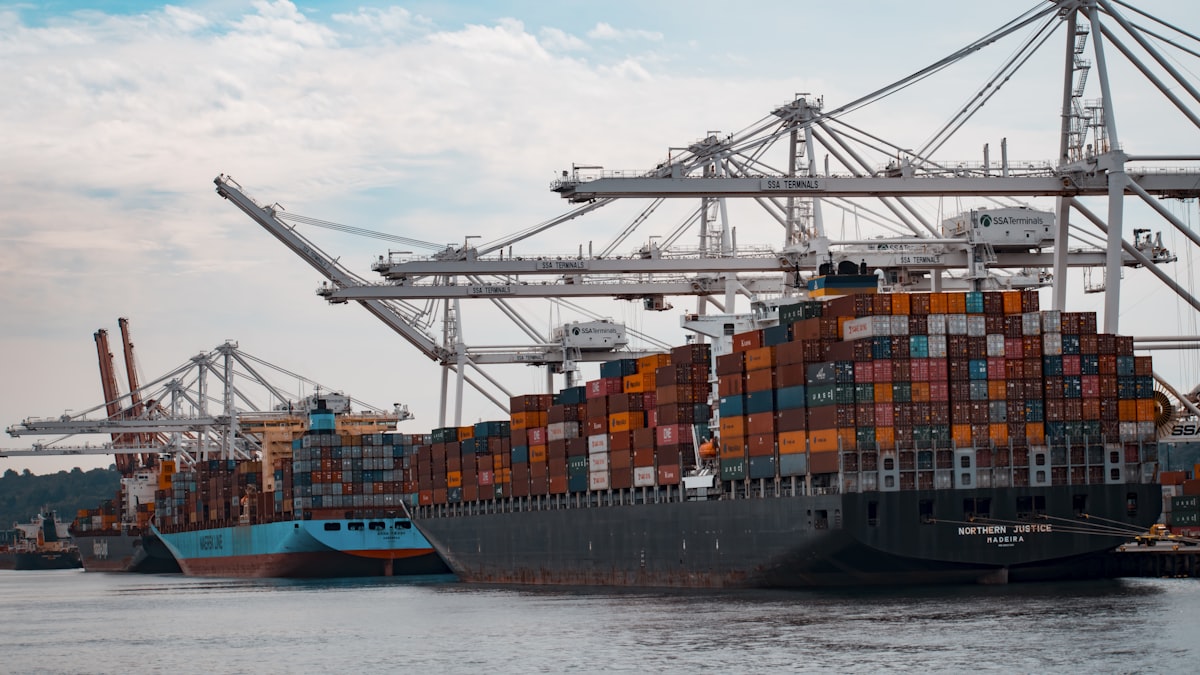
India's manufacturing landscape varies dramatically by state. Key considerations include proximity to ports (Mumbai, Chennai, and Gujarat for western exports; Kolkata and Visakhapatnam for eastern markets), availability of skilled labour, state-level incentives, and industrial infrastructure. States like Tamil Nadu, Gujarat, Maharashtra, and Karnataka offer additional state-level incentives on top of central government schemes.
Addressing the Trade Deficit: India's Import Substitution Opportunity
India's trade deficit is concentrated in specific product categories where the government is actively seeking to reduce import dependence. Foreign manufacturers who set up production in India for these categories gain dual advantages: access to a protected domestic market and export incentives.
China+1 Advantage
The China+1 strategy is accelerating India's manufacturing potential. India's manufacturing wage costs remain materially below China's, though the gap narrows sharply for scarce engineering skills; the per-hour ranges quoted in China+1 marketing material are unsourced, so benchmark against live quotations for your own state, skill band and shift pattern. Apple, HP, Dell, and numerous other multinationals have relocated or diversified manufacturing to India. The PLI scheme has specifically targeted sectors where India is import-dependent on China — electronics, APIs, solar modules, and specialty chemicals.
Semiconductor Opportunity
Four semiconductor plants are entering commercial production in India in 2026, marking a transformational shift. The Micron assembly and test facility at Sanand in Gujarat is the most advanced of them; its headline project cost is shared between Micron and central and state incentives, so quote the split rather than a single number. Foreign semiconductor equipment and materials manufacturers have a first-mover opportunity to establish supply chain presence.

Practical Cost Analysis: Manufacturing for Export from India
The cost comparison that matters for a mid-sized electronics or auto components manufacturer. Labour and land are shown as items to quote rather than as numbers, because no reliable published series compares the two countries on a like-for-like basis:
| Cost Component | India | China | Advantage |
|---|---|---|---|
| Average hourly labour | Quote for your state, skill band and shift pattern | Quote for the comparator province | India: materially lower, narrowing for scarce skills |
| Industrial land (per sq ft/year) | Quote from the state industrial development corporation for the specific park | Quote for the comparator zone | India: materially lower, and state incentives can cut it further |
| Corporate tax (company incorporated today) | 25.17% — section 200 of the Income-tax Act, 2025 (section 115BAA of the 1961 Act): 22% plus 10% surcharge and 4% cess | 25% | Broadly level |
| PLI incentive (net effect) | 4-6% of sales | Nil for foreign firms | India: direct subsidy |
| SEZ benefit available to a new unit | Customs duty exemption on capital goods and inputs; the income-tax holiday is closed to new units | Limited | India (customs, not tax) |
| Logistics (port access) | Variable | Superior infrastructure | China (for now) |
One widely repeated figure needs correcting before it goes into a model. The 15% concessional manufacturing rate — now section 201 (Table, Sl. No. 1) of the Income-tax Act, 2025, formerly section 115BAB of the 1961 Act — carried an effective rate of 17.16% with surcharge and cess, but condition (c) of that entry requires the company to have commenced manufacturing on or before 31 March 2024, and the Finance Act, 2026 did not reopen the window. A company incorporated today therefore pays 25.17% under section 200 of the Income-tax Act, 2025 (section 115BAA of the 1961 Act). India's cost advantage over China is real, but on the headline corporate tax rate the two are now close; the advantage comes from labour, land and the PLI subsidy, not from the tax rate.
Textiles and Apparel: India's Sleeping Giant
India's textile and apparel sector is one of the largest single sources of industrial employment in the country, and a significant share of manufacturing output. The PLI scheme for textiles — with a budget of INR 1,148 crore in FY26 — specifically targets man-made fibre (MMF) and technical textiles, where India has historically lagged behind China and Vietnam.
Foreign textile manufacturers can capitalise on India's raw material advantages: the country is the world's second-largest producer of cotton and silk, and has a well-established spinning and weaving ecosystem. The India-Australia ECTA and India-UAE CEPA have opened preferential market access for Indian textiles, while the India-EU agreement whose negotiations concluded on 27 January 2026 is expected to help once it is signed, ratified and in force. Until then Indian apparel enters the EU at the MFN rate — India lost GSP preference on textiles years ago — so check the current TARIC line for the specific garment rather than assuming a preferential rate.
The Mega Integrated Textile Region (MITRA) scheme offers plug-and-play infrastructure in seven locations, with world-class facilities including common processing houses, design centres, and testing laboratories. Foreign companies entering these textile parks benefit from reduced setup timelines and shared infrastructure costs.
Petroleum Refining and Petrochemicals
While India imports the overwhelming majority of its crude oil requirements, the country has built one of the world's most sophisticated refining capacities. India is among the largest refiners in the world, with installed capacity above 250 MMTPA. Refined petroleum products consistently rank as India's largest export category by value.
For foreign companies in the petrochemical value chain, India offers significant opportunities in downstream processing — specialty chemicals, polymers, and performance materials, where a substantial share of demand is still met by imports. The market-size and growth projections quoted for Indian specialty chemicals are consultancy estimates rather than official data; the durable point is that China+1 sourcing by global pharmaceutical and agricultural chemical companies.
Defence and Aerospace Manufacturing
India has opened defence manufacturing to 74% FDI under the automatic route and 100% through the government approval route. The country's defence import bill exceeds US$15 billion annually, and the government has mandated increasing domestic procurement percentages. Foreign defence manufacturers establishing Indian production lines can access both the domestic defence market and export to countries in South Asia, Africa, and Southeast Asia where Indian defence equipment has growing demand.
Key Risks and Mitigation Strategies
While the export opportunity is substantial, foreign manufacturers must account for several risks:
Regulatory Complexity
India's regulatory environment involves multiple central and state-level approvals. Manufacturers need FEMA and RBI compliance, sector-specific licences (BIS certification, FSSAI for food, CDSCO for pharma), and ongoing annual filings. Engaging experienced advisors from the outset is essential.
Infrastructure Gaps
While India has invested heavily in logistics infrastructure — including the dedicated freight corridors, Sagarmala port development, and industrial corridor programmes — logistics costs are often quoted at 13-14% of GDP against 8-10% in China, though NCAER's measured estimate for India is materially lower — treat the headline figure as contested and cost your own lane. Choosing the right location near ports and within established industrial clusters mitigates this risk.
Supply Chain Depth
India's component ecosystem is less mature than China's in several sectors. Manufacturers should plan for higher initial import content and work toward localisation over time, potentially qualifying for additional PLI incentives as local sourcing increases.
Currency Risk
The Indian rupee has historically depreciated against the US dollar over long periods, which can benefit exporters by making Indian goods more competitive in dollar terms. However, sudden depreciations add complexity to financial planning and capital budgeting. FEMA regulations govern hedging options available to foreign-owned entities, including forward contracts through authorised dealer banks and options on recognised exchanges. Foreign manufacturers should build an explicit rupee depreciation assumption into their export pricing models, taken from the forward curve their AD bank quotes rather than from a rule-of-thumb long-run average, stress it for a step move, and establish hedging policies from inception.
Labour Compliance
India's labour laws are complex, with overlapping central and state regulations covering wages, social security, industrial relations, and occupational safety. The four Labour Codes — on wages, industrial relations, social security, and occupational safety and health — were enacted in 2019 and 2020, but they operate through commencement notifications and through rules that each state must frame under them, so what actually applies to a given factory depends on both the central commencement position and the state's own rules. Verify the current position for the specific state before designing payroll, and do not assume the pre-Code central and state Acts have stopped applying. Foreign manufacturers should budget for Provident Fund contributions (12% of basic salary by employer), employer ESI contributions (3.25% of wages, for employees earning up to INR 21,000 a month), and gratuity obligations (15 days salary per year of service for employees with 5+ years tenure). On the statutory rates alone — 12% provident fund, 3.25% employer ESI where applicable and gratuity accruing at 15 days' wages a year — these add roughly 20% to base wages before administrative charges, bonus and leave encashment, and remain below comparable social security costs in China.
Power and Water Reliability
Industrial power supply has improved significantly, with India adding 72 GW of renewable energy capacity in the past five years. However, power quality and reliability vary by state and industrial zone. Manufacturers should evaluate state-level industrial power tariffs — these are set by each state electricity regulatory commission and published in its current tariff order, which is the figure to use rather than any national range — along with the availability of open access procurement from renewable sources, which is normally cheaper than the grid tariff but subject to state-level charges, and backup power infrastructure requirements. Established industrial parks and SEZs generally supply through dedicated feeders and captive generation; ask the developer for its own measured availability record.

Key Takeaways
- India's merchandise trade deficit of US$310.60 billion over April-February of FY 2025-26 signals massive domestic demand and import substitution opportunities for foreign manufacturers
- Electronics, pharmaceuticals, auto components, and specialty chemicals offer the highest-growth export opportunities, supported by sector-specific PLI incentives worth 4-20% of incremental sales
- Do not model a 17.16% tax rate or an SEZ tax holiday: both regimes are closed to new entrants. A company incorporated today pays 25.17% under section 200 of the Income-tax Act, 2025, and the SEZ case is now a customs and infrastructure case. The cost advantage over China is in labour, land and the PLI subsidy
- India's nine FTAs in force, spanning 38 countries — including the EFTA TEPA, whose investment chapter sets a promotion target and confers no investment protection — provide preferential market access for exports manufactured in India; the India-EU agreement is concluded but not yet in force and confers nothing until it is
- Foreign manufacturers should target locations near major ports (Chennai, Mumbai, Gujarat), leverage SEZ infrastructure, and plan for gradual supply chain localisation
Need help with Economic Intelligence? Our team handles it.
India Entry StrategyFrequently Asked Questions
What is India's current trade deficit and why is it growing?
India's merchandise trade deficit reached US$310.60 billion during April-February 2025-26, up from US$261.80 billion in the same period of FY25. The growth is driven primarily by surging imports of gold, electronics, and crude oil, combined with moderate export growth and pressure from US tariffs on Indian goods.
Which sectors offer the best export opportunities for foreign manufacturers in India?
Electronics (40.63% export growth in 2025), pharmaceuticals (net exporter status achieved under PLI), auto components (PLI budget increased 8x), gems and jewellery (27.8% growth in November 2025), and food processing offer the strongest export opportunities.
What tax incentives does India offer for export-oriented manufacturing?
The main live incentive is the PLI scheme — 4% to 20% of incremental sales depending on the sector, across 14 sectors — together with duty-free import of capital goods and raw materials into an SEZ or under the EPCG scheme, and state-level capital and power subsidies. Two incentives that are still widely quoted are no longer available to a new entrant: the 15% concessional manufacturing rate (an effective 17.16%) closed to companies that had not commenced production by 31 March 2024, and the SEZ income-tax holiday is closed to units that had not begun manufacturing under section 10AA of the 1961 Act. A company incorporated today pays 25.17% under section 200 of the Income-tax Act, 2025.
How does the PLI scheme work for foreign manufacturers?
The PLI scheme provides incentives of 4-6% (up to 20% in some sectors) on incremental sales above a base year threshold. As of September 2025, actual investments of INR 1.82 lakh crore have been realized across 14 sectors. Foreign manufacturers must establish an Indian entity and meet minimum investment and production thresholds to qualify.
Can a 100% foreign-owned company manufacture and export from India?
Yes. Manufacturing FDI is permitted under the automatic route in most sectors, allowing 100% foreign ownership without prior government approval. The entity must be registered as a private limited company, file FC-GPR within 30 days of investment, obtain an IEC from DGFT, and register for GST.
How do India's free trade agreements benefit exporters?
India has nine FTAs spanning 38 countries. The India-EFTA TEPA (effective October 2025) covers 92.2% of EFTA tariff lines and carries a US$100 billion EFTA investment promotion target over 15 years. The India-UAE CEPA drove bilateral trade past US$100 billion. Further agreements with the UK, the EU and Oman have been concluded, but conclusion is not entry into force — confirm each agreement has commenced before pricing a preferential rate into an export model.
What are the main risks of setting up export manufacturing in India?
Key risks include regulatory complexity (multiple central and state approvals), logistics costs (frequently quoted at 13-14% of GDP against 8-10% in China, though that headline is contested), less mature component supply chains in certain sectors, and currency fluctuation. These can be mitigated by choosing established industrial clusters near major ports and engaging experienced compliance advisors.