Understanding India's Economic Geography
India is not a single market — it is 28 state economies, each with its own GDP trajectory, regulatory environment, infrastructure quality, and talent pool. The difference between India's richest and poorest states is not marginal — per capita income in Karnataka (INR 1.86 lakh) is nearly six times that of Bihar (INR 32,164). For a foreign company choosing where to establish operations, this gap translates into fundamentally different cost structures, talent availability, consumer markets, and regulatory experiences.
The top five states — Maharashtra, Tamil Nadu, Uttar Pradesh, Karnataka, and Gujarat — together account for 47.71% of India's total GDP. Southern and western India collectively contribute approximately 31% through five states alone, while the entire northeast region (eight states) accounts for just 3%.
This guide maps India's regional economic landscape through the lens of a foreign investor: where the GDP is concentrated, which states are growing fastest, where the business environment is most welcoming, and which emerging states offer first-mover advantages for companies willing to invest ahead of the curve.
Tier 1: India's Economic Powerhouses
These five states form the core of India's economic engine. They have the most developed infrastructure, deepest talent pools, and most mature business ecosystems. The overwhelming majority of foreign direct investment flows into these states.
Maharashtra: India's Financial and Industrial Capital
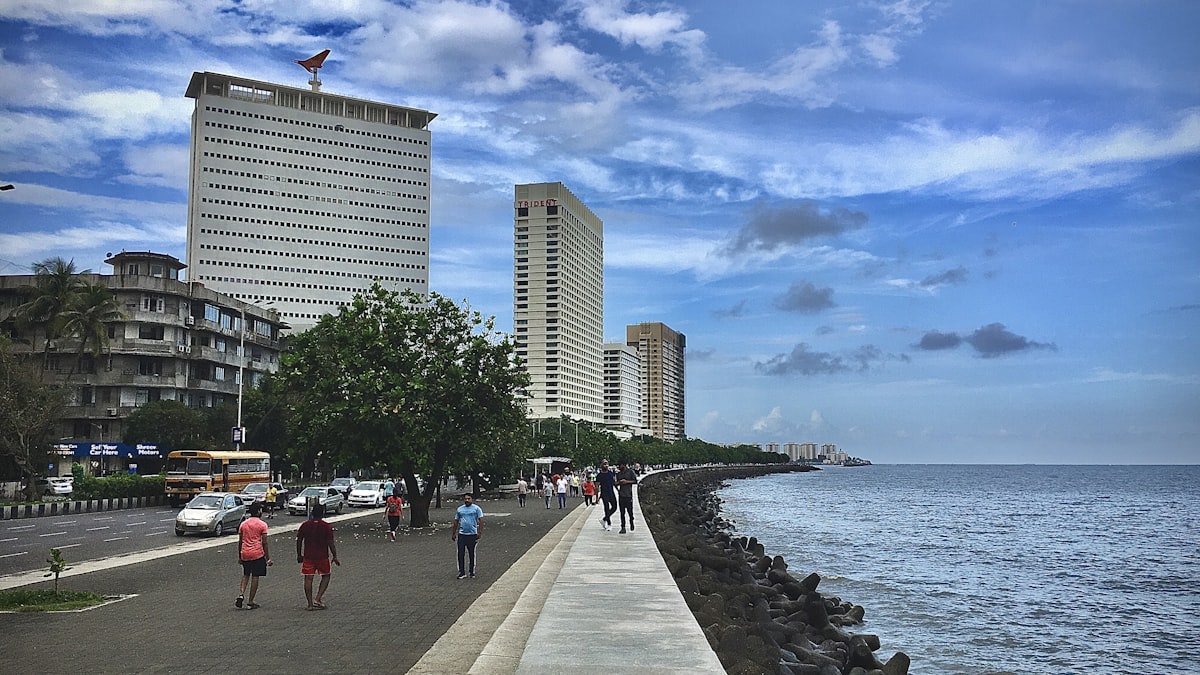
Maharashtra holds the top position with a GSDP of approximately INR 49.39 lakh crore, contributing 13.46% of India's national GDP. The state grew at approximately 9% in FY 2024-25. Mumbai — India's financial capital — is home to the Bombay Stock Exchange, RBI headquarters, and the country's largest concentration of banking, insurance, and financial services companies.
For foreign companies, Maharashtra offers unmatched access to capital markets, a deep financial talent pool, and India's busiest port complex (JNPT and Mumbai Port). However, real estate costs are the highest in India — commercial rents in Mumbai's BKC corridor reach INR 250-350 per sq ft per month. Companies seeking cost efficiency increasingly locate back-office functions in Pune (INR 65/sq ft) while maintaining a Mumbai headquarters for client-facing roles.
Tamil Nadu: Manufacturing and IT Convergence
Tamil Nadu is India's second-largest state economy with a GSDP share of 8.93%. It recorded the highest GSDP growth rate among large states at 11.19% at constant 2011-12 prices. Chennai is India's automotive manufacturing hub — the "Detroit of India" — hosting Hyundai, Ford, BMW, Daimler, and over 800 auto component manufacturers.
The state's IT corridor along the Old Mahabalipuram Road (OMR) in Chennai hosts major GCCs including Cognizant, Infosys, and TCS. For foreign manufacturers, Tamil Nadu's combination of port access (Chennai and Ennore ports), skilled labour, and established automotive supply chains makes it the default choice for production-oriented investments. The state government offers single-window clearance through the Tamil Nadu Industrial Guidance Bureau.
Uttar Pradesh: Scale and Ambition
Uttar Pradesh contributes 8.77% of national GDP, growing at 8.51%. With a population of 240 million — larger than Brazil — it represents India's largest consumer market in a single state. Cumulative FDI inflow stood at INR 17,003 crore (USD 2.15 billion) between April 2019 and June 2025.
The state is aggressively positioning itself for investment: the Jewar International Airport near Noida (expected completion 2027), the proposed data centre capacity of 644 MW with investments worth INR 21,343 crore, and the UP Defence Industrial Corridor are all designed to attract manufacturing and technology investment. For foreign companies, the Delhi-NCR suburbs of Noida and Greater Noida offer a cost-effective alternative to Delhi with commercial rents 40-50% lower.
Karnataka: India's Technology Capital
Karnataka contributes 8.49% of national GDP, anchored by Bengaluru — India's technology capital and the city with the highest office space absorption in the country (20.2 million sq ft in 2025). The state hosts the highest concentration of GCCs in India, with over 500 centres, and is home to India's largest startup ecosystem.
For technology companies establishing a wholly owned subsidiary, Bengaluru is the default choice. The talent pool is unmatched for software engineering, AI/ML, and product development. However, traffic congestion, infrastructure strain, and rising rents (up 15.8% year-on-year to INR 95/sq ft) are pushing some companies to evaluate Pune and Hyderabad as alternatives.
Gujarat: Manufacturing and Port Infrastructure
Gujarat contributes 8.05% of national GDP and has consistently been one of India's most industrialised states. The state hosts India's largest port complex at Mundra, GIFT City — India's first operational International Financial Services Centre — and a well-developed petrochemical and pharmaceutical manufacturing base.
GIFT City offers a distinctive advantage for foreign financial services companies: a 20-year tax holiday, exemption from GST, simplified FEMA compliance, and the ability to transact in foreign currency. For companies in banking, insurance, fund management, or fintech, GIFT City merits serious evaluation as an entry point, particularly after the Union Budget 2026-27 extended the tax holiday provisions.

Tier 2: High-Growth Challengers
These states are growing faster than the national average and actively competing for foreign investment through policy incentives, infrastructure development, and regulatory reforms.
Telangana and Hyderabad
Telangana has emerged as India's fastest-growing destination for GCCs, with Hyderabad hosting 355+ centres — more new GCC setups than any other Indian city in recent years. The state's T-AIM (Telangana AI Mission) and proactive IT policy have attracted companies including Google, Amazon, Apple, and Microsoft to establish large campuses.
Office rents at INR 72/sq ft represent roughly half of Mumbai's rates and two-thirds of Bengaluru's. The state topped the DPIIT ease of doing business rankings alongside Andhra Pradesh, reflecting genuine administrative efficiency.
Rajasthan
India's largest state by area, Rajasthan has made significant strides in easing regulations and supporting MSMEs. The state has a strong solar energy infrastructure — it receives the most solar radiation of any Indian state — and is positioning itself as a hub for renewable energy manufacturing and data centres. Jaipur's proximity to Delhi-NCR (280 km, 4 hours) makes it a viable location for cost-conscious operations that need capital access.
Madhya Pradesh
Madhya Pradesh ranked among the top five states during 2012-24 for GSDP growth at current prices. The state's central location gives it logistical advantages for distribution-focused businesses. Key investment areas include food processing (the state is India's second-largest producer of soybeans), pharmaceuticals, and textiles. Indore has emerged as a commercial hub with improving air connectivity and SEZ infrastructure.
Tier 3: Emerging Opportunity States
These states have lower per capita incomes but are posting high growth rates, creating first-mover opportunities for companies willing to build ahead of mass-market demand.
Bihar: High Growth from a Low Base
Bihar recorded an estimated 22% GDP growth rate for FY 2026-27, the highest of any Indian state, albeit from a low base. Per capita income remains the lowest nationally at INR 32,164 — roughly one-sixth of Karnataka's level. However, the state's population of 130 million, improving road infrastructure (particularly the Patna-Gaya-Darbhanga highway network), and rising consumer aspirations make it relevant for FMCG, education technology, and financial services distribution.
For foreign companies, Bihar is not yet suitable for manufacturing or technology operations due to infrastructure constraints, but it represents one of India's largest untapped consumer markets. Companies like Tata Motors, Flipkart, and Reliance Retail have increased their Bihar distribution networks significantly since 2023.
Odisha and Jharkhand
Both states are mineral-rich (iron ore, coal, bauxite, chromite) and are seeing increased investment in steel, aluminium, and mining-adjacent industries. Odisha has attracted major investments from Vedanta, Tata Steel, and JSPL. However, reliance on commodity cycles makes these economies volatile. Foreign companies in extractive industries or heavy manufacturing should evaluate these states, while services companies should look elsewhere.
Northeast India
The eight northeastern states collectively contribute just 3% of national GDP but receive significant central government subsidies and tax incentives under the Northeast Industrial Development Scheme (NEIDS). For companies willing to navigate logistical challenges, the region offers a gateway to Bangladesh, Myanmar, and Southeast Asian markets. The Act East Policy and improving road/rail connectivity (particularly the completion of the Lumding-Sabroom rail line) are gradually opening up this region.

State-Wise GDP Comparison Table
| State | GSDP Share (%) | Per Capita GSDP (INR) | Key Sectors | Ease of Business Rank |
|---|---|---|---|---|
| Maharashtra | 13.46% | 2,80,000 | Finance, IT, Manufacturing | Top 5 |
| Tamil Nadu | 8.93% | 2,75,000 | Auto, IT, Textiles | Top 5 |
| Uttar Pradesh | 8.77% | 72,000 | IT, Agriculture, Defence | Top 3 |
| Karnataka | 8.49% | 1,86,000 | IT, Biotech, Aerospace | Top 5 |
| Gujarat | 8.05% | 2,30,000 | Petrochemicals, Ports, IFSC | Top 5 |
| West Bengal | 6.20% | 1,10,000 | Steel, Tea, IT | Mid-tier |
| Telangana | 4.80% | 2,50,000 | IT, Pharma, GCCs | Top 3 |
| Rajasthan | 4.50% | 1,15,000 | Mining, Solar, Tourism | Improving |
| Madhya Pradesh | 4.10% | 95,000 | Agriculture, Pharma, Auto | Top 5 |
| Bihar | 3.20% | 32,164 | Agriculture, Services | Lower tier |
Ease of Doing Business: Which States Make It Easy for Foreign Companies
The Department for Promotion of Industry and Internal Trade (DPIIT) has completed seven editions of the Business Reform Action Plan (BRAP), with the eighth edition (BRAP 2026) launched on November 11, 2025. As of November 2025, more than 47,000 regulatory compliances have been reduced nationally, including 16,108 simplified, 22,287 digitised, 4,458 decriminalised, and 4,270 redundant compliances removed.
Andhra Pradesh topped the most recent DPIIT rankings, achieving 100% compliance with BRAP, followed by Uttar Pradesh, Telangana, Madhya Pradesh, and Jharkhand. However, for foreign companies, the practical experience of doing business also depends on factors not captured in rankings: speed of land acquisition, quality of power supply, availability of international flights, and the sophistication of local professional services (CAs, lawyers, company secretaries).
India is scheduled to be included in the World Bank's third B-Ready Report in 2026, which will provide an updated international benchmark of the country's business environment reforms.
Infrastructure Quality: The Hidden Differentiator
GDP numbers alone do not tell the full story. Infrastructure quality — power supply reliability, road connectivity, port access, airport frequency, and digital connectivity — varies dramatically across states and directly impacts operational costs.
Power Supply
Gujarat, Maharashtra, and Tamil Nadu enjoy the most reliable industrial power supply, with average Aggregate Technical and Commercial (AT&C) losses below 15%. In contrast, states like Bihar (AT&C losses above 30%), Jharkhand, and Uttar Pradesh face frequent load shedding and voltage fluctuations. For manufacturing operations, unreliable power supply necessitates diesel generator backup at a running cost of INR 18-22 per kWh — compared to INR 7-9 per kWh for grid power in well-served states. This hidden cost can add 5-8% to operating expenses for power-intensive industries.
Logistics and Port Access
Gujarat (Mundra, Kandla ports), Maharashtra (JNPT, Mumbai Port), and Tamil Nadu (Chennai, Ennore ports) offer the best port access for export-oriented businesses. Landlocked states like Madhya Pradesh, Rajasthan, and Bihar face higher logistics costs — container movement from Indore to JNPT adds INR 40,000-60,000 per TEU compared to manufacturing near the port. The dedicated freight corridors (Western DFC operational, Eastern DFC partially operational) are reducing transit times, but the cost differential remains significant.
Air Connectivity
For service-sector companies requiring frequent client travel, direct international flight availability matters. Mumbai, Delhi, Bengaluru, Hyderabad, and Chennai offer extensive international connectivity. Pune, despite its strong IT ecosystem, lacks a full-service international terminal — requiring a 3-hour drive to Mumbai airport for long-haul flights. This is a frequently cited reason for senior executives preferring Bengaluru or Hyderabad over Pune for GCC headquarters.
Digital Infrastructure
Bengaluru, Hyderabad, and Mumbai have the densest fibre optic networks and the lowest latency to international internet exchanges. India's submarine cable landing stations are concentrated in Mumbai and Chennai, making these cities optimal for data-intensive operations. The BharatNet programme aims to connect 250,000 gram panchayats with fibre, but Tier 2 and Tier 3 city connectivity remains inconsistent for bandwidth-intensive workloads.
Talent Availability and Labour Cost Differentials
Labour costs vary by 40-60% across Indian states. A software engineer with 3-5 years of experience commands INR 12-18 lakh annually in Bengaluru, but INR 7-12 lakh in Pune, Hyderabad, or Chennai. Factory floor workers earn INR 15,000-25,000 per month in Tamil Nadu and Maharashtra, but INR 10,000-18,000 in Madhya Pradesh, Rajasthan, and Uttar Pradesh.
However, lower labour costs do not always translate to lower total costs. Attrition rates in Tier 1 cities average 15-20% for IT companies, while smaller cities experience 8-12% attrition — reducing recruitment and training costs. Companies in Bengaluru report spending INR 50,000-1,00,000 per hire on recruitment, versus INR 20,000-40,000 in cities like Coimbatore, Jaipur, or Kochi.
For foreign companies building teams, the practical question is not just salary cost but talent density — how quickly can you hire 50, 100, or 500 people with the right skills? For technology roles, only Bengaluru, Hyderabad, Pune, and Chennai offer the talent density to scale a team to 500+ engineers within 12-18 months without quality compromises.
Strategic Framework: Matching Your Business to the Right State
For Technology and IT Services
Default choices: Bengaluru (deepest talent), Hyderabad (best value), Pune (balanced). Emerging alternatives: Chennai (automotive + IT convergence), Noida (proximity to Delhi). Register your entity as a private limited company and apply for a Digital Signature Certificate for the directors before beginning the SPICe+ incorporation process.
For Manufacturing
Primary choices: Tamil Nadu (auto), Gujarat (chemicals/pharma), Maharashtra (multi-sector). Cost-optimised alternatives: Madhya Pradesh, Rajasthan, Uttar Pradesh. Evaluate PLI scheme eligibility across 14 sectors and factor in proximity to ports for export-oriented manufacturing. File your IEC (Import Export Code) with DGFT if your operations involve cross-border trade.
For Financial Services
Primary choice: Mumbai (regulatory headquarters, capital markets). Alternative: GIFT City, Gujarat (IFSC benefits, tax holidays). Ensure compliance with FEMA and RBI regulations for financial services entities, which require additional approvals beyond standard company incorporation.
For Consumer-Facing Businesses
Market access choices: Maharashtra + Karnataka + Tamil Nadu for premium consumers. Volume-driven choices: Uttar Pradesh + Bihar + Madhya Pradesh for mass-market distribution. E-commerce companies should consider warehousing locations along the Delhi-Mumbai Industrial Corridor and the Bengaluru-Chennai expressway for optimal delivery coverage.
Tax and Incentive Differentials by State
Beyond central government taxes (corporate tax, GST), state-level tax and incentive differences materially affect the total cost of doing business for foreign companies.
State Industrial Incentives
Most Indian states offer industrial incentive packages to attract foreign investment. These typically include capital investment subsidies (5-25% of fixed capital investment), stamp duty exemptions on land purchase or lease registration, electricity duty exemptions for 5-10 years, and interest subsidies on term loans. Tamil Nadu's SIPCOT industrial areas, Gujarat's GIDC estates, and Karnataka's KIADB industrial areas offer pre-approved plots with clearances in place.
However, the actual delivery of these incentives varies significantly. States like Gujarat and Tamil Nadu have a strong track record of disbursing promised incentives within the committed timeline. In contrast, companies in UP, Bihar, and some northeastern states report delays of 2-5 years in receiving approved subsidies. Before choosing a state based on incentive offers, verify the disbursement track record with existing foreign companies operating there.
Professional Tax Variations
Professional tax — a state-level payroll levy — varies from zero (in states that have not enacted professional tax legislation) to INR 2,500 per employee per year (the constitutional cap). Maharashtra, Karnataka, Gujarat, and West Bengal impose professional tax. This adds a per-employee cost and, more significantly, requires separate registration and monthly/quarterly return filing in each state where you have employees.
State-Level GST Incentives
Several states offer reimbursement of the state GST (SGST) component as an investment incentive — effectively reducing the GST burden by 50% for qualifying manufacturers. Karnataka, Telangana, and Andhra Pradesh have active SGST reimbursement schemes for manufacturing companies meeting specified investment and employment thresholds. For foreign manufacturers evaluating site selection, this SGST reimbursement can be worth 5-9% of output value annually, making it a material factor in state selection.
Land Acquisition and Industrial Parks
Land acquisition remains one of the most challenging aspects of setting up manufacturing operations in India. Direct land purchase by foreign-owned companies is restricted in agricultural zones (which cover most of India's land area). The practical alternative is to lease or purchase land in state-designated industrial parks, SEZs, or industrial development corporation areas. Gujarat's GIDC, Tamil Nadu's SIPCOT, Maharashtra's MIDC, and Karnataka's KIADB offer pre-approved industrial plots with basic infrastructure (roads, water, power connections) at rates ranging from INR 1,000-5,000 per square metre depending on location and grade. Allotment timelines vary from 3-6 months in well-administered states to 12-18 months in states with complex bureaucratic processes. Companies should budget for a resident director or local representative to manage the land allotment process, as it requires physical presence for site inspections, document submissions, and departmental meetings.

Key Takeaways
- India's top 5 states (Maharashtra, Tamil Nadu, UP, Karnataka, Gujarat) control 47.7% of GDP — foreign companies entering India will almost certainly establish their primary operations in one of these states.
- Per capita income disparity is extreme — ranging from INR 32,164 (Bihar) to approximately INR 2,80,000 (Maharashtra). This affects everything from talent costs to consumer purchasing power.
- Southern and western states outperform — five southern states alone contribute 31% of national GDP. IT, pharma, automotive, and financial services are concentrated in this belt.
- Bihar and UP are the highest-growth states — Bihar at 22% and UP at 8.51%. While infrastructure lags, the consumer market opportunity is significant for FMCG, fintech, and e-commerce distribution.
- Match your sector to the right state — technology to Bengaluru/Hyderabad, manufacturing to Tamil Nadu/Gujarat, financial services to Mumbai/GIFT City, and mass-market consumer businesses to UP/Maharashtra.
For assistance with entity registration in any Indian state, explore our company registration services. For guidance on FDI routing and approval, see our FDI advisory services. Compare entity structure options in our Pvt Ltd vs OPC vs LLP comparison.
Need help with Economic Intelligence? Our team handles it.
India Entry StrategyFrequently Asked Questions
Which Indian state has the highest GDP?
Maharashtra has the highest GSDP at approximately INR 49.39 lakh crore, contributing 13.46% of India's national GDP. The state's economy is driven by financial services (Mumbai), IT services (Pune), manufacturing, and agriculture. Tamil Nadu ranks second at 8.93% share, followed by Uttar Pradesh at 8.77%.
What is the income gap between India's richest and poorest states?
The per capita income disparity is extreme. Karnataka's per capita GSDP of approximately INR 1.86 lakh is nearly six times Bihar's INR 32,164. Similarly, states like Goa (290% of national average) and Sikkim (319% of national average) vastly outperform eastern states. This gap directly affects talent costs, consumer purchasing power, and operational costs for businesses.
Which Indian state is best for foreign technology companies?
Bengaluru (Karnataka) remains the default choice for technology companies due to its unmatched talent pool in software engineering, AI/ML, and product development. It absorbed 20.2 million sq ft of office space in 2025 — the most of any Indian city. Hyderabad (Telangana) offers the best value with rents at roughly half of Mumbai's, while hosting 355+ GCCs.
Is Bihar a viable location for foreign investment?
Bihar recorded 22% GDP growth in FY 2025-26 but from a very low base. It is not yet suitable for manufacturing or technology operations due to infrastructure constraints. However, with 130 million people and rising consumer aspirations, it represents a significant market for FMCG distribution, education technology, financial services, and e-commerce.
What are the advantages of GIFT City for foreign companies?
GIFT City in Gujarat — India's first International Financial Services Centre — offers a 20-year tax holiday (extended in Budget 2026-27), exemption from GST, simplified FEMA compliance, and the ability to transact in foreign currency. It is specifically designed for banking, insurance, fund management, fintech, and capital market intermediaries.
How many Indian states have improved their ease of doing business?
Through seven editions of the Business Reform Action Plan (BRAP), more than 47,000 regulatory compliances have been reduced across states — including 16,108 simplified, 22,287 digitised, 4,458 decriminalised, and 4,270 redundant compliances removed. Andhra Pradesh topped the most recent DPIIT rankings with 100% BRAP compliance, followed by UP, Telangana, and MP.