The Scale of India's Infrastructure Push
India is in the midst of the most ambitious infrastructure development programme in its history. The National Infrastructure Pipeline (NIP) committed over USD 1.4 trillion (INR 111 lakh crore) to be spent between 2020 and 2026 across roads, railways, ports, airports, urban development, and energy infrastructure. The Union Budget 2025-26 allocated INR 11.21 lakh crore (3.1% of GDP) specifically for infrastructure — a figure that has more than doubled since 2019.
For foreign companies, this infrastructure pipeline creates two distinct categories of opportunity. First, direct participation through foreign direct investment in infrastructure projects, equipment supply, and engineering services. Second, indirect benefits — improved logistics, connectivity, and cost structures that make India more viable as a manufacturing and services base.
The Confederation of Indian Industry (CII) has called for a fresh INR 150 lakh crore investment plan for 2026-2032, signaling that the infrastructure build-out will accelerate rather than plateau. Understanding where the money is flowing — and where the bottlenecks remain — is essential for any foreign company with India ambitions.
Roads and Highways: Bharatmala and Beyond
Bharatmala Pariyojana — Current Progress
Bharatmala Pariyojana, approved in 2017 with a target of 34,800 km of highways and an outlay of INR 5.35 lakh crore, is India's flagship highway programme. As of February 2026, over 22,223 km have been constructed, representing approximately 84% completion of the 26,425 km awarded under Phase-I.
Highway construction pace has accelerated dramatically — from 11.6 km per day in FY 2013-14 to approximately 34 km per day in 2025. The remaining approximately 4,200 km are targeted for completion by end of FY 2026-27. The budgeted allocation for roads and highways for FY 2026-27 stands at INR 2,87,333 crore.
Key Corridors for Foreign Companies
The corridors most relevant to foreign manufacturers and logistics companies include:
- Delhi-Mumbai Expressway (1,386 km): India's longest expressway, connecting two major economic hubs. Reduces travel time from 24 hours to 12 hours for freight, directly benefiting companies with supply chains spanning North and West India.
- Amritsar-Jamnagar Corridor: Connects Punjab (agricultural processing) to Gujarat (ports and petrochemicals), creating an integrated export corridor.
- Chennai-Bengaluru Industrial Corridor: Serves India's densest concentration of automobile, electronics, and aerospace manufacturing, where companies like Foxconn and Tata Electronics operate.
- Eastern Peripheral Expressway: Diverts heavy vehicle traffic around Delhi, reducing logistics costs for NCR-based manufacturing and warehousing operations.
Opportunities for Foreign Companies
Foreign companies can participate in India's road infrastructure through:
- Engineering, Procurement, and Construction (EPC) contracts — open to foreign firms with local JV partners
- Supply of road construction equipment (India imports significant heavy machinery)
- Toll collection and highway management through Build-Operate-Transfer (BOT) and Hybrid Annuity Model (HAM) concessions
- Intelligent Transport Systems (ITS) deployment — traffic management, tolling technology, and vehicle tracking

Ports and Maritime Infrastructure: Sagarmala
Current Port Capacity and Expansion
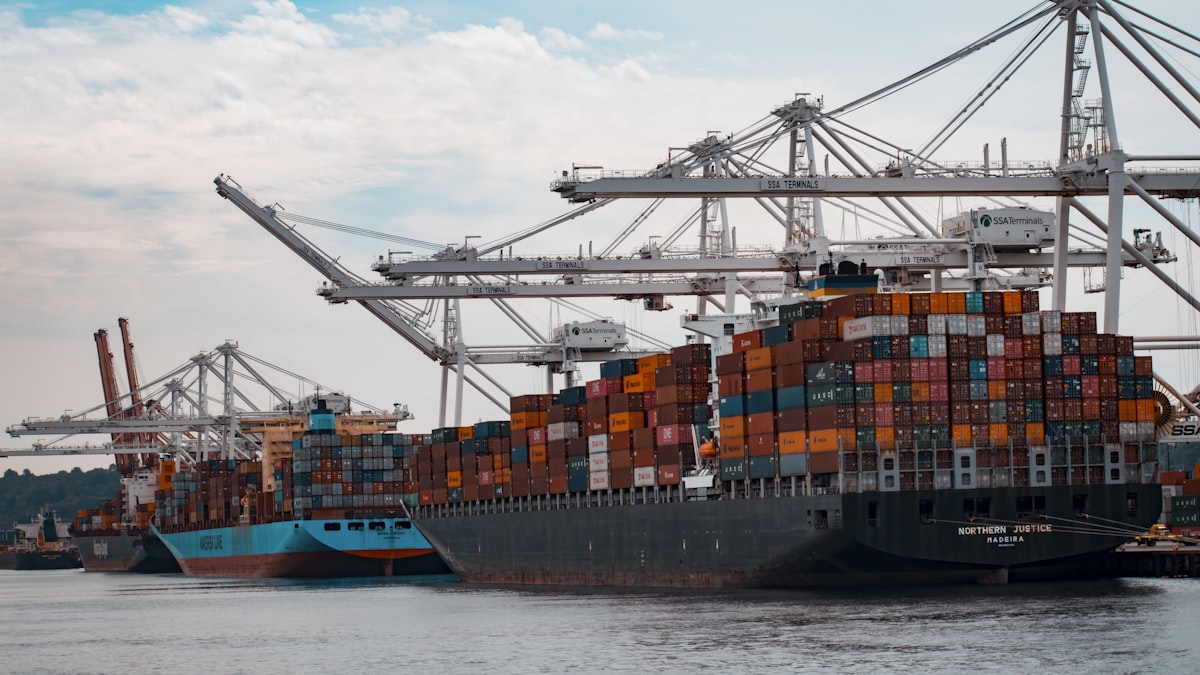
India has 12 major ports and over 200 minor ports. The Sagarmala Project, launched in 2015, aims to transform India into a port-led export hub by doubling port handling capacity. Sagarmala has completed 277 projects under its first phase, and Sagarmala 2.0 has been launched with expanded targets.
Key port developments that directly impact foreign business logistics include:
- Jawaharlal Nehru Port Trust (JNPT): India's largest container port, handling approximately 50% of India's containerized cargo. The fourth container terminal (operated by PSA International) has expanded capacity to 10 million TEUs per annum.
- Vizhinjam International Seaport (Kerala): India's first deep-water transshipment port, capable of handling ultra-large container ships. This eliminates the need for Indian cargo to transship through Colombo or Singapore, reducing transit times and costs by 3-5 days.
- Deendayal Port (Kandla) and Mundra Port: Gujarat's twin ports handle the bulk of India's western seaboard trade. Adani's Mundra Port is India's largest private port with capacity exceeding 250 MTPA.
Multimodal Logistics Parks
Thirty-five Multimodal Logistics Parks (MMLPs) are planned under Bharatmala Pariyojana with a total investment of approximately INR 46,000 crore. These parks will handle around 700 million metric tonnes of cargo when fully operational. Five MMLPs — at Jogighopa, Chennai, Bengaluru, Nagpur, and Indore — are currently under development and expected to become operational in FY 2025-26 and FY 2026-27.
For foreign companies managing import-export operations, these MMLPs offer integrated customs clearance, warehousing, and last-mile connectivity. Companies operating in Special Economic Zones will benefit from dedicated MMLP connectivity to ports and freight corridors.
Airports: India's Aviation Infrastructure Build-Out
Greenfield Airports Coming Online
India is executing the largest airport construction programme in its aviation history. Under the Greenfield Airports Policy, the government has approved 24 new airports, with 13 already operational. Two landmark projects are reshaping India's aviation landscape:
Navi Mumbai International Airport (NMIA)
India's newest greenfield airport commenced commercial operations on December 25, 2025, with IndiGo, Air India Express, and Akasa Air connecting Mumbai to 16 major domestic destinations. Key facts:
- Spread across 1,160 hectares — India's largest greenfield airport
- Phase 1: One terminal, one runway, handling 20 million passengers per annum
- Transitioned to round-the-clock operations from February 2026 with 34 daily departures
- Relieves pressure on the congested Chhatrapati Shivaji Maharaj International Airport
Noida International Airport (Jewar)
Located approximately 72 km from IGI Airport, Noida International Airport received its aerodrome licence from DGCA in March 2026 and is targeting commercial operations by mid-2026. Key facts:
- Phase 1: Terminal 1 with 12 million passenger capacity, 1 runway
- Construction cost: INR 4,588 crore for FY23-FY27
- Designed to be India's largest airport upon full completion (Phase 4: 70 million passengers)
- Will serve as the primary cargo hub for NCR-based manufacturers and exporters
Impact on Foreign Business Operations
New airports directly benefit foreign companies through improved freight connectivity, reduced air cargo costs, and better passenger connectivity for business travel. Companies with manufacturing operations in the Mumbai Metropolitan Region (MMR) should factor NMIA into their logistics planning. NCR-based companies can leverage Noida Airport for cargo operations that currently face congestion at IGI Airport.
Railways: Dedicated Freight Corridors
Eastern and Western DFCs
India's Dedicated Freight Corridors represent the most transformative rail infrastructure investment in decades. Two corridors are largely operational:
| Corridor | Route | Length | Status |
|---|---|---|---|
| Eastern DFC (EDFC) | Ludhiana (Punjab) to Sonnagar (Bihar) | 1,337 km | Fully operational since 2023 |
| Western DFC (WDFC) | JNPT (Maharashtra) to Dadri (UP) | 1,506 km | Over 90% complete; last 102 km commissioning by March 2026 |
DFC traffic has increased from 247 average trains per day in FY 2023-24 to 352 in FY 2024-25, demonstrating rapid adoption by freight operators. The DFCs enable double-stacked container transport, reducing freight costs by 30-40% on covered routes.
East-West DFC (Announced)
Union Budget 2026-27 announced a new 2,052 km east-west DFC connecting Dankuni (West Bengal) to Surat (Gujarat). This corridor will connect India's eastern ports and industrial zones with Gujarat's western seaboard, creating a seamless east-west freight network.
Industrial Corridor Integration
DFCs are strategically aligned with India's industrial corridor programme. The Delhi-Mumbai Industrial Corridor (DMIC) — the most advanced — features integrated industrial townships, logistics zones, and manufacturing clusters along the WDFC. DFCCIL signed an MoU worth INR 5.79 billion with the DMIC for a multimodal logistics hub in Greater Noida.
Foreign companies establishing manufacturing operations should strongly consider locations along DFC routes. The freight cost advantage of 30-40%, combined with reduced transit times and reliable scheduling, materially improves the cost competitiveness of India-based manufacturing for both domestic distribution and exports. For analysis of optimal manufacturing locations, see our guide on the best Indian cities for manufacturing.
Smart Cities and Urban Infrastructure
Smart Cities Mission — Results and Legacy
India's Smart Cities Mission, which officially concluded on March 31, 2025, delivered 7,555 projects (94% of 8,067 planned) worth INR 1,51,361 crore across 100 cities. Key outcomes:
- All 100 Smart Cities have fully operational Integrated Command and Control Centres (ICCCs) using real-time data for urban management
- Over 84,000 CCTV cameras installed across Smart Cities
- Digital governance infrastructure deployed at scale — water supply monitoring, traffic management, and solid waste management
Post-2025 Direction: City Economic Regions
Union Budget 2026 announced a shift from the Smart Cities Mission to "City Economic Regions" — a broader framework focused on regional infrastructure, economic integration, and connectivity rather than city-level beautification. This evolution creates opportunities for foreign companies in:
- Urban water and sewage treatment technology
- Smart transportation systems (metro rail, bus rapid transit, EV charging)
- Solid waste management and waste-to-energy plants
- Urban digital infrastructure (5G networks, IoT platforms, data centres)

PM Gati Shakti: Integrated Infrastructure Planning
The PM Gati Shakti National Master Plan, launched in 2021, aims to unify infrastructure planning across ministries and states. By October 2024, it had onboarded 44 Central Ministries and 36 States/UTs, integrated 1,614 data layers, and assessed 208 major projects worth INR 15.39 lakh crore.
For foreign companies, Gati Shakti's value lies in its role as a coordination mechanism. Infrastructure projects are now planned holistically — a new industrial zone gets simultaneous road, rail, power, and digital connectivity rather than sequential, uncoordinated development. This reduces the risk of investing in locations that lack supporting infrastructure.
FDI Framework for Infrastructure Participation
Sector-Specific FDI Provisions
India permits 100% FDI under the automatic route in most infrastructure sectors:
| Sector | FDI Cap | Route |
|---|---|---|
| Roads and Highways | 100% | Automatic |
| Ports and Shipping | 100% | Automatic |
| Airports (Greenfield) | 100% | Automatic |
| Airports (Existing) | 100% | Automatic (up to 74%), Government (beyond 74%) |
| Railways Infrastructure | 100% | Automatic |
| Construction Development | 100% | Automatic |
| Power Generation | 100% | Automatic |
Structuring the Investment
Foreign infrastructure investors typically structure their India presence as a wholly-owned subsidiary or through a joint venture with an Indian partner (common for construction and EPC projects). The choice between a subsidiary and joint venture depends on the sector, project scale, and local partnership requirements.
Key regulatory requirements include:
- FC-GPR filing with RBI within 30 days of share allotment
- FEMA compliance for all foreign investment transactions
- State-level land acquisition and environmental clearances
- Security clearance for strategic infrastructure (ports, airports, defence zones)
Companies exploring infrastructure investment should engage professional FDI advisory services to navigate the multi-layered regulatory process.

Energy Infrastructure: Power for Industrial Growth
Power Generation Capacity
India's installed power generation capacity exceeds 440 GW, making it the third-largest power producer globally. The energy mix is diversifying rapidly, with renewable energy now accounting for over 45% of installed capacity. For foreign manufacturers, reliable power supply is a critical site selection factor, and India's power infrastructure has improved markedly:
- Industrial power tariffs range from INR 5-9 per kWh depending on the state, with some states offering concessional rates for manufacturing units
- Open access power procurement allows large consumers (1 MW+) to purchase power directly from generators, often at 10-15% lower than grid tariff
- Captive solar installations are increasingly viable — a 1 MW rooftop solar system costs approximately INR 4-5 crore with payback periods of 3-4 years
- Green energy mandates (Renewable Purchase Obligations) are driving industrial adoption of solar and wind power
Renewable Energy Infrastructure
India aims for 500 GW of non-fossil-fuel energy capacity by 2030. This target is driving massive investment in solar parks, wind farms, battery storage, and green hydrogen. For foreign companies in the energy sector, India offers 100% FDI under the automatic route in power generation (including renewable energy). The PLI scheme for solar PV modules has attracted INR 48,120 crore in committed investment.
Key renewable energy projects include the Rajasthan Ultra Mega Solar Park (4,000 MW capacity), the Gujarat Hybrid Renewable Energy Park (30,000 MW planned capacity), and the offshore wind programme targeting 37 GW by 2030. Foreign companies in renewable energy equipment manufacturing, project development, or energy storage should evaluate India's rapidly growing market.
Digital Infrastructure
India's digital infrastructure has expanded at unprecedented speed. Over 950 million internet users, 5G rollout across major cities, and the India Stack digital platform (Aadhaar, UPI, DigiLocker) create the backbone for digital business operations. For foreign companies, this means:
- Reliable high-speed connectivity in most Tier-1 and Tier-2 cities
- Digital payment infrastructure (UPI processed over 14 billion transactions in a single month in 2025)
- Data centre capacity expanding rapidly — India added over 250 MW of data centre capacity in 2025 alone
- Government e-marketplace (GeM) for digital procurement by government entities
The digital infrastructure story is particularly relevant for companies in logistics, e-commerce, fintech, and SaaS. India's digital public infrastructure enables operational efficiencies that were not possible five years ago.
Water and Sanitation Infrastructure
The Jal Jeevan Mission (providing piped water to every rural household) and AMRUT 2.0 (urban water supply and sewerage) represent over INR 3.5 lakh crore in combined investment. For foreign companies in water treatment, membrane technology, SCADA systems, and water infrastructure engineering, these programmes create direct market opportunities.
Industrial water supply and wastewater treatment requirements are also expanding. Manufacturing units in water-intensive sectors (textiles, food processing, chemicals, pharmaceuticals) must comply with Zero Liquid Discharge (ZLD) norms in many states. Foreign companies with ZLD technology and expertise can find significant market opportunities in India's industrial water management sector.
Risks and Challenges
Land Acquisition Delays
Land acquisition remains the single largest bottleneck for infrastructure projects. The last 102 km of the Western DFC — between Vaitarna and JNPT — was delayed precisely due to land acquisition and encroachment issues. Foreign companies bidding for infrastructure projects should build 12-18 months of contingency into project timelines.
Execution Capacity
While India's infrastructure ambitions are massive, execution capacity — particularly for complex projects like metro rail, underwater tunnels, and high-speed rail — sometimes falls short. Foreign companies with specialized engineering capabilities can fill these gaps through technology partnerships and JVs.
Payment and Cash Flow
Government infrastructure contracts in India sometimes face payment delays, particularly at the state level. Companies should structure contracts with milestone-based payments, bank guarantees, and arbitration clauses. The Hybrid Annuity Model (HAM) for road projects mitigates this risk by providing 40% of project cost during construction.
Regulatory Approvals and Clearances
Major infrastructure projects require multiple clearances from central and state authorities. Typical approvals needed include environmental clearance from the Ministry of Environment (MoEFCC), forest clearance for projects in forested areas, Coastal Regulation Zone (CRZ) clearance for coastal projects, and state-level land use change permissions. The PM Gati Shakti platform has improved inter-ministerial coordination, but companies should still plan for 6-12 months of clearance timelines for large projects.
Currency and Repatriation Risk
Foreign companies participating in infrastructure through FDI earn revenues in INR. The gradual depreciation of the rupee (3-4% annually against USD) affects returns when profits are repatriated. Long-term infrastructure investments spanning 15-25 years face cumulative currency exposure. Companies should evaluate hedging strategies and structure their financial models to account for rupee depreciation. For detailed guidance, see our currency hedging strategies article.
Infrastructure Investment Checklist for Foreign Companies
Foreign companies evaluating infrastructure participation in India should systematically assess the following:
- Market sizing: Quantify the addressable opportunity in your specific infrastructure segment (roads, ports, airports, energy, urban, digital)
- FDI route verification: Confirm whether your sector permits 100% FDI under the automatic route or requires government approval
- Entity structure: Choose between a wholly-owned subsidiary and a joint venture based on sector requirements and local partnership needs
- State selection: Evaluate state-level infrastructure policies, incentives, and existing project pipelines. Infrastructure development varies significantly by state
- Regulatory mapping: Identify all required clearances and approvals. Budget 6-12 months for environmental and land-related approvals
- Financial structuring: Assess project financing options including domestic debt, external commercial borrowings, and equity injection from the foreign parent
- Local partnerships: Identify potential Indian JV partners, subcontractors, and equipment suppliers. Many infrastructure projects require demonstrated local experience
- Risk allocation: Structure contracts with clear risk allocation, milestone-based payments, and appropriate dispute resolution mechanisms
Environmental and Social Compliance
Infrastructure projects require Environmental Impact Assessments (EIA), forest clearances (for projects in forested areas), and social impact assessments. The timeline for environmental clearances has improved but can still take 6-12 months for large projects. Our compliance services can support the regulatory navigation process.
Key Takeaways
- India has committed over USD 1.4 trillion to infrastructure through the NIP, with INR 11.21 lakh crore (3.1% of GDP) allocated in Budget 2025-26 alone. The CII is calling for INR 150 lakh crore for 2026-2032, signaling continued acceleration.
- Bharatmala has completed 22,223 km of highways at a pace of 34 km per day. Dedicated Freight Corridors spanning 2,843 km are largely operational, reducing freight costs by 30-40% on covered routes.
- Navi Mumbai International Airport is operational (20 million passenger capacity), and Noida International Airport is targeting mid-2026 launch. Both create new logistics corridors for foreign manufacturers.
- 100% FDI under the automatic route is permitted in roads, ports, greenfield airports, railways, construction, and power generation — making India one of the most open infrastructure markets globally.
- Land acquisition delays, execution capacity constraints, and payment risks remain the key challenges. Foreign companies should build 12-18 months of contingency into project timelines and structure contracts with milestone-based payments.
Need help with Economic Intelligence? Our team handles it.
India Entry StrategyFrequently Asked Questions
What is India's National Infrastructure Pipeline (NIP) for 2026?
India committed over USD 1.4 trillion (INR 111 lakh crore) through the National Infrastructure Pipeline for 2020-2026. The Union Budget 2025-26 allocated INR 11.21 lakh crore (3.1% of GDP) for infrastructure. The CII has recommended a fresh INR 150 lakh crore plan for 2026-2032.
What is the latest status of India's Bharatmala roads project?
As of February 2026, over 22,223 km have been constructed under Bharatmala Pariyojana, representing 84% completion of the 26,425 km awarded under Phase-I. Highway construction pace has accelerated to approximately 34 km per day. The remaining 4,200 km are targeted for completion by end of FY 2026-27.
Can foreign companies invest in Indian infrastructure projects?
Yes. India permits 100% FDI under the automatic route in roads, ports, greenfield airports, railways infrastructure, construction development, and power generation. Foreign companies can participate through wholly-owned subsidiaries, joint ventures, or as EPC contractors. FC-GPR filing with RBI is required within 30 days of share allotment.
What is the status of India's rail freight corridors (DFCs)?
Dedicated Freight Corridors (DFCs) are exclusive rail lines for goods transport. The Eastern DFC (1,337 km) and Western DFC (1,506 km) are largely operational, enabling double-stacked container transport that reduces freight costs by 30-40%. A new 2,052 km east-west DFC has been announced in Budget 2026-27. Foreign manufacturers located along DFC routes gain significant logistics cost advantages.
What is the latest on India's Noida International Airport project?
Noida International Airport (Jewar) received its aerodrome licence from DGCA in March 2026 and is targeting commercial flight operations by mid-2026. Phase 1 features Terminal 1 with 12 million passenger capacity and one runway, at a cost of INR 4,588 crore. Upon full completion, it will be India's largest airport.
What happened after India's Smart Cities Mission ended?
The Smart Cities Mission concluded on March 31, 2025, having completed 7,555 projects worth INR 1,51,361 crore across 100 cities. Budget 2026 announced a shift to City Economic Regions — a broader framework focused on regional infrastructure, economic integration, and connectivity rather than city-level projects.
What are the biggest risks in India's infrastructure sector for foreign investors?
The main risks are land acquisition delays (the single largest bottleneck, requiring 12-18 months contingency), execution capacity constraints for complex projects, payment delays particularly at the state government level, and environmental clearance timelines of 6-12 months. The Hybrid Annuity Model (HAM) for roads mitigates payment risk by providing 40% during construction.