India's Meat Processing and Export Opportunity
Meat processing and export is one of the most heavily regulated food business categories in India. A foreign investor must navigate dual licensing from FSSAI and APEDA, halal certification under the new I-CAS framework, state pollution control board requirements, and animal welfare regulations — all before the first consignment clears customs.
India is among the world's largest exporters of buffalo meat (carabeef). On DGCIS data published by APEDA, India's buffalo meat exports were USD 5,098.54 million in 2025-26 — 81.75% of the USD 6,236.79 million of animal products exported that year (read 5 September 2026). APEDA names Vietnam, Egypt, the UAE, Malaysia and Saudi Arabia as the main markets for Indian buffalo meat and other animal products.
The Indian government permits 100% foreign direct investment (FDI) in the food processing sector through the automatic route. The Production-Linked Incentive (PLI) scheme for food processing, the National Livestock Mission, and APEDA's export promotion framework create a policy-supportive environment for organised, compliance-ready meat processors.
Understanding the Dual Licensing Framework
Meat processing and export units in India must comply with two distinct regulatory bodies, each with separate licensing requirements:
FSSAI: Domestic Food Safety Compliance
The Food Safety and Standards Authority of India (FSSAI) regulates the safety, hygiene, and quality of all food products manufactured, stored, distributed, or sold in India. Every meat processing unit — regardless of whether it sells domestically or exports exclusively — must hold a valid FSSAI license. FSSAI enforces standards on processing hygiene, storage temperatures, labelling, and product safety.
APEDA: Export Authorisation and Promotion
The Agricultural and Processed Food Products Export Development Authority (APEDA), under the Ministry of Commerce & Industry, is the mandatory registration body for exporting scheduled agricultural products — including meat and meat products. Without APEDA registration, no meat exporter can obtain the Registration-Cum-Membership Certificate (RCMC) required by Indian Customs for export clearance.
Critically, APEDA will not process your RCMC application without a valid FSSAI license. The licensing sequence is: first FSSAI, then APEDA.
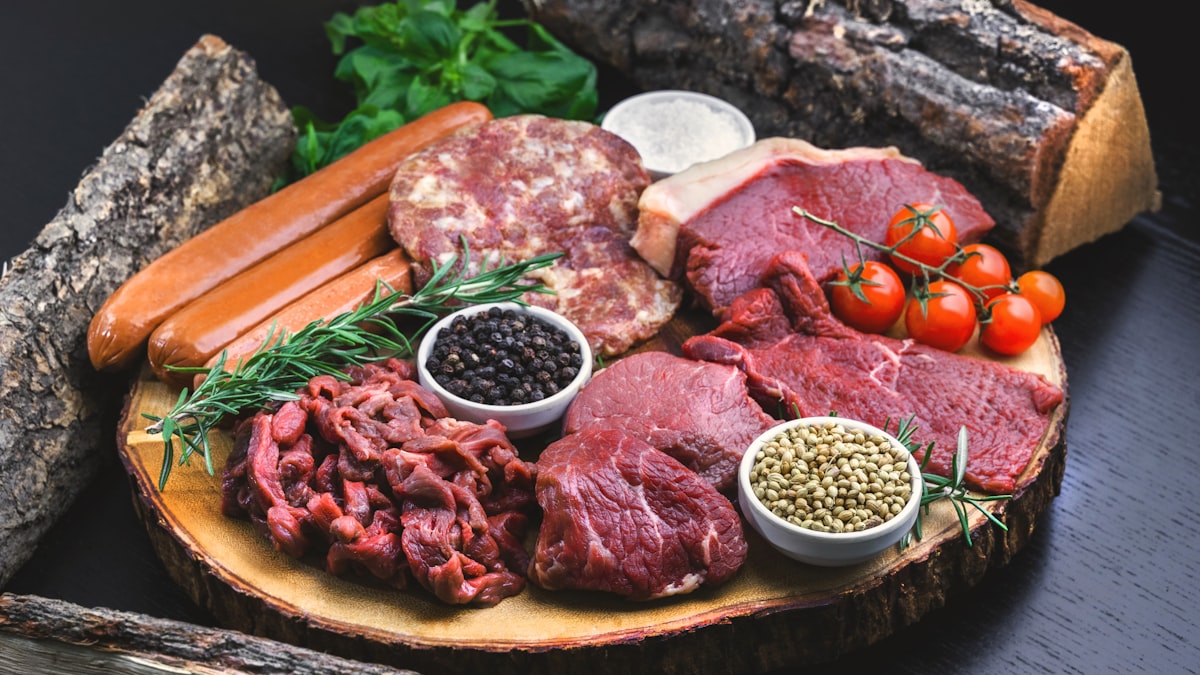
FSSAI Central License for Meat Processing Units
Any meat processing unit established by a foreign investor will almost certainly require a Central License (not basic registration or state license) because:
- 100% export-oriented units and trader or merchant exporters require a Central License regardless of turnover
- Any business importing raw materials or ingredients requires a Central License regardless of turnover
- Under FSSAI's eligibility criteria as updated on 1 April 2026, a meat processing unit with annual turnover above INR 50 crore requires a Central License; between INR 1.5 crore and INR 50 crore it takes a State License, and up to INR 1.5 crore, Basic Registration
- The declared head office or registered office of a food business operating in two or more states requires a Central License
Application Through FoSCoS Portal
The application is filed online through the Food Safety Compliance System (FoSCoS) portal at foscos.fssai.gov.in using Form B. The process follows these steps:
- Create FoSCoS account: Register with a valid mobile number, email, and identity proof (passport accepted for foreign nationals)
- Complete Form B: Select "Meat and Meat Products" as the food category, declare installed processing capacity, list all product types (frozen, chilled, processed/value-added), and provide facility addresses
- Upload documents: Certificate of Incorporation, MoA, AoA, GST registration, Import Export Code (IEC), plant layout, water testing report, FSMS/HACCP plan, and pollution control board consent
- Pay fees: INR 7,500 a year for a Central License (Schedule 3 of the Food Safety and Standards (Licensing and Registration of Food Businesses) Regulations, 2011). Since the Food Safety and Standards (Licensing and Registration of Food Businesses) Amendment Regulations, 2026 (notified 10 March 2026) substituted regulation 2.1.7, the licence is valid and subsisting until it is suspended, cancelled or surrendered — there is no fixed one-to-five-year term, but the annual fee must be paid each year or the licence is deemed suspended
- Facility inspection: An FSSAI Food Safety Officer inspects the facility for hygiene, cold chain, equipment, and waste management compliance
- License issuance: The Licensing Regulations require the licensing authority to grant or reject the application within 60 days; queries and inspection scheduling routinely push the real elapsed time past that, and no other timeline is published
FSSAI Standards for Meat Storage and Processing
Meat processing units must comply with specific temperature and handling standards:
| Category | Temperature Requirement | Additional Requirements |
|---|---|---|
| Fresh meat (chilled) | 0°C to 7°C | Consume within specified shelf life |
| Frozen meat | -18°C or below | Once thawed, must not be re-frozen; handle as chilled meat thereafter |
| Processing area | Below 12°C | Stainless steel equipment mandatory |
| Cold storage | -18°C or below | Continuous temperature monitoring and recording |
APEDA Registration and RCMC Process
Once the FSSAI Central License is in hand, the next step is APEDA registration to obtain the RCMC (Registration-Cum-Membership Certificate).
Eligibility
Any entity incorporated in India — including a wholly-owned foreign subsidiary or private limited company — with a valid FSSAI license and IEC can apply for APEDA registration.
Online Application Process
- Apply through the DGFT e-RCMC module: APEDA has issued RCMCs through the DGFT common digital platform since 2023, so the application starts at the DGFT portal, not on apeda.gov.in
- Enter IEC code: Your Import Export Code is the primary identifier
- Verify via OTP: Receive OTP on registered mobile and email
- Complete application form: Provide business details, export product categories (select meat and meat products), processing facility details, and FSSAI license number
- Upload documents: PAN, GST certificate, IEC, FSSAI license copy, bank certificate or cancelled cheque, company incorporation documents
- Pay registration fee: INR 5,000 plus 18% GST — INR 5,900 in total; confirm the amount shown on the DGFT e-RCMC module before you pay
- Receive RCMC: The certificate is issued online through the DGFT module once the application is approved
RCMC Validity and Renewal
The RCMC is a multi-year registration rather than an annual one, which keeps the ongoing administrative burden low compared with most Indian export approvals. It is not, however, self-perpetuating: it has to be kept live through the DGFT e-RCMC module, and the exporter remains responsible for filing the annual returns APEDA requires. Confirm the validity period and renewal date shown on your own certificate on the DGFT portal rather than relying on a general figure — the rules moved when RCMC issuance shifted to DGFT in 2023.
Halal Certification: The New I-CAS Framework
For export to Muslim-majority countries — which include most of the destination markets APEDA names for Indian buffalo meat — halal certification is commercially essential. DGFT has put a mandatory certification framework in place, though its commencement has been deferred more than once — confirm the date in force with DGFT before you contract for certification:
- All meat and meat products exported as "halal certified" must be processed in facilities certified under the India Conformity Assessment Scheme (I-CAS) — Halal
- The certification body must be accredited by the National Accreditation Board for Certification Bodies (NABCB) under the Quality Council of India
- Self-declarations or certifications from non-accredited bodies are no longer accepted for export documentation
The I-CAS Halal certification covers the entire production chain — from animal sourcing and slaughter to processing, packaging, and storage — and is granted on a comprehensive facility audit. No official turnaround is published for it, so start the process well before you commit to shipment dates and take a timeline from the accredited certification body in writing.
Additional Licenses and Approvals Required
Beyond FSSAI and APEDA, a meat processing and export unit in India requires several additional clearances:
State Pollution Control Board (SPCB)
Meat processing units require Consent to Establish (CTE) before construction and Consent to Operate (CTO) before commencing production. The SPCB evaluates wastewater treatment, effluent discharge, solid waste management, and air emissions. While slaughterhouses and meat processing units are not currently required under the Environmental Impact Assessment (EIA) notification of 2006, the SPCB approval remains mandatory.
Export Inspection Council (EIC)
The EIC under the Ministry of Commerce issues approval for meat processing establishments that export. The EIC inspection covers processing hygiene, laboratory testing capabilities, and compliance with destination country import standards.
Animal Husbandry Department
Slaughterhouse operations require a license from the local municipal corporation and must comply with the Prevention of Cruelty to Animals (Slaughter House) Rules. Foreign investors establishing integrated slaughter-to-processing operations must ensure compliance with both central and state-level animal welfare regulations.
Company and Tax Registration
- Company incorporation as a private limited company or subsidiary
- FC-GPR filing with the RBI within 30 days of allotting the shares
- GST registration for interstate and intrastate supplies
- Professional tax and Shops & Establishments Act registration

Statutory Fees — and the Costs That Have No Published Schedule
Only two approvals in this chain carry a fee fixed by regulation:
| License/Certification | Fee (INR) | Validity |
|---|---|---|
| FSSAI Central License | 7,500/year (Schedule 3, Licensing Regulations) | Until suspended, cancelled or surrendered (annual fee payable) |
| APEDA Registration (RCMC) | 5,000 + 18% GST = 5,900 | Multi-year; check the expiry on the DGFT e-RCMC portal |
Everything else in the chain — I-CAS Halal certification, HACCP/ISO 22000, State Pollution Control Board consent, EIC approval and professional advisory work — is priced by the certification body, the state board or the adviser concerned, and moves with plant size, throughput and the destination markets you are certifying for. None of them publishes a schedule. Budget from written quotations against your own plant specification rather than from a general range, and get the SPCB fee from the board of the state you are building in, since it is set state by state.
Export Destination Requirements and Market Access
Different export destinations impose their own import standards beyond what FSSAI and APEDA require. Foreign investors must design their compliance framework to meet the most demanding destination market requirements:
Middle East and Gulf Countries
The Gulf Cooperation Council (GCC) countries — Saudi Arabia, UAE, Qatar, Kuwait, Bahrain, and Oman — are among India's largest meat export markets. Requirements include I-CAS Halal certification (mandatory under DGFT's halal export policy conditions), compliance with GSO (Gulf Standards Organization) standards for labelling in Arabic, and specific microbiological testing certificates for each consignment. Saudi Arabia's SFDA (Saudi Food and Drug Authority) may require additional facility registration.
Southeast Asia
Vietnam has long been one of the largest destinations for Indian buffalo meat. Requirements include sanitary and phytosanitary (SPS) certificates, Certificate of Health issued by EIC-designated veterinary officers, and compliance with the importing country's maximum residue limits (MRLs) for veterinary drugs and pesticides.
Africa and CIS Countries
Egypt, another major destination, requires fumigation certificates for shipping containers and compliance with Egyptian food safety standards (EOS). CIS countries may require GOST-R certification. Each market requires destination-specific documentation, making a robust export documentation system essential.

Facility Infrastructure and Design Standards
FSSAI and EIC inspectors evaluate the physical infrastructure of meat processing facilities against detailed standards:
- Segregation zones: Dirty (receiving, slaughter), clean (processing, cutting), and ultra-clean (packaging) zones must be physically separated with controlled access points
- Flooring and drainage: Non-slip, impervious flooring with adequate gradient for drainage; stainless steel drainage channels with grease traps
- Water supply: Potable water meeting IS 10500 standards, with backup supply; hot water at 82°C minimum for equipment sterilisation
- Cold chain infrastructure: Blast freezers capable of reaching -35°C to -40°C for quick-freezing, holding cold rooms at -18°C or below, and temperature-monitored refrigerated loading docks
- Waste management: Rendering plant or authorised waste disposal arrangement for offal, blood, and condemned material; effluent treatment plant (ETP) meeting SPCB discharge standards
- Quality laboratory: In-house or on-site NABL-accredited laboratory for microbiological, chemical, and physical testing of raw materials and finished products
These infrastructure requirements represent a significant capital investment. The figure turns almost entirely on throughput, the level of automation, and how much of the cold chain, rendering and effluent treatment you build in-house rather than contract out, so it is worth costing against a specific plant design rather than against a benchmark.
Choosing the Right Location for Meat Processing
Location selection is critical for meat processing units due to the raw material supply chain, proximity to ports for export, and state-level regulatory environments. Key considerations include:
- Uttar Pradesh: India's largest buffalo meat exporting state, with established supply chains, multiple APEDA-registered abattoirs, and proximity to the Delhi-NCR logistics network
- Maharashtra: Strong industrial infrastructure, JNPT port access for exports, and a well-developed cold chain corridor
- Andhra Pradesh and Telangana: Competitive land costs, state investment incentives for food processing, and proximity to ports at Krishnapatnam and Kakinada
- Punjab and Haryana: Established livestock belts with high-quality raw material availability
Foreign investors should also consider state-specific policies on slaughterhouse licensing, as regulations vary significantly between states. Some states have restrictions on the slaughter of certain animal categories, which directly impacts processing operations. For detailed state-level comparisons, see our guide on choosing the right Indian state for food processing.

Common Mistakes Foreign Investors Make
- Applying for APEDA before FSSAI: APEDA requires a valid FSSAI license as a prerequisite — always get FSSAI first
- Ignoring state-level regulations: Each Indian state has different rules on slaughterhouse licensing and animal types permitted for processing
- Using non-accredited halal certifiers: Under DGFT's halal export policy conditions, only NABCB-accredited certifiers under I-CAS are accepted for export documentation
- Underestimating cold chain requirements: FSSAI temperature standards are strictly enforced, and any break in the cold chain can result in product seizure and license suspension
- Not budgeting for EIC inspections: The Export Inspection Council can conduct unannounced inspections, and non-compliance can result in export suspension
For a broader perspective on food processing compliance, see our guides on FSSAI registration for foreign food companies and FMCG manufacturing in India.
Key Takeaways
- Meat processing and export units require dual licensing: FSSAI Central License (INR 7,500/year) and APEDA RCMC (about INR 5,900 including GST, applied for through the DGFT e-RCMC module) — FSSAI must be obtained first
- 100% FDI is permitted through the automatic route in food processing, with no prior government approval needed
- Halal certification under the new I-CAS framework (NABCB-accredited) is mandatory for exports to Muslim-majority markets
- State pollution control board consent, EIC approval, and municipal slaughterhouse licenses are additional mandatory clearances
- Beyond those two statutory fees, nothing in the chain has a published price — halal and HACCP certification, SPCB consent, EIC approval and advisory work are quoted by the certifier, board or adviser, so budget from written quotations
- The RCMC is a multi-year registration issued through the DGFT e-RCMC module, making APEDA one of the simpler registrations to maintain — but check your own certificate's expiry date rather than assuming it renews itself
Need help with Sector Licensing? Our team handles it.
FDI AdvisoryFrequently Asked Questions
What is the difference between FSSAI and APEDA licenses for meat export?
FSSAI ensures food safety and hygiene compliance for all food businesses operating in India. APEDA specifically authorises the export of scheduled agricultural products including meat. Both are mandatory — FSSAI for domestic food safety compliance, and APEDA for export authorisation via the RCMC certificate.
Can a foreign company export meat directly from India without an Indian entity?
No. Both FSSAI and APEDA licenses require an Indian incorporated entity. A foreign company must first establish a subsidiary or private limited company in India, obtain an IEC from DGFT, secure an FSSAI Central License, and then apply for APEDA registration.
How much does APEDA registration cost for meat exporters?
APEDA registration costs approximately INR 5,900 inclusive of 18% GST. Since 2023 the RCMC is applied for and issued through the DGFT e-RCMC module rather than on apeda.gov.in. It is a multi-year registration with low ongoing administrative cost, but check the expiry date on your own certificate on the DGFT portal rather than assuming it renews automatically.
Is halal certification mandatory for all meat exports from India?
Halal certification is not legally mandatory for all meat exports, but it is commercially essential for exports to Muslim-majority countries which form the bulk of India's meat export market. DGFT's halal export policy conditions require that halal-certified exports use only NABCB-accredited certification bodies under the I-CAS framework; the commencement date has been deferred more than once, so confirm the position in force.
What temperature must frozen meat be stored at under FSSAI standards?
FSSAI mandates that frozen meat must be stored at -18°C or below. Fresh chilled meat must be maintained between 0°C and 7°C. Processing areas should be maintained below 12°C. All temperature-controlled storage must have continuous monitoring and recording systems.
How long does it take to get all licenses for a meat processing export unit?
Only one step in the chain has a published timeline: the Licensing Regulations require the FSSAI licensing authority to grant or reject a Central License application within 60 days. APEDA's RCMC can only be applied for once the FSSAI licence is in hand and is issued through the DGFT e-RCMC module; I-CAS halal certification and State Pollution Control Board consent run on the certification body's and the board's own schedules, and neither publishes a service level. Sequence the applications — FSSAI first, then APEDA — and take a date for each of the others from the authority or certifier concerned rather than from a general estimate.
What are the penalties for operating a meat processing unit without an FSSAI license?
Operating a food business without a valid FSSAI licence is dealt with under section 63 of the FSS Act, 2006. The Jan Vishwas (Amendment of Provisions) Act, 2023 (assented on 11 August 2023) decriminalised that offence, replacing imprisonment with a monetary penalty adjudicated by the Adjudicating Officer, and revised the amounts. The older 'six months and INR 5 lakh' formulation still widely quoted online is out of date. Selling unsafe food under section 59 remains a criminal offence, graded by the harm caused and most severe where the food causes death.