Why ICEGATE Matters for Foreign Companies Operating in India
Every foreign company importing goods into India or exporting from an Indian subsidiary must interact with ICEGATE — the Indian Customs Electronic Gateway. Managed by the Central Board of Indirect Taxes and Customs (CBIC), ICEGATE is not optional: it is the sole electronic platform through which all customs documentation, duty payments, and trade compliance activities flow.
As of 2026, ICEGATE processes over 30 million transactions annually across India's 250+ customs stations. The platform handles everything from Import Export Code verification to real-time duty calculations, document uploads, and clearance tracking. For foreign companies unfamiliar with India's customs infrastructure, ICEGATE can appear complex — but understanding its core modules eliminates the delays, penalties, and compliance gaps that routinely affect first-time importers and exporters.
The transition to ICEGATE 2.0 in 2025-2026 has introduced enhanced features including AI-driven validation, JSON-based bulk uploads, and a revamped Bill of Entry amendment process. This guide covers every module a foreign company needs to master.
ICEGATE Registration: Prerequisites and Step-by-Step Process
Who Must Register
Any entity involved in importing or exporting goods through Indian customs must register on ICEGATE. This includes Indian subsidiaries of foreign companies, branch offices with import permissions, and any entity holding a valid IEC (Import Export Code) issued by the Directorate General of Foreign Trade (DGFT). Customs brokers, freight forwarders, shipping lines, and console agents also need separate partnership registrations.
Required Documents
Before starting the registration process, ensure your Indian entity has the following documents ready:
- Import Export Code (IEC) Certificate — Issued by DGFT, this is the primary identifier for all import/export activities
- PAN Card — The entity's Permanent Account Number, which will be cross-verified against the Income Tax Department's database
- Class III Digital Signature Certificate (DSC) — Required for the authorized signatory; costs approximately INR 3,700 plus taxes from certified agencies
- GST Registration Certificate — To verify tax status and enable IGST credit claims on imports
- Certificate of Incorporation — Establishing the legal identity of the Indian entity
- Authorization Letter — If the registering individual is not the proprietor/director
- Bank Account Details — For duty refund processing and e-payment linkage
Registration Steps
- Visit the ICEGATE portal at www.icegate.gov.in and click "Register Now"
- Enter your PAN — The system auto-verifies against the Income Tax database. The name must match exactly.
- Enter your IEC and GSTIN — Both are validated in real-time against DGFT and GST Network databases
- Upload documents — Scanned copies of IEC certificate, PAN card, DSC, and authorization letter
- Digital signature verification — Your Class III DSC is validated during the registration process
- Submit and await approval — ICEGATE ID and password are sent to the registered email within 24-48 hours
Registration on ICEGATE is free of cost — CBIC does not charge any application fee. However, the Class III DSC procurement and any professional assistance for first-time registrations are additional costs. Foreign companies that have not yet obtained their IEC should first complete the IEC registration process through the DGFT portal before attempting ICEGATE registration.
AD Code Registration
After ICEGATE registration, importers and exporters must also register their Authorized Dealer (AD) Code at each customs station where they plan to operate. The AD Code links your bank account to the customs station for receiving export proceeds, duty drawback, and FEMA-compliant foreign exchange transactions. This registration requires a letter from your AD bank confirming the account details and must be completed separately at each port — a step frequently overlooked by foreign companies expanding to multiple locations.
Bill of Entry: Import Documentation on ICEGATE
What Is a Bill of Entry
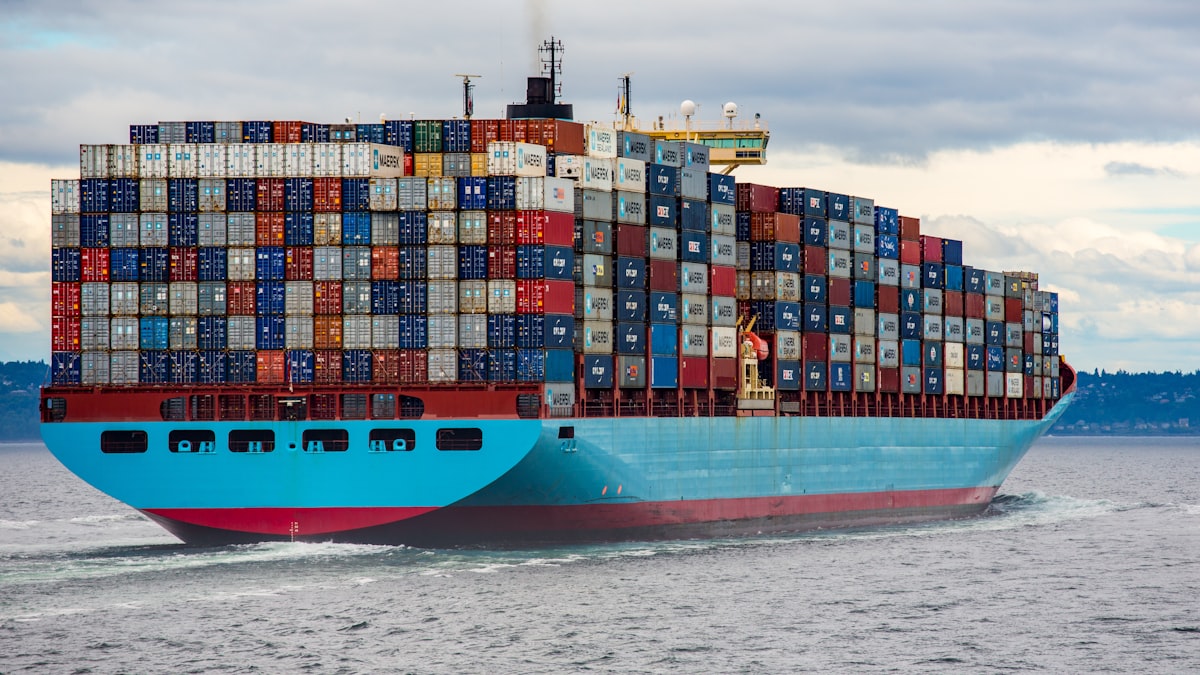
A Bill of Entry (BoE) is the mandatory legal declaration that every importer must file when goods arrive at an Indian port, airport, or land customs station. It contains critical details including the shipment's assessable value, HS Code classification, port of entry, quantity, country of origin, and applicable duty calculations. Without a filed BoE, goods cannot be cleared from customs.
Types of Bill of Entry
| Type | Use Case | Key Feature |
|---|---|---|
| Bill of Entry for Home Consumption | Goods cleared directly for domestic use | Full duty paid upfront |
| Bill of Entry for Warehousing | Goods stored in a bonded warehouse before clearance | Duty deferred until ex-bond clearance |
| Bill of Entry for Ex-Bond Clearance | Goods removed from bonded warehouse | Duty paid at time of removal |
Filing Process on ICEGATE
The advance BoE filing requirement means importers must submit their Bill of Entry before the vessel arrives at the Indian port. This pre-arrival processing allows the Risk Management System to assess the shipment in the background, significantly reducing clearance time.
- Log in to ICEGATE with your registered credentials
- Navigate to Bill of Entry filing under the e-Filing module
- Enter shipment details — Invoice number, HS Code classification, CIF value, country of origin, port of discharge
- Calculate duties — The system auto-calculates Basic Customs Duty (BCD), Integrated GST (IGST), and applicable cess based on the HS Code
- Upload supporting documents via e-Sanchit (commercial invoice, packing list, bill of lading, certificate of origin, insurance certificate)
- Digitally sign and submit — The BoE is assigned a unique number and routed to the RMS for risk assessment
ICEGATE 2.0 now supports a "Save As Draft" function and JSON import/export for bulk BoE filing — particularly useful for foreign companies with high-volume import operations.
Shipping Bills: Export Documentation on ICEGATE
What Is a Shipping Bill
The Shipping Bill is the export equivalent of the Bill of Entry. Every exporter must file a Shipping Bill on ICEGATE before goods leave India. It captures the goods' nature, quantity, FOB value, destination country, applicable export incentives (such as duty drawback or RoDTEP), and the exporter's IEC details.
Types of Shipping Bills
| Type | Purpose |
|---|---|
| Free Shipping Bill | Goods exported without claiming any duty incentive |
| Dutiable Shipping Bill | Goods subject to export duty |
| Drawback Shipping Bill | Goods eligible for duty drawback claims |
| DEPB/Advance Authorization Shipping Bill | Exports under trade promotion schemes |
| Ex-Bond Shipping Bill | Goods exported from a bonded warehouse |
Filing and Let Export Order
After filing the Shipping Bill on ICEGATE, the customs officer examines the goods (if flagged by RMS) and grants a "Let Export Order" (LEO). The LEO is the final clearance that allows the goods to be loaded onto the vessel or aircraft. For low-risk consignments cleared through compliant trade facilitation, the LEO can be generated within hours of filing.
Foreign subsidiaries using India as an export hub should note that IGST refunds on exports are processed end-to-end through ICEGATE. The system automatically reconciles export Shipping Bills with GSTR-1 returns to process refunds — a process that typically takes 30-60 days. Companies with recurring GST compliance obligations should ensure their Shipping Bill data and GST returns are reconciled monthly to prevent refund rejections.
e-Sanchit: Paperless Document Upload System
e-Sanchit (e-Storage and Computerized Handling of Indirect Tax Documents) is ICEGATE's paperless document management module. It eliminates the need to physically present documents at the customs office — a significant advantage for foreign companies whose authorized signatories may not be based in India.
How e-Sanchit Works
- Log in to ICEGATE and navigate to the e-Sanchit module
- Upload documents — Commercial invoices, packing lists, bills of lading/airway bills, certificates of origin, insurance certificates, test reports, permits, and licenses
- Receive a Document Reference Number (DRN) — Each uploaded document gets a unique identifier
- Link DRNs to your Bill of Entry or Shipping Bill — Reference the DRN when filing customs declarations
- Customs officers access documents digitally — No physical copies required at the port
Documents uploaded to e-Sanchit are stored securely and can be reused across multiple Bills of Entry — useful for standing contracts, annual permits, or recurring import licenses. The system accepts PDF, JPEG, and TIFF formats with a maximum file size of 5 MB per document.
Key Documents Required for Import Clearance
Foreign companies should prepare the following customs documentation for every import consignment:
- Commercial Invoice — Detailing item descriptions, quantities, unit prices, and total value in the transaction currency
- Packing List — Weight, dimensions, and package count for each line item
- Bill of Lading or Airway Bill — Issued by the carrier as proof of shipment
- Certificate of Origin — Required to claim preferential tariff rates under trade agreements like India-Japan CEPA, India-Singapore CECA, or India-ASEAN FTA
- Insurance Certificate — Covering the CIF value of the shipment
- Technical Documentation — BIS certificates, test reports, or product-specific licenses where applicable
- FSSAI License or NOC — For food products and ingredients
- Drug License or CDSCO Registration — For pharmaceuticals and medical devices
Customs Duty Structure and e-Payment Through ICEGATE
Understanding the Duty Components
Import duties in India comprise multiple layers. The Union Budget 2025-26 simplified the structure by reducing tariff slabs to eight (including zero), removing seven additional rates for industrial goods, and limiting surcharges to one cess per item. The core components are:
| Component | Rate Range | Basis of Calculation |
|---|---|---|
| Basic Customs Duty (BCD) | 0% to 150% | Assessable value (CIF + landing charges) |
| Social Welfare Surcharge | 10% of BCD | Exempted on 82 tariff lines as of 2025-26 |
| IGST | 0%, 5%, 12%, 18%, or 28% | Assessable value + BCD + surcharge |
| Compensation Cess | Varies by product | Assessable value + BCD (select goods only) |
Most industrial imports attract BCD rates of 5%-15%. Companies importing manufacturing equipment should note that many capital goods attract reduced BCD rates or outright exemptions under project import provisions. IGST paid on imports is claimable as input tax credit under GST, making it a cost-neutral component for companies with domestic sales.
e-Payment Process
Customs duty must be paid electronically through ICEGATE's e-Payment module. The process operates between 4:00 AM and 10:45 PM IST and supports over 200 authorized banks:
- After BoE assessment, ICEGATE generates a challan with the exact duty amount
- Navigate to e-Payment and select unpaid challans
- Choose your payment method — Internet banking, debit/credit card, or RTGS/NEFT
- Select your designated bank and complete the transaction
- Download the cyber receipt — Payment confirmation updates the BoE instantly
Delayed duty payment attracts interest at 15% per annum under Section 47(2) of the Customs Act. The duty must be paid within two days of the BoE assessment, failing which interest accrues from the date of entry inward of the vessel.

Risk Management System: How RMS Affects Your Clearance
ICEGATE routes every Bill of Entry through the Risk Management System (RMS) — an AI-driven engine that categorizes shipments into risk channels. Understanding the RMS is critical for foreign companies because it directly determines clearance speed.
RMS Channels
| Channel | What Happens | Typical Timeline |
|---|---|---|
| Green Channel | No examination required; automatic clearance | 2-4 hours after duty payment |
| Yellow Channel | Document verification only, no physical inspection | 24-48 hours |
| Red Channel | Physical inspection of goods required | 48-72 hours or more |
The RMS learns from historical data. Importers with a clean compliance history, accurate declarations, and consistent valuation patterns are increasingly routed to the Green Channel. Conversely, companies with past misdeclarations, frequent amendments, or valuation discrepancies are flagged for deeper scrutiny.
Tips for Faster Clearance
- File advance BoE — Submit the Bill of Entry before the vessel arrives to allow pre-arrival RMS processing
- Accurate HS Code classification — Incorrect classification is the single most common reason for Red Channel routing
- Consistent valuation — Sudden drops in declared value trigger automatic RMS alerts
- Complete documentation — Upload all required documents via e-Sanchit before the BoE is assessed
- Use an Authorized Economic Operator (AEO) status — AEO-certified entities enjoy expedited clearance across all channels
- Engage a licensed customs broker — Experienced brokers understand port-specific processes and can navigate RMS queries efficiently
ICEGATE 2.0: Recent Enhancements for 2025-2026
The ongoing migration to ICEGATE 2.0 has introduced several features that directly benefit foreign companies:
- Faceless Assessment — Bills of Entry are now assessed by officers located anywhere in India, not just the port of import. This reduces local discretion and increases consistency.
- BE Amendment Web Forms — The March 2025 update (User Manual v1.03) introduced Save As Draft, JSON import/export for bulk amendments, and AI-driven validation that reduces errors by 40% for repeat users
- Section 65 Manufacturing Module — Launched via Circular No. 28/2025-Customs (November 2025), this module enables online permissions for manufacturing operations in bonded warehouses
- Compliance Information Portal (CIP) — A dedicated sub-portal at foservices.icegate.gov.in/cip that provides regulatory requirements, applicable duties, and required permits for any HS Code before import
- 24/7 Helpdesk — Toll-free support at 1800-3010-1000 and email at [email protected]
The old ICEGATE Public Enquiry service was discontinued on February 16, 2026, with all services now consolidated on ICEGATE 2.0.
Common ICEGATE Challenges for Foreign Companies and How to Solve Them
PAN-IEC Mismatch Issues
ICEGATE cross-verifies your PAN against the Income Tax database and your IEC against DGFT records. Even minor name discrepancies ("Pvt. Ltd." vs. "Private Limited") can block registration. Solution: ensure your entity name is identical across all registrations before attempting ICEGATE registration.
DSC Compatibility Problems
The Digital Signature Certificate must be a Class III certificate from a Certifying Authority recognized by the Controller of Certifying Authorities (CCA). USB token-based DSCs occasionally face browser compatibility issues with ICEGATE's signing utility. Use the CBIC-recommended Common Signer utility available free on the ICEGATE portal.
HS Code Classification Disputes
Incorrect HS Code classification leads to wrong duty calculations, RMS red-flagging, and potential penalty proceedings. Foreign companies should obtain an Advance Ruling on classification from the Authority for Advance Rulings before commencing regular imports of complex or multi-component goods.
IGST Refund Delays
Exporters frequently face IGST refund delays due to mismatches between Shipping Bill data on ICEGATE and GSTR-1 filing on the GST portal. The most common errors are invoice number mismatches, port code discrepancies, and incorrect GSTIN. Reconcile your export data across both platforms before filing GSTR-1.
AD Code Registration
The Authorized Dealer (AD) Code links your bank account to the customs station for receiving export proceeds and duty drawback. AD Code registration must be completed separately at each port from which you export — a step foreign companies frequently overlook when expanding to multiple ports.
Key Takeaways
- ICEGATE registration is mandatory and free — Any Indian entity with an IEC must register on ICEGATE before filing any import or export documentation
- File Bills of Entry before vessel arrival — Pre-arrival filing allows RMS pre-processing and significantly reduces clearance time to as little as 2-4 hours for Green Channel consignments
- Use e-Sanchit for all document uploads — Eliminates physical document submission and enables document reuse across multiple shipments
- Pay duties electronically within two days — Late payment attracts 15% annual interest; the e-Payment module supports 200+ banks and multiple payment methods
- Build a clean compliance history — The RMS rewards consistent, accurate declarations with faster Green Channel clearance over time
- Leverage ICEGATE 2.0 features — Faceless assessment, bulk JSON uploads, and the Compliance Information Portal reduce manual effort and improve predictability
Need help with Government Portals? Our team handles it.
Compliance Calendar for Indian CompaniesFrequently Asked Questions
Is ICEGATE registration mandatory for all importers and exporters in India?
Yes. Any entity with a valid Import Export Code (IEC) that imports or exports goods through Indian customs must register on ICEGATE. Registration is free of cost, but requires a Class III Digital Signature Certificate (costing approximately INR 3,700), PAN card, and GST registration. The process takes 24-48 hours for approval after submission.
How long does customs clearance take through ICEGATE?
Clearance timelines depend on the Risk Management System (RMS) channel assignment. Green Channel consignments clear in 2-4 hours after duty payment. Yellow Channel (document verification only) takes 24-48 hours. Red Channel (physical inspection) takes 48-72 hours or more. Filing advance Bills of Entry before vessel arrival significantly reduces processing time.
Can foreign companies file Bills of Entry directly on ICEGATE?
Foreign companies cannot file directly on ICEGATE. Their Indian subsidiary, branch office, or an authorized customs broker registered with the Customs Brokers Licensing Regulations (CBLR) must file on their behalf using the Indian entity's ICEGATE credentials. The entity must hold a valid IEC and be registered on ICEGATE.
What is e-Sanchit and is it mandatory?
e-Sanchit is ICEGATE's electronic document upload system that eliminates physical document submission at customs offices. Each uploaded document receives a unique Document Reference Number (DRN). While not technically mandatory for all documents, it is the standard method at all EDI-enabled customs stations and documents can be reused across multiple Bills of Entry.
How are customs duties paid through ICEGATE?
Duties are paid electronically through ICEGATE's e-Payment module using internet banking, debit/credit cards, or RTGS/NEFT. The system operates between 4:00 AM and 10:45 PM IST and supports over 200 authorized banks. Payment must be made within two days of BoE assessment to avoid interest at 15% per annum under Section 47(2) of the Customs Act.
What happens if the RMS flags my shipment for Red Channel inspection?
Red Channel means physical inspection by customs officers at the port. Expect a 48-72 hour delay beyond normal processing. Common triggers include inconsistent valuation, incorrect HS Code classification, first-time imports of a product category, or a compliance history with past misdeclarations. Building a clean track record of accurate declarations reduces Red Channel frequency over time.
What is the difference between ICEGATE and ICEGATE 2.0?
ICEGATE 2.0 is the upgraded version launched in phases from 2025, featuring faceless assessment (BoE assessed by officers anywhere in India), AI-driven validation reducing errors by 40%, JSON-based bulk uploads for high-volume filers, and the Compliance Information Portal (CIP) for pre-import regulatory checks. The old ICEGATE Public Enquiry was discontinued on February 16, 2026.