Why German Automotive Suppliers Are Doubling Down on India
More than 2,000 German companies operate across all sectors in India, and the automotive supply chain alone accounts for over 300 German-run facilities. Pune hosts more than 300 German companies -- the largest single-city concentration outside Europe -- anchoring a market where India's auto components industry reached USD 55.9 billion in 2024, projected to hit USD 80.5 billion by 2033.
German Companies in India: Key Numbers
| Metric | Figure |
|---|---|
| German companies operating in India (all sectors) | 2,000+ |
| German companies based in Pune | 300+ |
| Bosch India employees (FY 2024-25) | 38,655 |
| Continental India employees | 10,000 |
| ZF India production and development locations | ~30 |
| Schaeffler India manufacturing plants | 5 |
Germany was the second-largest supplier of auto components to India after China, accounting for 14% of total auto component imports. But the relationship is no longer one-directional. German suppliers now operate over 300 facilities in India, with Pune alone hosting more than 300 German companies -- the largest single-city concentration of German industrial presence outside Europe, joining German auto component suppliers already established in India.
The drivers behind this shift are structural, not cyclical. India's domestic vehicle market produces over 5 million passenger cars annually, the PLI scheme for automobiles has attracted Rs. 35,657 crore (USD 4.3 billion) in investment, and the newly concluded EU-India FTA will reduce tariffs on auto components to near-zero over the next five to ten years. For German suppliers evaluating their global footprint, India is no longer optional.
The Big Four: German Automotive Suppliers Operating in India
Bosch: The Largest German Industrial Presence
Robert Bosch GmbH has the deepest roots in India among German industrial companies. Present since 1951, the Bosch Group now operates through 14 legal entities in India, spanning 17 manufacturing sites and 7 development and application centers.
Key financial metrics for FY 2024-25:
- Revenue: Rs. 37,345.7 crore (approximately EUR 4.13 billion)
- Employees: 38,655 associates across India
- Flagship entity: Bosch Limited generated revenue of Rs. 18,087 crore (EUR 1.985 billion)
- Q3 FY 2025-26: Revenue of Rs. 4,886 crore, a 9.4% year-on-year increase driven by passenger car and off-highway demand
Bosch's India operations cover Mobility Solutions (fuel injection, braking systems, powertrain components), Industrial Technology (drive and control technology), Consumer Goods (power tools), and Energy and Building Technology. The company's Bangalore R&D center is its largest outside Germany, working on autonomous driving, connected mobility, and electrification technologies.
Continental: 10,000 Employees Across Seven Plants
Continental operates 7 manufacturing plants and 13 locations across India, headquartered in Bangalore with 10,000 employees. The company's India operations generated revenue of Rs. 4,010 crore in FY 2024-25.
Key facilities include:
- Bangalore: Technical Center India (TCI) campus accommodating over 6,500 employees, focused on advanced safety technologies, autonomous driving, and connected mobility
- Pune: Greenfield surface solutions plant (Rs. 200 crore investment) manufacturing premium interior surfaces for automotive and two-wheeler OEMs
- Gurugram and Sonepat: Powertrain components and electronics manufacturing
Continental's India strategy has shifted from a pure manufacturing play to an engineering-led model. The TCI campus now contributes to global product development, not just local adaptation -- making India a core node in Continental's global R&D network.
ZF Friedrichshafen: EUR 200 Million India Investment Plan
ZF operates approximately 30 production and development locations on the Indian subcontinent, with a total committed investment of EUR 200 million through 2032. Recent developments include:
- Oragadam (Tamil Nadu): New plant for brakes and chassis components, with Phase 2 expansion to include electric vehicle components such as air compressors for commercial vehicles. The facility spans 7,000 sqm, expanding to 15,300 sqm.
- Pune: Groundbreaking for plant expansion to serve growing passenger vehicle and commercial vehicle demand
- Sustainability: The Oragadam plant operates on 100% renewable energy with a 450 kWp solar installation, targeting water neutrality by 2025
ZF's India play is increasingly focused on electrification. With India targeting 30% EV penetration by 2030, ZF is positioning its Indian facilities to produce EV-specific drivetrain and chassis components for both domestic and export markets.
Schaeffler India: Rs. 94 Billion Revenue and Growing
Schaeffler India reported full-year 2025 revenue of Rs. 93,953 million (approximately EUR 1 billion), a 16.3% increase over 2024, with a net profit margin of 12.7%. The company operates five manufacturing plants in Pune, Savli, Maneja, Hosur, and Shoolagiri, along with three R&D centers.
Plant utilization exceeded 85% in Q4 2025, and Schaeffler plans to raise capital expenditure above Rs. 5 billion (EUR 55 million) in 2026. The company's India operations manufacture precision bearings, engine systems, transmission components, and industrial automation products, serving both Indian OEMs and global export markets.
Beyond the Big Four: The Broader German Supply Chain Ecosystem
The German automotive supply chain in India extends well beyond these four giants. Notable players include:
| Company | Primary Operations in India | Key Locations |
|---|---|---|
| MAHLE | Pistons, filtration, thermal management | Pune, Parwanoo |
| HELLA (FORVIA) | Lighting, electronics | Pune, Chennai |
| Webasto | Sunroofs (USD 33.9M investment, 2021) | Pune |
| BENTELER | Chassis, body structures | Pune (expanded 2025) |
| Brose | Mechatronic systems, door modules | Pune |
| Eberspaecher | Exhaust technology | Pune |
Pune's dominance in this ecosystem is not accidental. The city hosts India's largest automotive OEM cluster (Tata Motors, Bajaj Auto, Force Motors), offers proximity to Mumbai's port and financial infrastructure, and has a deep talent pool of mechanical and automotive engineers. For new German entrants, the established supplier network in Pune significantly reduces ramp-up risk.
The EV Transition: New Opportunities for German Suppliers
India's electric vehicle push is creating a new category of supply chain opportunities. The government's PM E-DRIVE scheme allocates Rs. 10,900 crore for EV adoption and charging infrastructure, while the PLI scheme for Advanced Chemistry Cell (ACC) batteries is driving domestic battery manufacturing.
For German suppliers, the EV transition in India means:
- Battery management systems: Bosch and Continental are both developing BMS solutions for Indian EV OEMs
- Electric drivetrain components: ZF's Oragadam expansion specifically targets electric air compressors and e-axle components
- Thermal management: As EV battery packs require sophisticated cooling, German thermal management specialists (MAHLE, Webasto) have a natural advantage
- Lightweight materials: BENTELER's chassis expertise translates directly to EV platform development, where weight reduction is critical for range optimization
The window for entry is now. India's EV ecosystem is still forming, and early-mover suppliers that establish manufacturing and engineering partnerships will secure long-term OEM relationships. Waiting for the market to mature means competing against entrenched Chinese and Korean suppliers.
How German Suppliers Structure Their India Entry
Entity Structure Options
100% FDI is permitted in the automotive sector through the automatic route, meaning no government approval is required. The three main structures German companies use:
- Wholly Owned Subsidiary: The most common approach. Incorporate a Private Limited Company via SPICe+, file FC-GPR with RBI within 30 days, and obtain IEC for importing machinery. Timeline: 8-12 weeks to operational readiness.
- Joint Venture: Useful for Mittelstand companies wanting local market access. Indian JV partners provide distribution networks and regulatory navigation. See our branch office vs subsidiary comparison for structural alternatives.
- Liaison Office: A lower-commitment entry point for market exploration. Cannot generate revenue in India but can assess the market, identify partners, and build relationships before committing to manufacturing.
Tax Considerations Under the India-Germany DTAA
The India-Germany DTAA provides critical tax treaty benefits for German suppliers:
- Withholding tax on dividends: Capped at 10% (vs. domestic rate of 20%)
- Interest payments: Capped at 10%
- Royalties and technical fees: Capped at 10%
- Permanent establishment: German companies must carefully structure their India operations to manage PE risk, especially for engineering and technical services support
Manufacturing companies incorporated after October 2019 that commenced production on or before 31 March 2024 qualify for the concessional corporate tax rate of 15% (effective 17.16% including surcharge and cess) under section 201 (Table, Sl. No. 1) read with section 205(2) of the Income-tax Act, 2025 (section 115BAB of the Income-tax Act, 1961) -- one of the lowest manufacturing tax rates globally. That window is closed to companies that began production after 31 March 2024, which default to the 22% rate (effective 25.17%) under section 200 read with section 205(1) of the Income-tax Act, 2025 (section 115BAA of the Income-tax Act, 1961). This makes India significantly cheaper than Germany's 29.8% corporate tax rate.
PLI Incentives for Auto Components
The PLI scheme for Automobile and Auto Components offers incentives of 4-6% on incremental sales over a 5-year period. As of early 2026:
- Total investment attracted: Rs. 35,657 crore (USD 4.3 billion)
- Incentives disbursed: Rs. 2,321.94 crore (USD 280 million)
- Jobs created: Over 45,000 direct positions
Both domestic and foreign companies are eligible. Minimum investment thresholds apply: Rs. 100 million for MSMEs, Rs. 1 billion for larger companies.
Compliance Framework for German Automotive Subsidiaries
Operating a manufacturing subsidiary in India requires managing multiple compliance obligations. Key requirements include:
- GST registration: Mandatory before commencing operations. Manufacturing companies must file monthly GSTR-1 and GSTR-3B returns.
- Transfer pricing documentation: Critical for German parent-subsidiary transactions including raw material supply, IP licensing, and management fees. Arm's length pricing must be maintained and documented annually.
- FLA return: Annual filing with RBI for all entities with FDI, due by July 15 each year.
- Factory license and environmental clearances: State-level approvals required before commencing manufacturing. Timelines vary by state -- Maharashtra and Tamil Nadu typically process faster than northern states.
- Annual compliance: ROC filings (Form AOC-4, MGT-7), income tax returns, and statutory audits are mandatory for all Indian companies.
Working with an experienced compliance partner who understands both German business practices and Indian regulatory requirements is essential. The cost of non-compliance -- including penalties under FEMA, the Companies Act, and GST law -- can be substantial.
R&D and Engineering: India as the Global Development Hub
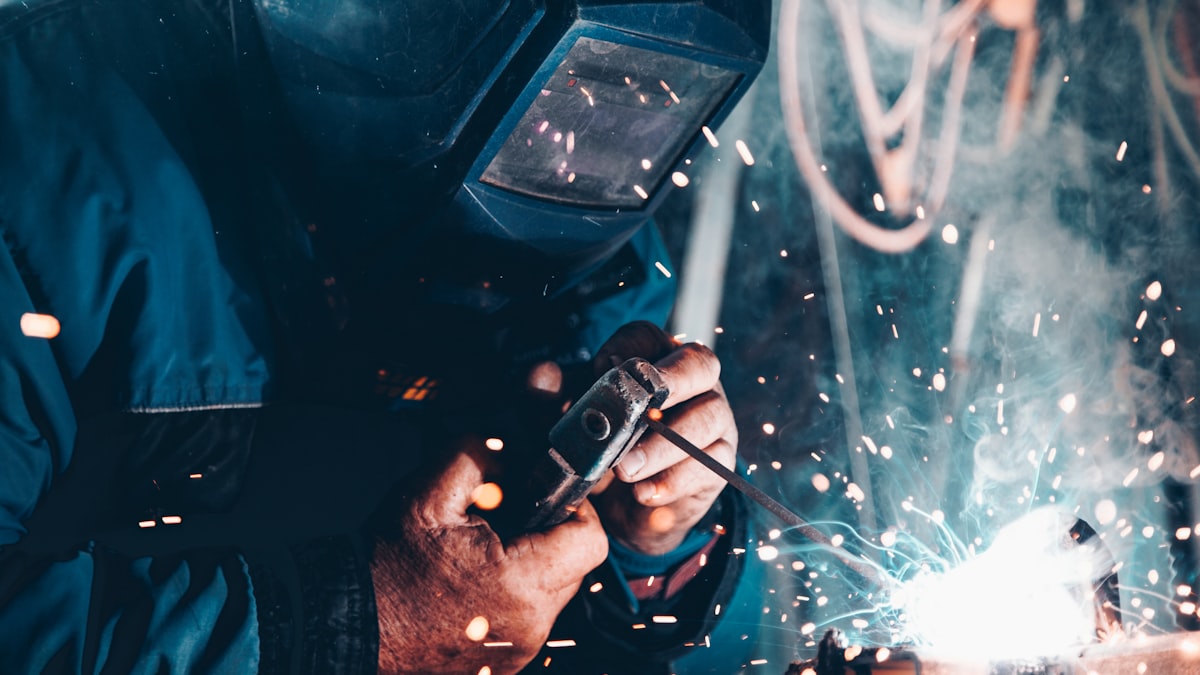
The transformation of German automotive operations in India from pure manufacturing to engineering-led development centers is perhaps the most significant trend of the past five years. India now contributes to global product development, not just local adaptation:
- Bosch Bangalore: The company's largest R&D center outside Germany, with thousands of engineers working on autonomous driving, connected mobility, and electrification technologies for global platforms.
- Continental TCI: The Technical Center India campus develops advanced driver assistance system (ADAS) algorithms, radar and LiDAR signal processing, and autonomous driving software used in Continental's global product lines.
- Mercedes-Benz R&D India (MBRDI): One of Mercedes' largest R&D centers worldwide, contributing to vehicle architecture, digital cockpit systems, powertrain development, and autonomous driving. MBRDI engineers work on next-generation S-Class and EQS platforms.
- Schaeffler R&D: Three dedicated R&D centers focused on bearings, transmission systems, and electric mobility solutions, with growing contributions to global patent filings.
India produces 2.5 million STEM graduates annually -- providing a talent pipeline that Germany, with its aging workforce and tight engineering labor market, simply cannot match. For German automotive suppliers, India R&D centers deliver 50-70% cost savings on engineering labor while maintaining quality standards aligned to German DIN and VDA norms.
The SupplyOn platform -- jointly operated by Bosch, Continental, Schaeffler, and ZF -- exemplifies how German suppliers leverage India-based digital capabilities. This cloud-based supply chain management system, used by over 100,000 companies across 70 countries, relies significantly on Indian engineering talent for development and maintenance.
Supply Chain Logistics: Getting Components In and Out
For German suppliers, logistics is both a strength and a challenge in India:
Import Infrastructure
- Key ports: JNPT (Mumbai) for western India, Chennai Port for southern operations, Mundra (Gujarat) for bulk shipments
- Customs clearance: Auto components under HS codes 8708-8714 attract customs duties of 7.5-15%, which the EU-India FTA will progressively eliminate
- Bonded warehousing: Available at major ports and industrial zones for duty-deferred storage of imported raw materials
Domestic Distribution
- India's Dedicated Freight Corridor (DFC) connecting Mumbai to Delhi reduces transit time from 60+ hours to under 24 hours for containerized goods
- GST has eliminated inter-state checkpoints, but e-way bill compliance adds an administrative layer
- SupplyOn: Bosch, Continental, Schaeffler, and ZF jointly operate SupplyOn, a cloud-based supply chain platform used by over 100,000 companies globally. This platform provides visibility across the India supply chain for procurement, logistics, and quality management.
What German Tier-2 and Mittelstand Suppliers Should Know
While the major German Tier-1 suppliers have established deep India operations, the bigger opportunity may lie with Mittelstand companies that have not yet entered the market. Key considerations:
- Follow your OEM: When BMW, Mercedes, or Volkswagen expand India production, their preferred Tier-2 suppliers are expected to localize as well. Waiting too long means losing mandates to Indian or Asian alternatives.
- Start with a liaison office: A liaison office costs approximately Rs. 15-25 lakh per year to operate and allows market assessment without revenue commitment. Upgrade to a subsidiary when you have confirmed orders.
- Leverage the Indo-German Chamber: The Indo-German Chamber of Commerce (IGCC) has offices in Mumbai, Pune, Bangalore, Chennai, Delhi, and Kolkata, providing market research, partner identification, and regulatory navigation services specifically for German companies.
- Consider Pune first: With 300+ German companies already operating there, Pune offers the densest ecosystem of German-speaking professionals, established supply chains, and cultural familiarity that makes operational ramp-up significantly smoother.
For guidance on structuring your India entry, explore our FDI advisory services or our Germany-specific registration guide.
Key Takeaways
- India's auto components market is USD 55.9 billion and growing: German suppliers already contribute significantly through 300+ operations, concentrated in Pune, Bangalore, and Chennai.
- The Big Four dominate: Bosch (38,655 employees, EUR 4.13B revenue), Continental (10,000 employees, 7 plants), ZF (30 locations, EUR 200M investment plan), and Schaeffler (Rs. 94B revenue, 5 plants) anchor the German supply chain.
- EV transition creates new entry points: Battery management, thermal systems, lightweight materials, and electric drivetrain components are emerging categories where German engineering excellence commands a premium.
- Tax and regulatory framework is favorable: 100% FDI automatic route, 17.16% effective tax for new manufacturers, India-Germany DTAA caps withholding at 10%, and PLI incentives of 4-6% on incremental sales.
- Start now, start in Pune: The established German ecosystem in Pune reduces entry risk for Tier-2 and Mittelstand suppliers following their OEM customers into India.
Need help with Germany Market? Our team handles it.
Foreign Subsidiary Registration in IndiaFrequently Asked Questions
Can German automobile and manufacturing companies in India get 100% FDI?
Yes. 100% FDI is permitted under the automatic route for automobile and auto component manufacturing. No government approval is required. Companies can set up a wholly owned subsidiary by incorporating a Private Limited Company through the SPICe+ portal and filing FC-GPR with RBI within 30 days.
What tax rate applies to German car companies and car manufacturers in India?
Manufacturing companies that commenced production on or before 31 March 2024 qualify for a 15% corporate tax rate (effective 17.16%) under section 201 (Table, Sl. No. 1) read with section 205(2) of the Income-tax Act, 2025 (section 115BAB of the Income-tax Act, 1961); later entrants default to the 22% rate under section 200 read with section 205(1). The India-Germany DTAA caps withholding tax on dividends, interest, royalties, and technical fees at 10%. PLI incentives of 4-6% on incremental sales provide additional support over a 5-year period.
How many German companies are in India?
Over 300 German companies operate in Pune alone, with additional presence across Bangalore, Chennai, Gurugram, and other industrial hubs. Major players include Bosch (38,655 employees), Continental (10,000 employees), ZF (30 locations), and Schaeffler (5 plants). Over 2,000 German companies operate across all sectors in India.
What is the PLI scheme for auto components in India?
The Production Linked Incentive (PLI) scheme for Automobile and Auto Components offers 4-6% incentives on incremental sales over 5 years. As of 2026, it has attracted Rs. 35,657 crore (USD 4.3 billion) in investment and generated over 45,000 direct jobs. Both domestic and foreign companies are eligible.
Which Indian city is best for German automotive suppliers?
Pune is the primary hub with 300+ German companies, proximity to Mumbai port, established automotive OEM cluster, and the densest ecosystem of German-speaking professionals in India. Chennai is strong for commercial vehicles (Daimler, ZF), while Bangalore leads in automotive R&D and electronics.
How will the EU-India FTA affect German auto suppliers in India?
The EU-India FTA concluded in January 2026 will progressively reduce tariffs on auto components from 7.5-15% to near-zero over 5-10 years. Car tariffs will drop from 110% to 10% gradually. This makes India a more attractive manufacturing and export base for German suppliers serving both the Indian and global markets.
What compliance requirements do German automotive subsidiaries face in India?
Key requirements include GST registration and monthly filing, transfer pricing documentation for parent-subsidiary transactions, FLA return filing with RBI by July 15, factory license and environmental clearances, annual ROC filings (AOC-4, MGT-7), income tax returns, and statutory audits. FEMA compliance for all foreign exchange transactions is also mandatory.