Japan's Strategic Pivot to India: Why Supply Chains Are Moving
Japanese automakers and electronics manufacturers are making their largest-ever collective investment in India. Toyota, Honda, and Suzuki together are committing nearly Rs 97,504 crore (US$ 11 billion) to expand Indian manufacturing capacity, while companies like Murata, TDK, and Denso are building component manufacturing ecosystems that transform India from an assembly destination into a full-stack production base.
The strategic logic is clear. Japan's METI-led supply chain diversification initiative — accelerated by the China+1 strategy — has identified India as the primary alternative manufacturing hub. Over 60% of Japanese tech firms explored India as a strategic destination in 2024-2025. India now ranks first as the most promising country for Japanese investment in both the automobile and electrical equipment/electronics sectors, according to the 2024 JBIC survey.
For Japanese manufacturers entering India, the supply chain challenge is not whether to invest, but how to structure operations for maximum efficiency under India's regulatory framework. This guide covers the practical dimensions: trade agreement benefits, government incentives, entity structuring, localization strategies, and the compliance infrastructure required to run just-in-time production lines in India.
India-Japan CEPA: Tariff Advantages for Supply Chain Operations
The India-Japan Comprehensive Economic Partnership Agreement (CEPA), operational since August 2011, is one of the most comprehensive trade agreements India has signed. For Japanese manufacturers importing components into India or exporting finished goods from India, the CEPA offers substantial tariff advantages.
Tariff Reductions for Auto and Electronics
Japan committed to eliminating tariffs on 95% of Indian exports, while India eliminated duties on nearly 90% of imports from Japan. Key sectors covered include:
| Category | Pre-CEPA Duty | Post-CEPA Duty | Savings |
|---|---|---|---|
| Auto components (specified list) | 15-30% | 0-5% | 10-25% reduction |
| Steel and metals (for auto use) | 10-15% | 0-5% | 5-10% reduction |
| Electronic components | 10-20% | 0-7.5% | Up to 12.5% reduction |
| Capital goods and machinery | 7.5-15% | 0-5% | Up to 10% reduction |
| Finished vehicles | 100-125% | 60-100% (phased) | Limited reduction |
The CEPA's rules of origin require that goods qualify for preferential tariffs only if at least 35-40% of the value is added in the exporting country. For Japanese manufacturers building local supply chains in India, this means that components manufactured in India using Japanese technology qualify for CEPA preferences when exported back to Japan or to other CEPA partner countries. See our detailed guide on India-Japan CEPA benefits for a full breakdown.
Certificate of Origin Requirements
To claim CEPA tariff preferences, Japanese manufacturers must obtain a Certificate of Origin from the authorized body — in Japan, this is JETRO or the relevant chamber of commerce; in India, it is the Federation of Indian Export Organisations (FIEO) or the Export Inspection Council. The certificate must accompany the customs declaration, and incorrect or incomplete certificates can result in denial of preferential rates and application of MFN duties.

PLI Incentives: Cash Back on Incremental Sales
India's Production Linked Incentive (PLI) scheme offers Japanese manufacturers direct cash incentives for manufacturing in India. The incentives are structured as a percentage of incremental sales over a base year.
Automotive PLI
The automotive PLI provides 18% cash incentive on incremental sales of advanced automotive technology products — specifically EV motors, motor controllers, sensors, semiconductors, and power electronics. The scheme targets localization of the EV value chain and reduction of import dependency.
Electronics Components PLI
In March 2025, the Cabinet approved a Rs 22,919 crore (US$ 2.75 billion) PLI scheme for non-semiconductor electronics components, targeting:
- Multi-layer printed circuit boards (PCBs)
- Display and camera modules
- Lithium-ion cells
- Resistors, capacitors, and inductors — the passive components that Japanese firms like Murata, TDK, and Kyocera dominate globally
By October 2025, electronics component makers committed more than Rs 1.15 lakh crore (US$ 13.6 billion) across 249 applications. Murata, a leading Japanese MLCC manufacturer, is already building a factory at OneHub Chennai Industrial Park in Tamil Nadu for multilayer ceramic capacitor production, with full-scale operations targeted for FY2026.
Auto Components PLI
The auto components PLI scheme covers advanced chemistry cell batteries, electric vehicle components, and high-precision auto parts. The incentive structure provides 4-6% of incremental sales for 5 years, with higher rates for companies investing in advanced technology manufacturing. India's auto component sector recorded a turnover of Rs 6.73 lakh crore in FY2024-25 and is projected to grow at 14.8% CAGR through 2030. For more details on PLI across sectors, see our PLI scheme results tracker.
Japanese Investment in India: The Major Players
Understanding who is already on the ground — and where — helps new Japanese entrants plan their supply chain geography.
Suzuki Motor Corporation
Suzuki holds approximately 40% of India's passenger car market through its subsidiary Maruti Suzuki India Limited. The company is investing Rs 70,912 crore (US$ 8 billion) to scale annual production to 4 million vehicles. This investment covers new manufacturing plants, EV production lines, and battery manufacturing facilities. Suzuki's Gujarat plant in Hansalpur is one of the most advanced automotive manufacturing facilities in Asia.
Toyota Kirloskar Motor
Toyota is investing Rs 26,592 crore (US$ 3 billion) to expand its hybrid component supply chain and build a new facility in Maharashtra, expected to be operational by January 2026, with a capacity of 400,000 units per annum. Toyota is also positioning India as a manufacturing hub for hybrid vehicles destined for global markets.
Honda
Honda is positioning India as an export base for its upcoming Zero Series electric cars, with production beginning in 2027. The company operates manufacturing facilities in Rajasthan (Greater Noida for cars, Manesar for two-wheelers) and is expanding its supplier ecosystem to support EV production.
Denso
Denso, Toyota's primary Tier 1 supplier, has committed to making India a global manufacturing hub. Denso India operates multiple facilities and is investing in EV components, thermal management systems, and powertrain technology for the Indian market.
Electronics Manufacturers
TDK is relocating smartphone battery cell production from China to Haryana and conducts R&D on basic films and ferrite materials locally — part of a broader roster detailed in our roundup of which companies are actually adopting China Plus One in India. Murata is manufacturing MLCCs in Chennai. These investments represent a fundamental shift — Japanese electronics manufacturers are no longer treating India as a sales market alone, but as a production and R&D base. For an overview of electronics manufacturing incentives, see our electronics PLI Phase 2 guide.
Localization Strategy: Building an Indian Supply Base
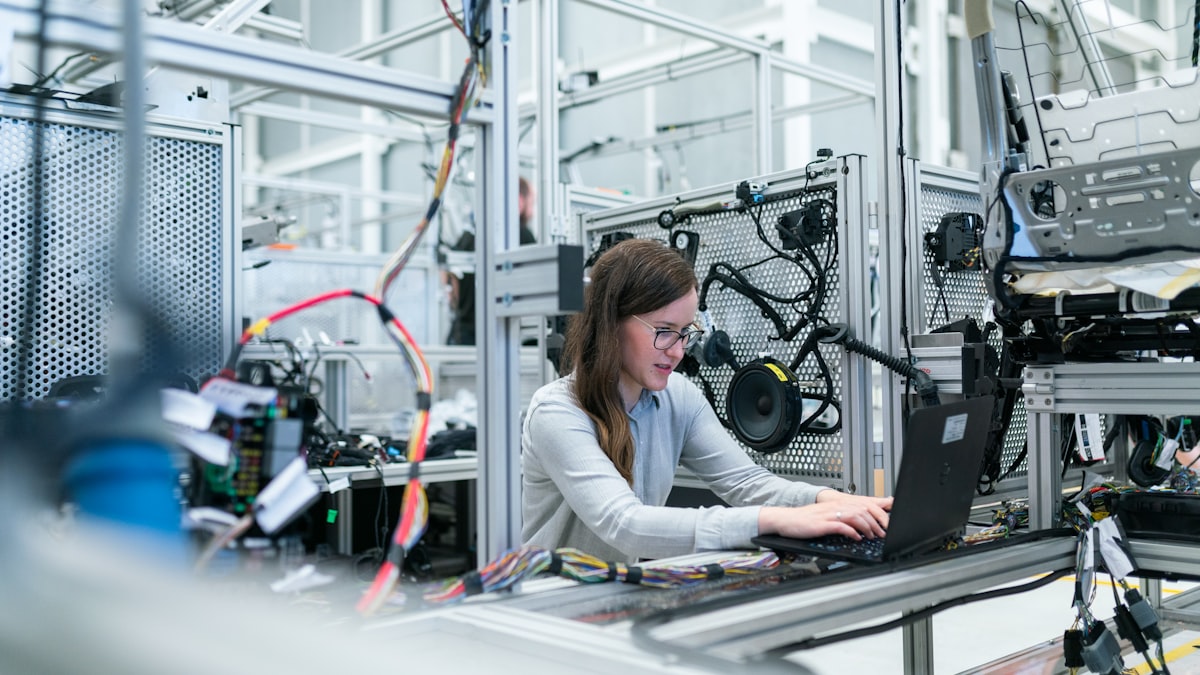
Japanese manufacturers are achieving aggressive localization targets — 40-60% local content in Year 1, scaling to 60-80% by Year 3. This is critical for both PLI eligibility and CEPA rules of origin compliance.
Tier 1, 2, and 3 Supplier Development
India's auto component industry comprises approximately 400 major players and 700 Tier 1 and Tier 2 suppliers, accounting for 85% of total industry output. Japanese OEMs are actively qualifying Indian vendors to Japanese quality standards through their Global Capability Centres (GCCs) in India.
The GCC model is particularly effective: Japanese manufacturers establish GCCs that test, qualify, and certify Indian vendors — Tier 1, Tier 2, and Tier 3 suppliers — ensuring supply chain robustness while driving localization. The GCC structure also provides a controlled environment for technology transfer without exposing proprietary IP. For the legal framework, see our guide on GCC vs subsidiary structures.
Key Manufacturing Clusters for Japanese Companies
| Location | Focus Sector | Key Japanese Companies Present |
|---|---|---|
| Gujarat (Hansalpur, Ahmedabad) | Automotive assembly and components | Suzuki, Denso, Mitsui |
| Tamil Nadu (Chennai, Hosur) | Auto components, electronics | Toyota, Murata, Nissan |
| Karnataka (Bengaluru) | Electronics, R&D, IT | TDK, Panasonic, NEC |
| Haryana (Gurugram, Manesar) | Auto manufacturing, battery cells | Honda, TDK, Marelli |
| Maharashtra (Pune, Chakan) | Auto components, engineering | Toyota (new plant), JTEKT |
| Rajasthan (Neemrana) | Japanese Industrial Township | Daikin, Mitsui Chemicals |
The Neemrana Industrial Township in Rajasthan and the Sri City Industrial Township in Andhra Pradesh are specifically designed for Japanese companies, with infrastructure, utilities, and administrative support tailored to Japanese business practices. For more on these zones, see our guide on Japanese auto and electronics supply chain clusters in India.
Entity Structure for Japanese Supply Chain Operations
Japanese manufacturers entering India need to choose the right legal structure for each type of supply chain operation.
Manufacturing Subsidiary
A wholly owned subsidiary (WOS) is the standard structure for manufacturing operations. Japanese companies can hold 100% equity under the automatic FDI route — no government approval required for automotive and electronics manufacturing. The subsidiary is incorporated as a Private Limited Company through the SPICe+ process, which takes 10-15 working days.
Trading or Procurement Entity
Japanese trading companies (sogo shosha) like Mitsui and Mitsubishi often establish procurement subsidiaries in India to source components for their global supply chains. These entities require an Import Export Code (IEC) from DGFT and should target AEO registration process early to benefit from expedited customs clearance.
R&D and GCC Operations
Several Japanese manufacturers are establishing R&D centres and GCCs in India. These entities focus on product adaptation for the Indian market, supplier qualification, and software development for connected vehicles and Industry 4.0 applications. 100% FDI is permitted under the automatic route for R&D services.
For a practical timeline of the setup process, see our Japanese manufacturer first-year timeline. For guidance on cultural and operational challenges, see the cultural bridge guide.
Japan Plus Initiative and Government Support
The Japan Plus desk, established at Invest India in 2014, serves as a dedicated single-window facilitation cell for Japanese investments. This initiative provides:
- Fast-track approvals: Dedicated officers to expedite government clearances for Japanese investment projects
- Issue resolution: Direct escalation channel for operational challenges faced by Japanese companies
- State-level coordination: Liaison with state governments for land allocation, utility connections, and environmental clearances
The India-Japan Industrial Competitiveness Partnership, established between METI and DIPP (now DPIIT) in 2019, identifies sector-specific challenges and solutions for Japanese manufacturers. Additionally, JETRO's India operations, including the Japan-India Startup Hub in Bengaluru, provide market intelligence and investment matching services.
For Japanese companies, the National Single Window System (NSWS) launched in 2021 consolidates all government approval processes into a single digital interface — covering factory licences, environmental clearances, fire safety certificates, and other operational permits.
Customs and Import Compliance for Supply Chain Operations
Running a manufacturing supply chain in India requires a robust import compliance framework. Japanese manufacturers importing components, raw materials, and capital equipment face the following regulatory requirements.
Import Export Code and Customs Registration
Every importing entity must obtain an IEC from DGFT — this is the gateway to all import/export activity. Simultaneously, register on the ICEGATE platform for electronic filing of bills of entry and shipping bills. See our comprehensive IEC registration guide.
AEO Certification
For manufacturers importing components regularly, AEO certification provides transformative benefits — deferred duty payment, direct port delivery, and reduced inspections. Japanese companies operating just-in-time production lines should target AEO-T1 within their first 3 years and upgrade to T2 for deferred duty benefits. The 2025 On-Arrival Clearance Regulations allow AEO T2/T3 holders to move goods directly from port to their factory premises.
Customs Duty on Manufacturing Equipment
Capital goods imported for manufacturing attract customs duty of 7.5-15%, but several exemptions are available under Project Import regulations, Special Economic Zone (SEZ) schemes, and the CEPA. For a complete breakdown, see our customs duty on manufacturing equipment guide.
Transfer Pricing for Intercompany Component Imports
Japanese subsidiaries importing components from the parent company or affiliates must maintain transfer pricing documentation demonstrating arm's-length pricing. The Indian tax authorities are particularly vigilant with related-party imports — inconsistent pricing between customs declarations and transfer pricing reports can trigger audits from both authorities simultaneously.
Tax and FEMA Compliance for Japanese Manufacturing Entities
Japanese subsidiaries in India face a comprehensive tax and regulatory compliance framework.
Corporate Tax
Manufacturing companies incorporated after October 2019 that begin production before March 2024 (extended deadline) can opt for a concessional corporate tax rate of 15% (effective rate approximately 17.16% including surcharge and cess) under section 201 (Table, Sl. No. 1) read with section 205(2) of the Income-tax Act, 2025 (section 115BAB of the Income-tax Act, 1961). The window for new manufacturing companies closed on 31 March 2024, so a subsidiary incorporated today cannot enter this rate; it is one of the lowest manufacturing tax rates in Asia and was a key driver of Japanese investment decisions.
GST on Manufacturing
Most manufactured goods attract GST at 18% or 28% (for automobiles). Input tax credit is available on raw materials, components, and services used in manufacturing, making the effective tax burden dependent on the value addition in India. Imported services from the Japanese parent (management fees, technology licences) attract 18% GST under the reverse charge mechanism.
FEMA Compliance
Japanese subsidiaries must comply with FEMA reporting requirements including FC-GPR filing within 30 days of share allotment and annual FLA returns by 15 July. Royalty payments, technology licensing fees, and management service charges remitted to Japan require Forms 145 and 146 (formerly Forms 15CA and 15CB) certification.
India-Japan DTAA Benefits
The India-Japan DTAA provides reduced withholding tax rates: 10% on dividends, interest, and royalties, compared to India's domestic rates of 20%. These treaty rates significantly reduce the cost of repatriating profits and paying for technology licences. For a comprehensive analysis, see our India-Japan CEPA and DTAA guide. Japanese manufacturers should also be aware of permanent establishment risks — Japanese employees spending extended periods at the Indian subsidiary can inadvertently create a PE that triggers additional tax obligations.
Building a Resilient India Supply Chain: Practical Recommendations
Based on our experience advising Japanese manufacturers in India, here are the critical success factors for building an efficient supply chain.
1. Start with Site Selection and Industrial Township Access
Choose a manufacturing location within or adjacent to established Japanese industrial clusters. The Neemrana Industrial Township, Sri City, and the Gujarat industrial zones offer pre-built infrastructure, Japanese-language support, and proximity to an existing supplier ecosystem.
2. Plan AEO Certification from Day One
Structure your import documentation and security protocols from the outset to meet AEO requirements. Many Japanese companies retrofit these systems after 3 years, incurring unnecessary costs. Building AEO-ready processes from day one enables certification at the earliest eligibility date.
3. Invest in Indian Supplier Development
Achieving 60-80% localization within 3 years requires active supplier development. Deploy quality engineers from Japan to train Indian Tier 2 and Tier 3 suppliers. The GCC model works well — establish a dedicated team to qualify and audit Indian suppliers against Japanese quality standards (JIS, IATF 16949).
4. Structure Intercompany Pricing Defensibly
The transfer pricing framework for component imports, technology licences, and management fees must be documented with comparable uncontrolled pricing or cost-plus benchmarking studies. Engage a transfer pricing advisor before the first intercompany transaction — retroactive documentation is far more expensive and less defensible.
5. Leverage CEPA and PLI Simultaneously
Companies that combine CEPA tariff preferences on imported inputs with PLI cash incentives on finished goods can achieve effective operating cost reductions of 15-25%. This requires careful planning of rules of origin compliance and PLI eligibility criteria — the two schemes interact and must be managed together.
Key Takeaways
- US$ 11 billion in committed Japanese auto investment is transforming India into a global production base, not just a sales market — Suzuki (US$ 8B), Toyota (US$ 3B), and Honda are all expanding aggressively
- The India-Japan CEPA provides 0-5% duty on most auto components and electronics versus 15-30% MFN rates — proper Certificate of Origin documentation is essential
- PLI incentives of 4-18% on incremental sales provide direct cash returns for manufacturers in auto components, EVs, and electronics — the Rs 22,919 crore electronics components PLI approved in March 2025 is particularly relevant for Japanese passive component makers
- Localization of 40-60% in Year 1, scaling to 60-80% by Year 3 is achievable with dedicated GCC-based supplier qualification programmes
- The 15% concessional corporate tax rate under section 201 (Table, Sl. No. 1) read with section 205(2) of the Income-tax Act, 2025 made India one of the most tax-competitive manufacturing destinations in Asia, but it is closed to companies that did not commence production by 31 March 2024
For end-to-end support in establishing your Japanese manufacturing supply chain in India, explore our subsidiary registration services and FDI advisory practice. We work with over 20 Japanese manufacturers across automotive, electronics, and precision engineering sectors. See also our Japan country guide for a step-by-step registration walkthrough.
Need help with Japan Market? Our team handles it.
Foreign Subsidiary Registration in IndiaFrequently Asked Questions
How much are Japanese automakers investing in India?
Toyota, Honda, and Suzuki are collectively investing nearly US$ 11 billion in India. Suzuki alone is committing US$ 8 billion to scale production to 4 million vehicles annually. Toyota is adding US$ 3 billion for a new Maharashtra facility operational by January 2026, while Honda is setting up India as an export base for its Zero Series EVs.
What customs duty savings does the India-Japan CEPA provide on auto components?
The CEPA reduces customs duty on most auto components from 15-30% (MFN rate) to 0-5%. Electronic components see reductions from 10-20% to 0-7.5%. To claim these preferential rates, importers must provide a Certificate of Origin from JETRO or the relevant Japanese chamber of commerce.
What PLI incentives are available for Japanese electronics manufacturers in India?
The March 2025 electronics components PLI scheme offers incentives worth Rs 22,919 crore for manufacturing PCBs, display modules, lithium-ion cells, resistors, capacitors, and inductors. The automotive PLI provides 18% cash incentive on incremental sales of EV-related advanced technology products.
Can Japanese companies own 100% of their Indian manufacturing subsidiary?
Yes. 100% FDI is permitted under the automatic route for automotive and electronics manufacturing — no government approval is needed. The subsidiary is incorporated as a Private Limited Company through the SPICe+ process, typically completed in 10-15 working days.
What is the concessional corporate tax rate for new manufacturing companies in India?
Manufacturing companies incorporated after October 2019 that commenced production on or before 31 March 2024 can opt for a concessional corporate tax rate of 15% under section 201 (Table, Sl. No. 1) read with section 205(2) of the Income-tax Act, 2025 (section 115BAB of the Income-tax Act, 1961), an effective rate of approximately 17.16% including surcharge and cess. The window is closed to companies that began production after that date.
What are Japanese Industrial Townships in India?
Dedicated industrial zones designed for Japanese companies, such as the Neemrana Industrial Township in Rajasthan and Sri City in Andhra Pradesh. They offer pre-built infrastructure, Japanese-language support, reliable utilities, and proximity to an existing Japanese supplier ecosystem.
What localization level can Japanese manufacturers achieve in India?
Japanese manufacturers are achieving 40-60% local content in Year 1, scaling to 60-80% by Year 3. This is driven by GCC-based supplier qualification programmes where Japanese quality engineers train and certify Indian Tier 2 and Tier 3 suppliers against JIS and IATF 16949 standards.