Austria-India Trade: A Relationship Built on Industrial Precision
Austria may be a small European economy, but its industrial footprint in India is disproportionately significant. Bilateral trade between Austria and India stands at approximately EUR 2.93 billion, with over 150 Austrian subsidiaries or joint ventures operating across India. Austrian investments in India total over EUR 560 million, while Indian investments in Austria have crossed USD 1.29 billion.
India is Austria's third-largest export market in Asia, with double-digit trade growth recorded since 2021 (excluding the pandemic disruption period). The composition of this trade is telling: machinery and transport equipment account for 40% of Austrian exports to India, followed by manufactured goods (22%) and chemical products (16%). This is not a commodity trading relationship — it is a high-technology partnership centred on precision manufacturing and industrial solutions.
Prime Minister Narendra Modi's visit to Austria in July 2024 elevated the bilateral relationship, with both governments identifying clean transportation, water management, waste management, renewable energy, and green hydrogen as priority cooperation areas. For Austrian companies, this means India is actively seeking the exact technologies and industrial solutions that Austria excels in.
Key Sectors for Austrian Companies in India
Industrial Machinery and Manufacturing Technology
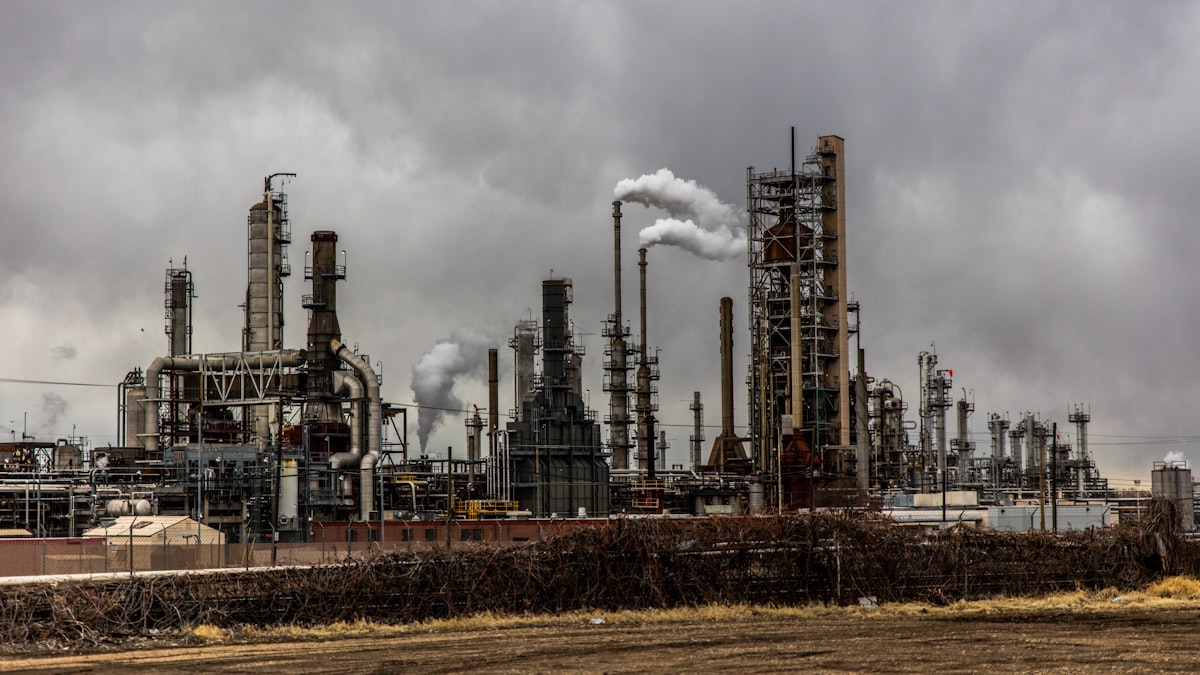
Austria's 1,200 metal technology and machinery companies generated approximately EUR 40 billion in revenue in recent years. Several of these firms already have significant Indian operations:
- Andritz AG: One of Austria's largest industrial companies, Andritz operates in India through Andritz Hydropower India, supplying reversible pump turbines and motor generators for major hydroelectric projects. India's target of 30 GW additional hydropower capacity by 2030 creates a sustained demand pipeline.
- voestalpine: Austria's steel and technology group has production facilities in India, serving the automotive, railway, and construction sectors. voestalpine's speciality steel and high-performance metals division targets India's growing automotive and infrastructure markets.
- Palfinger: The crane and lifting solutions manufacturer has Indian operations serving the construction and logistics sectors. With India spending over USD 200 billion annually on infrastructure development, demand for advanced lifting equipment is growing at 15-20% per year.
- AT&S (Austria Technologie & Systemtechnik): AT&S operates a production site in Nanjangud, Karnataka, producing high-end printed circuit boards for the semiconductor and electronics industries. India's semiconductor mission and electronics manufacturing incentives make this a strategic growth market.
Clean Technology and Renewable Energy
India's clean technology market is projected to reach approximately USD 200 billion by 2034, growing at a CAGR of 16%. Austrian companies have significant opportunities in:
- Green hydrogen: Both Austria's national Hydrogen Strategy and India's National Green Hydrogen Mission create complementary frameworks for joint research and commercial deployment. Austria's expertise in electrolysis technology aligns with India's target of producing 5 million tonnes of green hydrogen annually by 2030.
- Water and wastewater management: India needs to invest over USD 100 billion in water infrastructure over the next decade. Austrian companies like BWT (Best Water Technology) and Wabag have relevant expertise in industrial water treatment and desalination.
- Smart city solutions: India's Smart Cities Mission, covering 100 cities, requires urban mobility, waste management, and energy efficiency solutions — all areas where Austrian companies have demonstrated capabilities.
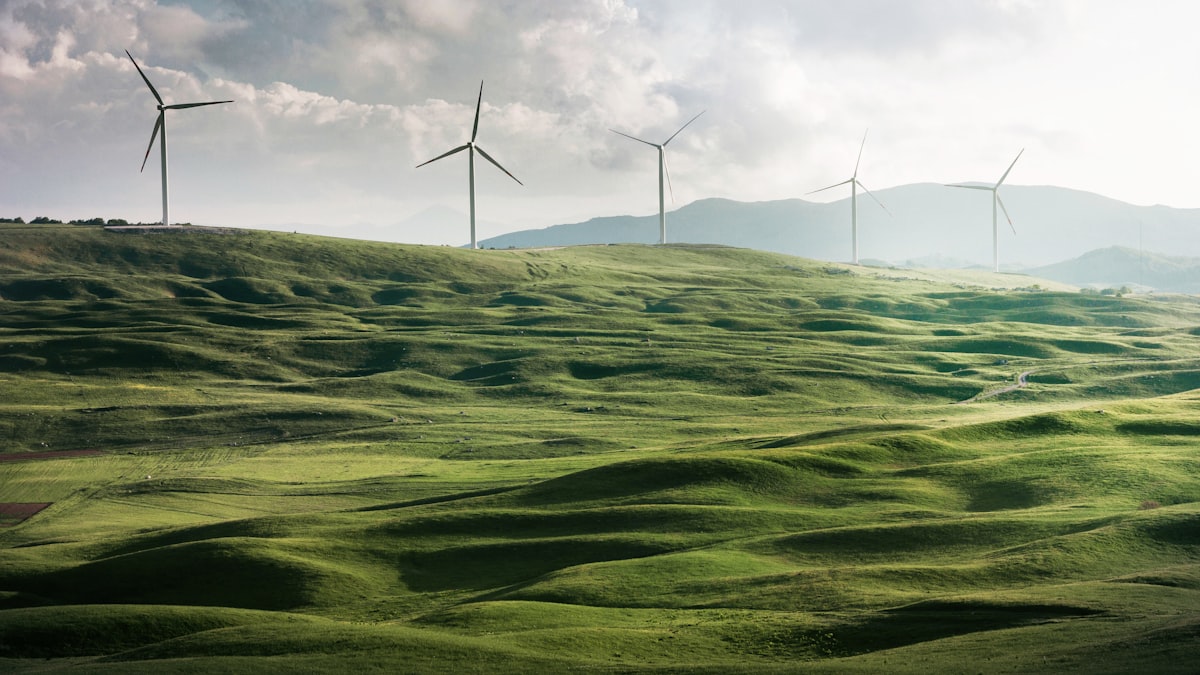
- Renewable energy equipment: Austria's photovoltaic and wind energy component manufacturers can supply India's target of 500 GW renewable energy capacity by 2030.
Railway and Transport Equipment
India's railway modernisation programme represents one of the world's largest transport infrastructure investments. Indian Railways is investing over INR 2.65 lakh crore (approximately USD 32 billion) in FY 2025-26, covering track modernisation, Vande Bharat train expansion, station redevelopment, and dedicated freight corridors. Austrian expertise in railway signalling, rolling stock components, and track technology aligns directly with these requirements.
India-Austria DTAA: Tax Rates and Treaty Benefits
Withholding Tax Rates
The India-Austria Double Taxation Avoidance Agreement provides the following reduced withholding tax rates compared to India's domestic rates:
| Income Type | DTAA Rate | India Domestic Rate (without DTAA) | Savings |
|---|---|---|---|
| Dividends | 10% | 20% | 10 percentage points |
| Interest | 10% | 20% | 10 percentage points |
| Royalties | 10% | 10% | Parity |
| Fees for Technical Services | 10% | 10% | Parity |
How to Claim DTAA Benefits
Austrian companies must follow a specific process to claim these reduced rates:
- Obtain a Tax Residency Certificate (TRC): Request a TRC from the Austrian tax authorities (Finanzamt) confirming your company's Austrian tax residency for the relevant financial year
- Provide Form 41 (formerly Form 10F): Submit Form 41 to the Indian payer/deductor with your TRC. This form confirms your beneficial ownership status and eligibility for treaty benefits
- File Form 145 (formerly Form 15CA)/Form 146 (formerly Form 15CB): For each remittance from India to Austria, the Indian entity must file Form 145 (online declaration) and Form 146 (CA certificate) confirming the applicable DTAA rate
For a comprehensive walkthrough, see our guides on claiming DTAA benefits in India and obtaining a Tax Residency Certificate.
Permanent Establishment Considerations
Austrian companies operating in India through branch offices, project sites, or long-term service contracts must carefully assess whether they create a Permanent Establishment (PE) in India. Under the India-Austria DTAA, a PE is generally created when:
- A fixed place of business exists in India for more than six months
- A construction, assembly, or installation project lasts more than six months
- Services are furnished for more than 90 days within any 12-month period
If a PE is established, the Austrian company becomes liable to pay Indian corporate tax on profits attributable to the PE, currently at 35% for foreign companies (plus surcharge and cess). This is significantly higher than the 25.17% rate applicable to Indian subsidiaries — which is one key reason most Austrian companies incorporate a subsidiary rather than operating through a branch.
Entity Structure Options for Austrian Companies
Wholly Owned Subsidiary (Recommended)
For most Austrian companies planning sustained India operations, incorporating a wholly owned subsidiary as a private limited company is the optimal choice. Benefits include:
- Lower tax rate (25.17%) compared to branch office tax (35% + surcharge)
- Limited liability — the Austrian parent is not directly liable for the subsidiary's debts
- section 115BAB of the Income-tax Act, 1961 benefits (17.16% effective rate; from 1 April 2026 the provision is section 201 (Table, Sl. No. 1) read with section 205(2) of the Income-tax Act, 2025) were available only to new manufacturing companies that commenced production on or before 31 March 2024. This window is now closed, so new manufacturing facilities set up today default to the 22% regime in section 200 read with section 205(1) of the Income-tax Act, 2025 (section 115BAA of the Income-tax Act, 1961), a 25.17% effective rate
- Easier access to government incentives under Make in India, PLI schemes, and state industrial policies
100% FDI is permitted under the automatic route for manufacturing and most service sectors relevant to Austrian companies. No government approval is required. The FC-GPR filing with RBI must be completed within 30 days of share allotment.
Branch Office
A branch office may be suitable for Austrian companies that want to execute specific projects in India without incorporating a separate entity. However, branch offices face higher tax rates and operational restrictions. For a comparison, see our branch office vs subsidiary comparison.
Liaison Office
A liaison office is limited to market research, promotional activities, and communication between the Austrian parent and Indian buyers. It cannot earn revenue or execute contracts. This structure is suitable for Austrian companies exploring the Indian market before committing to full operations.
Registration Process for Austrian Companies
The incorporation timeline for an Austrian company setting up a subsidiary in India:
| Step | Timeline | Key Requirement |
|---|---|---|
| DSC for Austrian directors | 1-3 days | Apostilled passport copies required |
| Company name reservation + incorporation via SPICe+ | 3-7 days | MoA and AoA in prescribed format |
| Certificate of Incorporation | Issued with SPICe+ approval | PAN and TAN auto-generated |
| Appoint resident director | Pre-incorporation | Must have stayed 182+ days in India in previous FY |
| Bank account opening | 7-15 days | Board resolution + KYC of Austrian parent |
| FC-GPR filing | Within 30 days of share allotment | Mandatory RBI reporting |
| GST registration | 3-7 days | Required for goods/services sales |
| IEC registration | 1-2 days | Required for importing machinery/equipment |
Total timeline: 4-6 weeks from document apostillation to operational readiness.
Austrian directors' documents (passport copies, address proofs, board resolutions) must be apostilled under the Hague Convention — India and Austria are both Hague Convention members, so no embassy attestation is required.
Government Incentives for Austrian Industrial Companies
Production Linked Incentive (PLI) Scheme
Austrian manufacturing companies can benefit from India's PLI scheme, which offers financial incentives of 4-6% of incremental sales over a 5-year period for manufacturing in India. Eligible sectors particularly relevant to Austrian companies include:
- White goods (air conditioners, LED lighting)
- Electronic components and semiconductors
- High-efficiency solar PV modules
- Automobiles and auto components
- Advanced chemistry cell batteries
- Speciality steel
State-Level Industrial Incentives
Indian states compete aggressively for foreign industrial investment. Incentive packages can include:
- Gujarat: Capital subsidy of 8-12% for manufacturing units, stamp duty exemption, land at concessional rates in industrial zones
- Karnataka: Single-window clearance for investments over INR 50 crore, capital subsidy up to 25% for anchor units in industrial parks
- Maharashtra: Industrial promotion subsidy, electricity duty exemption for 7-15 years, interest subsidy on term loans
- Tamil Nadu: Capital subsidy up to 20%, training cost reimbursement, dedicated industrial infrastructure
For a broader overview of state incentive competition, see our article on 8 Indian states competing for foreign investment.
Compliance Calendar for Austrian Subsidiaries in India
Once operational, an Austrian subsidiary in India must meet ongoing compliance obligations:
- Monthly: GST return filing (GSTR-1 and GSTR-3B by the 11th and 20th of the following month), TDS return filing, provident fund contributions
- Quarterly: TDS return filing (Forms 138 and 140, formerly Forms 24Q and 26Q), advance tax payments (June 15, September 15, December 15, March 15)
- Annually: Income tax return (September 30 for transfer pricing applicable entities), FLA return to RBI (July 15), annual ROC filings (AOC-4 and MGT-7 within 30/60 days of AGM), transfer pricing report (Form 48 (formerly Form 3CEB)), statutory audit
Missing these deadlines triggers penalties ranging from INR 100 per day (ROC late filing) to 1.5% per month (late advance tax). Our annual compliance services ensure Austrian companies never miss a deadline.
The EU-India FTA Factor
The ongoing EU-India Free Trade Agreement negotiations, which gained momentum in 2025-2026, could significantly benefit Austrian companies if concluded. The proposed FTA aims to:
- Eliminate tariffs on 90%+ of goods traded between the EU and India
- Reduce non-tariff barriers through mutual recognition of standards
- Liberalise investment frameworks beyond current FDI policy
- Establish intellectual property protection aligned with EU standards
Austrian companies already trading with India should monitor the EU-India FTA developments closely. Even without the FTA, India's current FDI regime is open to Austrian investment in most sectors. The FTA would add a tariff dimension that particularly benefits Austrian machinery and equipment exporters.
Transfer Pricing and Intercompany Transactions
Austrian parent companies with Indian subsidiaries must pay careful attention to transfer pricing regulations. India has one of the most stringent transfer pricing frameworks globally, enforced by the Indian Transfer Pricing Officer (TPO).
Key Compliance Requirements
- Arm's length pricing: All intercompany transactions — machinery sales, technology licensing, management fees, shared services — must be priced at arm's length. India's transfer pricing rules — sections 161 to 173 of the Income-tax Act, 2025 (sections 92 to 92F of the Income-tax Act, 1961) — govern international and specified domestic transactions.
- Documentation: Companies must maintain contemporaneous transfer pricing documentation including a local file, master file (for groups with consolidated turnover exceeding INR 500 crore), and Country-by-Country Report (CbCR) for groups with consolidated revenue exceeding EUR 750 million.
- Benchmarking: Use Comparable Uncontrolled Price (CUP), Resale Price Method (RPM), Cost Plus Method (CPM), Transactional Net Margin Method (TNMM), or Profit Split Method — with TNMM being the most commonly applied in practice.
- Penalties: Non-compliance attracts penalties of 2% of the transaction value for failure to maintain documentation, and 200% of tax payable for under-reporting of income attributable to transfer pricing adjustments.
For Austrian companies licensing technology or providing engineering services to their Indian subsidiary, structuring the royalty or technical service fee correctly is critical. The DTAA caps withholding at 10%, but the fee itself must pass arm's length scrutiny. For more details, see our guide to DTAA royalty and technical service fees.
Key Takeaways
- Austria-India bilateral trade is EUR 2.93 billion, with 150+ Austrian subsidiaries operating in India and machinery/transport equipment comprising 40% of Austrian exports.
- The India-Austria DTAA provides 10% withholding tax on dividends, interest, royalties, and fees for technical services — claim benefits by obtaining a TRC from Austrian tax authorities and filing Form 41 with your Indian counterpart.
- Incorporate a subsidiary (not a branch) to access the 25.17% corporate tax rate instead of the 35% branch tax rate. The 17.16% effective rate under section 201 (Table, Sl. No. 1) read with section 205(2) of the Income-tax Act, 2025 (section 115BAB of the Income-tax Act, 1961) is closed to manufacturers that did not commence production by 31 March 2024.
- Clean technology, green hydrogen, water management, and smart city solutions are priority bilateral cooperation areas identified in the 2024 Joint Statement — Austrian cleantech companies have a strategic opening.
- PLI scheme incentives of 4-6% on incremental sales are available for Austrian manufacturers in eligible sectors, and state-level incentives can reduce setup costs by 15-25%.
Need help with European Markets? Our team handles it.
Foreign Subsidiary Registration in IndiaFrequently Asked Questions
What is the withholding tax rate on dividends from India to Austria?
Under the India-Austria DTAA, the withholding tax rate on dividends is 10%, compared to the domestic rate of 20%. To claim this reduced rate, the Austrian parent company must provide a Tax Residency Certificate from Austrian tax authorities and the Indian subsidiary must file Forms 145 and 146 for each remittance.
Can Austrian companies own 100% of an Indian subsidiary?
Yes. 100% FDI is permitted under the automatic route for manufacturing and most service sectors relevant to Austrian companies. No government approval is required. Austria is not on India's Press Note 3 restricted list, so there are no additional approval requirements based on country of origin.
What tax rate applies to Austrian companies operating in India?
An Indian subsidiary of an Austrian company pays corporate tax at 25.17% (effective rate including surcharge and cess). The reduced 17.16% rate under section 201 (Table, Sl. No. 1) read with section 205(2) of the Income-tax Act, 2025 (section 115BAB of the Income-tax Act, 1961) applies only to manufacturers that commenced production on or before 31 March 2024; the window is closed to new entrants. A branch office, by contrast, pays 35% plus surcharge and cess.
Do Austrian directors' documents need embassy attestation for India incorporation?
No. Both India and Austria are members of the Hague Convention. Austrian directors' documents (passport copies, address proofs, board resolutions) need only be apostilled by the Austrian government, not attested by the Indian embassy. This simplifies and speeds up the incorporation process.
Which Indian states offer the best incentives for Austrian manufacturing companies?
Gujarat, Karnataka, Maharashtra, and Tamil Nadu offer the most competitive incentive packages for manufacturing. Gujarat provides 8-12% capital subsidy, Karnataka offers up to 25% capital subsidy for anchor units, and Maharashtra provides electricity duty exemption for up to 15 years. The optimal state depends on your specific sector and supply chain requirements.
What is the PLI scheme and can Austrian companies benefit from it?
The Production Linked Incentive scheme offers 4-6% financial incentives on incremental sales over 5 years for manufacturing in India. Austrian companies can benefit in sectors including white goods, electronic components, solar PV modules, auto components, speciality steel, and advanced chemistry cell batteries.
How will the EU-India FTA affect Austrian companies in India?
The proposed EU-India FTA aims to eliminate tariffs on 90%+ of goods, reduce non-tariff barriers through mutual recognition of standards, and liberalise investment frameworks. Austrian machinery and equipment exporters would particularly benefit from tariff elimination. Negotiations are ongoing with completion expected in 2026-2027.