
Kerala as a Business Destination
Kerala, often called "God's Own Country," has transformed from a tourism and remittance-driven economy into a thriving knowledge and technology hub. The state's GSDP is estimated at INR 14.3 lakh crore (US $167.3 billion) in FY26, growing at a CAGR of 8.84% between FY16 and FY26. In FY25, Kerala's economy recorded robust growth of 6.19%, with the services sector accounting for 63.45% of Gross State Value Added.
What sets Kerala apart is its human capital advantage. The state boasts India's highest literacy rate at 96.2%, strong English proficiency across the workforce, and a tradition of educational excellence. These factors, combined with significantly lower operating costs than Bangalore or Hyderabad, make Kerala an increasingly attractive alternative for foreign companies seeking IT/ITES operations in India.
Cumulative FDI inflows into Kerala reached INR 13,848 crore (US $1.56 billion) between October 2019 and June 2025. The state's IT exports are approaching INR 1,00,000 crore (US $11.27 billion), signalling the sector's growing maturity. Tourism contributes nearly 10–12% of state GDP, with the government targeting 20% by 2030.
Kerala offers foreign companies a unique combination: world-class IT infrastructure through government-owned tech parks, a highly educated workforce, competitive costs, and quality of life that aids talent retention — a persistent challenge in India's hotter, more congested tech hubs.
The state's high Human Development Index (HDI) — the best in India — translates into a workforce that is healthier, better-educated, and more productive per capita than most Indian states. For companies from the United States, the United Kingdom, or Germany considering IT delivery centres in India, Kerala's combination of lower costs, lower attrition, English fluency, and government-managed infrastructure eliminates many of the operational risks associated with entering the Indian market. The state also has India's densest network of cooperative banks and one of the most mature payment systems ecosystems outside the metro cities.
Key Cities & Industrial Corridors
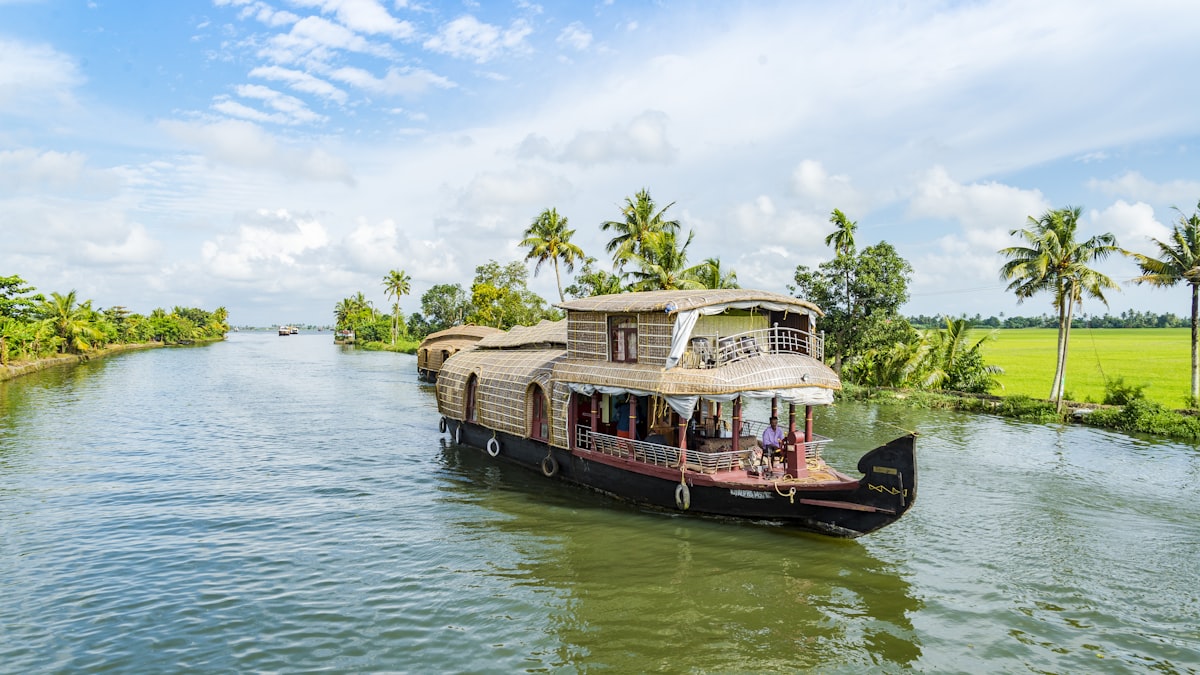
Thiruvananthapuram (Trivandrum) is the state capital and home to Technopark — India's first technology park, established in 1990. Technopark has grown into a 12.72 million sq ft campus accommodating 490+ companies. It is Asia's largest and greenest IT park, with Phase I through Phase IV campuses and dedicated SEZ zones. Major global companies including Infosys, TCS, UST, and IBS Software operate from Technopark. The city also hosts the Indian Institute of Space Science and Technology (IIST), ISRO's Vikram Sarabhai Space Centre, and the Indian Institute of Science Education and Research (IISER).
Kochi (Cochin) is Kerala's commercial and financial capital. Infopark Kochi, the state's second major IT park, was established in 2004 and hosts companies spanning IT, fintech, and BPO. Kochi also houses Cochin Shipyard (India's largest), the Cochin Special Economic Zone (CSEZ) — one of India's oldest multi-product SEZs — and a thriving port. The Kochi Metro, operational since 2017, connects key commercial districts. SmartCity Kochi, a joint venture with Dubai Holdings, adds premium Grade A office space.
Kozhikode (Calicut) hosts Cyberpark, a government IT park designed to drive tech growth in northern Kerala. Its SEZ building "Sahya" spans 2.88 lakh sq ft. Satellite centres at Cherthala (Alappuzha), Koratty (Thrissur), and Kollam extend the IT ecosystem across the state.
For companies considering a India entry strategy, Kerala's distributed IT park model means foreign firms can set up in cities with lower attrition and cost than Bangalore while maintaining access to Tier 1 infrastructure.
Beyond IT, Kerala's economy supports thriving industries in marine products and seafood processing (one of India's largest exporters), rubber and spice production, Ayurvedic pharmaceuticals and wellness tourism, shipbuilding through Cochin Shipyard, and a growing electronics manufacturing base. The state's coastline spans 590 km with 17 minor ports and one major port (Cochin), creating a natural advantage for export-oriented manufacturing and international trade operations.
State Tax & Compliance
Kerala's state-level compliance requirements apply alongside central regulations. Proper planning for annual compliance is essential.
Professional Tax
Kerala levies professional tax on a half-yearly basis through local self-government bodies (municipalities and panchayats); see the full Kerala professional tax slabs and due dates for registration steps:
- Exemption: Individuals earning below INR 12,000 per half-year are exempt
- Minimum slab: INR 120 for half-yearly income of INR 12,000–17,999
- Maximum rate: Up to INR 1,250 per half-year for higher income brackets
- Due dates: August 31 (first half) and February 28 (second half)
- Penalty: 1% monthly penalty on unpaid tax; persistent non-payment can attract up to INR 5,000 penalty
Stamp Duty
- Property sale: 8% stamp duty + 2% registration charge (flat rates across the state)
- Lease agreements: 1–2% of annual rent plus deposit, varying by tenure
- Long-term leases: INR 5–8 per INR 100, scaled by lease duration
- Verification: The Kerala Registration Department's E-Stamping system provides online stamp duty calculation
Labour Welfare Fund
Under the Kerala Shops and Commercial Establishments Workers' Welfare Fund Act, 2006:
- Employee contribution: INR 50/month
- Employer contribution: INR 50/month
- Due date: 5th of the following month
- Factories and plantations follow a half-yearly contribution schedule (June 30 and December 31)
For comprehensive compliance guidance, refer to our Shops & Establishment Act overview and Labour Codes glossary.

State Startup & Investment Policy
The Kerala Startup Mission (KSUM), established under the Department of Electronics & IT, is one of India's most active state startup agencies. Kerala's startup ecosystem is consistently ranked among India's top three.
KSUM Programmes & Funding
- Innovation Grant Scheme: Financial assistance at three stages — Idea (up to INR 2 lakh), Productization (up to INR 7 lakh), and Scale-up (up to INR 15 lakh)
- GPU Cluster Fund: INR 10 crore allocated in the 2025-26 budget for AI infrastructure
- Fund-of-Funds: INR 10 crore to provide financial support to emerging startups through partner VCs
- Coworking Space Loans: INR 10 crore allocated for startups to set up coworking facilities
- Young Entrepreneurship Programme: INR 90.52 crore earmarked across the state
- Maker Village & Super Fab Labs: Subsidised access to manufacturing facilities, 3D printing, and shared factory space
- Emerging Technology Hub: Dedicated hub in Trivandrum for AI, robotics, blockchain, and IoT
Companies incorporating through a private limited company or LLP can access KSUM benefits alongside central Startup India incentives. The Section 80-IAC tax holiday applies to eligible DPIIT-registered startups operating from Kerala.
Land & Real Estate
Kerala's IT parks offer purpose-built, government-managed commercial space — a significant advantage for foreign companies wary of private landlord complexities in India:
- Technopark Trivandrum: 12.72 million sq ft campus, INR 30–55/sq ft/month for furnished IT space, SEZ and non-SEZ zones available
- Infopark Kochi: Flagship campus at Kakkanad plus satellite locations, INR 35–65/sq ft/month, plug-and-play options available
- Cyberpark Kozhikode: 42.5-acre campus with the SEZ building Sahya (2.88 lakh sq ft), competitive rates for northern Kerala operations
- SmartCity Kochi: Premium Grade A office space, international-standard infrastructure
- Cochin SEZ (CSEZ): Multi-product SEZ near Kochi port, suitable for manufacturing and export-oriented units
- Coworking spaces: Available across Kochi and Trivandrum from INR 4,000–10,000/seat/month
The SEZ zones within Technopark and Cyberpark offer duty-free imports, income tax benefits, and streamlined customs clearance for import-export operations.

Labour & Employment Rules
Kerala applies the central Labour Codes alongside state-specific provisions:
- Kerala Shops & Commercial Establishments Act: Regulates working hours (maximum 9 hours/day, 48 hours/week), overtime, leave, and termination for commercial establishments. IT/ITES companies may avail relaxed provisions.
- Minimum wages: Kerala's minimum wages are among India's highest, reflecting the state's high cost-of-living index. Rates are revised periodically across scheduled employments.
- EPF: Mandatory for establishments with 20+ employees. Both employer and employee contribute 12% of basic wages.
- Gratuity: Payable after 5 years of continuous service. Maximum limit INR 25 lakh.
- Maternity benefits: 26 weeks of paid maternity leave under the central Maternity Benefit Act, fully enforced in Kerala.
- Trade union presence: Kerala has an active trade union culture. Foreign companies should factor this into workforce planning, particularly for non-IT sectors.
Foreign subsidiaries require a resident director and must register under the local Shops & Establishment Act within 30 days of commencing operations. Beacon Filing provides end-to-end payroll processing and statutory compliance services for companies operating in Kerala, ensuring timely EPF, ESI, professional tax, and labour welfare fund remittances.
One factor foreign companies should consider is Kerala's active trade union environment. While IT/ITES companies in notified tech parks have historically experienced minimal union-related disruptions, companies in manufacturing, plantations, and traditional sectors should build stakeholder engagement into their workforce strategy. The state government has introduced reforms to simplify labour-management relations, but early engagement with a local compliance partner is advisable.
Infrastructure
Kerala's infrastructure combines natural geographic advantages with modern development:
- Airports: Four international airports — Cochin (COK), Trivandrum (TRV), Calicut (CCJ), and Kannur (CNN). Cochin International Airport was the world's first fully solar-powered airport.
- Vizhinjam International Seaport: Under construction near Trivandrum, this deep-water transshipment port (operated by Adani Ports) will reduce dependency on Colombo and Singapore for container transshipment, dramatically improving logistics for export-oriented units.
- Kochi Metro: Operational since 2017, connecting key commercial and residential areas. India's first metro with a rooftop solar plant.
- Kochi Water Metro: India's first water metro, improving intra-city connectivity across Kochi's island geography.
- National Waterway 3: Inland waterway from Kollam to Kottapuram (168 km) for cargo transport.
- NH 66 (Mumbai-Kanyakumari): Major highway undergoing widening across Kerala's coastline.
- SilverLine (under review): Proposed semi-high-speed rail connecting Trivandrum to Kasaragod (530 km) in under 4 hours.
- Power: Kerala has 100% rural electrification and a growing renewable energy portfolio. The state targets 40% renewable energy in its total mix by 2030.
- Healthcare: Kerala has India's best healthcare infrastructure per capita, with a network of government and private hospitals meeting international standards. This is particularly relevant for foreign companies whose expatriate employees require reliable medical facilities.
For companies involved in cross-border payments and international trade, Cochin Port's proximity to major IT parks and the upcoming Vizhinjam transshipment port create a logistics ecosystem that is increasingly competitive with Chennai and Mumbai. The state's fibre optic backbone, maintained by Kerala State IT Infrastructure Limited (KSITIL), provides high-bandwidth connectivity to all major business centres.

Frequently Asked Questions
Why should a foreign company consider Kerala over Bangalore or Hyderabad?
Kerala offers 30–40% lower office costs than Bangalore, significantly lower employee attrition (8–12% vs. 20–25% in Bangalore IT), India's highest literacy rate (96.2%), strong English proficiency, and government-managed IT parks that eliminate landlord risks. The state's quality of life — including low pollution, healthcare access, and education standards — aids long-term talent retention.
What IT parks are available for foreign companies in Kerala?
Kerala has three major government IT parks: Technopark in Trivandrum (12.72M sq ft, 490+ companies), Infopark in Kochi (with satellite campuses in Cherthala and Koratty), and Cyberpark in Kozhikode. All offer plug-and-play IT space, SEZ zones, and single-window clearance for setup.
What is the professional tax structure in Kerala?
Kerala levies professional tax on a half-yearly basis. Individuals earning below INR 12,000 per half-year are exempt. The minimum tax is INR 120 per half-year, with rates scaling up for higher income brackets. Due dates are August 31 and February 28. Employers must deduct and remit on behalf of employees.
How does Kerala's startup ecosystem support foreign entrepreneurs?
The Kerala Startup Mission (KSUM) offers Innovation Grants at three stages (Idea, Productization, Scale-up), access to Maker Village manufacturing facilities, GPU clusters for AI startups, and a fund-of-funds programme. KSUM is consistently ranked among India's top three state startup ecosystems.
What is the Vizhinjam port and how does it benefit businesses?
Vizhinjam International Seaport, under construction near Trivandrum, is India's first deep-water transshipment port. Once operational, it will eliminate the need for containers from southern India to route through Colombo or Singapore, reducing logistics costs by 25–30% for export-oriented businesses in Kerala.
Are there any special incentives for IT companies in Kerala?
IT/ITES companies in Kerala SEZ zones benefit from duty-free imports, income tax holidays under central SEZ legislation, and state-level SGST exemptions. KSUM additionally offers Innovation Grants, subsidised incubation, and GPU cluster access. Companies registered under Startup India can access Section 80-IAC tax holidays.
What are the labour compliance requirements for a company in Kerala?
Companies must register under the Kerala Shops & Establishment Act within 30 days, contribute to EPF (12% each from employer and employee), ESI for eligible employees, labour welfare fund (INR 50/month each), and deduct professional tax. A resident director must be appointed for foreign subsidiaries. IT companies enjoy relaxed working hour provisions.