Why Power Backup Is Non-Negotiable for India Offices
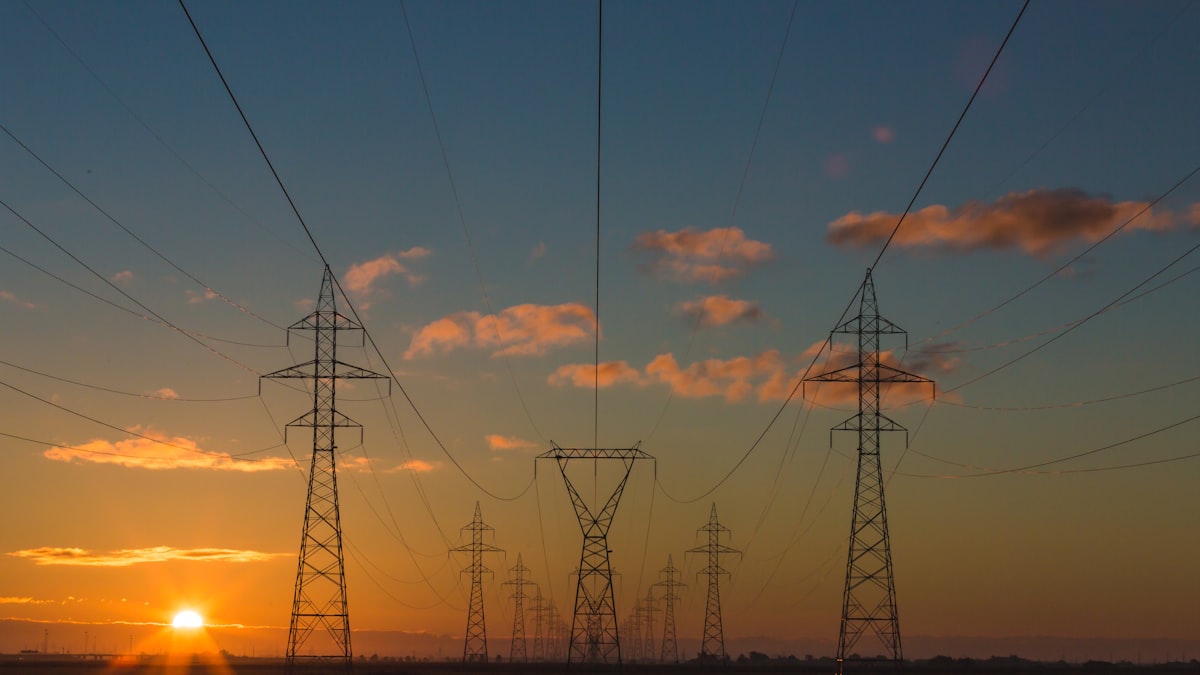
India's power grid has made remarkable progress — the national peak demand touched 250 GW in 2025, and generation capacity exceeds 450 GW. Yet the operational reality for offices remains uneven. Urban centres like Mumbai and Delhi-NCR experience 2-5 unscheduled outages per month, each lasting 15 minutes to 2 hours. Voltage fluctuations between 180V and 260V are common in commercial areas, and power quality issues (harmonics, surges, and sags) can damage sensitive IT equipment without proper conditioning.
For a wholly owned subsidiary running a 50-seat office with servers, a single 2-hour power outage without backup means lost productivity worth INR 50,000 to INR 2,00,000 depending on the nature of work. Over a year, cumulative downtime from unreliable power can cost 3-5% of total operating expenses. The investment in proper power backup — typically INR 5,00,000 to INR 25,00,000 for a mid-sized office — pays for itself within the first year.
This guide covers all three layers of a robust power backup strategy: diesel generator (DG) sets for extended outages, uninterruptible power supply (UPS) systems for seamless switchover, and solar rooftop installations for long-term cost reduction and ESG compliance.
Whether you are setting up a branch office, liaison office, or a full private limited company subsidiary, power infrastructure planning should happen during the office fit-out phase — retrofitting backup systems after move-in is 30-50% more expensive due to rewiring, structural modifications, and business disruption.
Diesel Generator (DG) Sets: Regulations, Sizing, and Costs
DG sets remain the backbone of commercial power backup in India, providing reliable electricity during grid outages lasting more than a few minutes. However, the regulatory landscape changed significantly in 2023-2025, and foreign companies must navigate these rules carefully.
CPCB IV+ Emission Norms
Since July 2023, all new diesel generators up to 800 kW must comply with CPCB IV+ (Central Pollution Control Board Phase IV+) emission standards. These norms mandate a 90% reduction in particulate matter (PM) and nitrogen oxide (NOx) emissions compared to the earlier CPCB II standards. Key compliance requirements include:
- Diesel Oxidation Catalyst (DOC): Mandatory for oxidizing CO and HC emissions
- Diesel Particulate Filter (DPF): Required to capture PM emissions
- Selective Catalytic Reduction (SCR): Required for NOx reduction, uses Diesel Exhaust Fluid (DEF/AdBlue)
- Type Approval certificate: Every genset model must have a valid TA certificate from CPCB
- Conformity of Production (COP): Annual production-year certification required
Running a non-compliant DG set can result in penalties under the Air (Prevention and Control of Pollution) Act, 1981 — fines up to INR 1,00,000 and imprisonment up to six years in severe cases. State Pollution Control Boards conduct random inspections, particularly in metro cities.
DG Set Ban in Delhi-NCR
From October 2025, Delhi-NCR has imposed a near-complete ban on non-essential DG set usage. DG sets are permitted only as backup against regular power supply failures and for exempt categories including hospitals, defence installations, airports, data centres, metro rail, and telecom infrastructure. Commercial offices are allowed to use DG sets only during actual grid failures — not for load management or cost arbitrage. IT and data services have a conditional exemption, but standard office operations do not qualify.
Sizing Your DG Set
Proper sizing prevents both underpowering (causing shutdowns when load exceeds capacity) and oversizing (wasting fuel and capital). A standard office load calculation:
| Equipment | Per Unit Load (kW) | Typical Office (50 seats) |
|---|---|---|
| Workstations (desktop + monitor) | 0.3 | 15 kW |
| Laptops | 0.08 | 4 kW |
| Lighting (LED) | 5 W/sq ft | 5 kW (1,000 sq ft lit area) |
| Air conditioning (VRF) | 3 kW per TR | 30 kW (10 TR) |
| Server room | 5-15 | 10 kW |
| Common area (pantry, meeting rooms) | 3-5 | 4 kW |
Total connected load for a 50-seat office: approximately 65-70 kW. With a diversity factor of 0.7 (not everything runs simultaneously), the running load is approximately 45-50 kW. Add 20% headroom for startup surges, and you need a DG set rated at 60-75 kVA.
DG Set Cost Breakdown
| Capacity | CPCB IV+ Compliant Price (INR) | Suitable For |
|---|---|---|
| 15 kVA | 3,50,000 - 5,00,000 | Small office (10-15 seats) |
| 30 kVA | 5,50,000 - 8,00,000 | Small-medium office (20-30 seats) |
| 62.5 kVA | 8,00,000 - 12,00,000 | Medium office (40-60 seats) |
| 125 kVA | 14,00,000 - 20,00,000 | Large office (80-120 seats) |
| 250 kVA | 22,00,000 - 35,00,000 | Large office with heavy IT load |
CPCB IV+ compliant DG sets cost 20-35% more than their CPCB II predecessors due to the advanced emission control technologies. However, they offer significantly lower fuel consumption (8-12% improvement) and reduced maintenance requirements for the emission control system components.
Fuel Costs and Ongoing Maintenance
Diesel fuel consumption for a 62.5 kVA genset runs approximately 12-15 litres per hour at 75% load. At current diesel prices of approximately INR 90-95 per litre, that translates to INR 1,080-1,425 per hour of operation. For an office experiencing 4-6 hours of power outages per month, monthly fuel costs run INR 4,300-8,550. Annual Maintenance Contracts (AMCs) for DG sets cost INR 25,000-75,000 per year depending on capacity, covering oil changes, filter replacements, coolant top-ups, and load bank testing.
Diesel Exhaust Fluid (DEF/AdBlue) for CPCB IV+ compliant sets adds INR 2,000-5,000 per month depending on run hours. The SCR system requires AdBlue at approximately 5% of diesel consumption.
Installation and Compliance Requirements
DG set installation requires multiple approvals:
- State Pollution Control Board NOC: Consent to Establish (CTE) before installation and Consent to Operate (CTO) before commissioning
- Fire Department clearance: For fuel storage above 500 litres
- Electrical Inspector approval: For sets above 100 kVA
- Noise level compliance: Maximum 75 dB(A) at 1 metre from the genset enclosure as per Environment Protection Rules
- Exhaust stack height: Minimum height requirements as per state PCB guidelines (typically building height + 1 metre)
Uninterruptible Power Supply (UPS) Systems
A UPS provides the critical 10-15 second bridge between grid failure and DG set startup, preventing data loss and equipment damage. For offices with servers, trading desks, or any mission-critical IT infrastructure, an online UPS is essential.
Types of UPS for Office Use
| Type | Switchover Time | Best For | Cost Factor |
|---|---|---|---|
| Offline/Standby | 5-12 milliseconds | Desktop PCs, lighting | 1x |
| Line-Interactive | 2-4 milliseconds | Workstations with voltage regulation | 1.5x |
| Online/Double Conversion | Zero (0 ms) | Servers, network equipment, trading floors | 2-3x |
For foreign companies with any form of IT infrastructure beyond basic laptops, an online (double-conversion) UPS is the standard recommendation. It provides zero-millisecond switchover, constant voltage and frequency regulation, and complete isolation from grid power quality issues.
UPS Sizing and Pricing
| Capacity | Price Range (INR) | Battery Backup Duration | Suitable For |
|---|---|---|---|
| 3 kVA | 35,000 - 60,000 | 10-15 minutes | 5-8 workstations |
| 6 kVA | 70,000 - 1,20,000 | 10-15 minutes | Small server + 10-12 workstations |
| 10 kVA | 1,10,000 - 1,70,000 | 15-30 minutes | Server room + 15-20 workstations |
| 20 kVA | 2,50,000 - 4,00,000 | 15-30 minutes | Medium server room + 30 workstations |
| 40 kVA | 5,00,000 - 8,00,000 | 15-30 minutes | Large server room + 50 workstations |
Major UPS brands available in India include APC by Schneider Electric, Vertiv (Emerson), Eaton, Delta, and domestic manufacturers like Microtek and Luminous. APC and Vertiv dominate the enterprise segment, while Microtek and Luminous offer competitive pricing for smaller installations.
UPS Topology for Different Office Functions
Not every part of your office needs the same level of power protection. A practical deployment strategy segments the office into protection tiers:
- Tier 1 — Critical (Online UPS): Servers, network switches, routers, NAS storage, and security systems. Zero-millisecond switchover, 30-minute battery runtime. Estimated 20-30% of total office load.
- Tier 2 — Important (Line-Interactive UPS): Workstations handling financial transactions, ERP access, or customer-facing applications. 2-4 millisecond switchover acceptable. Estimated 40-50% of office load.
- Tier 3 — Non-Critical (DG backup only): Lighting, air conditioning, pantry equipment, and general outlets. These can tolerate the 10-15 second DG startup delay. Estimated 30-40% of office load.
This tiered approach can reduce UPS investment by 30-40% compared to putting the entire office on online UPS, while still protecting mission-critical systems. The electrical distribution panel should be designed with separate circuits for each tier during the office fit-out phase.
Battery Considerations
UPS batteries are the single largest ongoing cost. Standard VRLA (sealed lead-acid) batteries last 3-4 years and cost INR 5,000 to INR 15,000 per battery (typically 4-20 batteries per UPS depending on capacity and runtime). Lithium-ion batteries cost 2-3x more upfront but last 8-10 years with better charge-discharge characteristics. For a 20 kVA UPS, budget INR 1,00,000 to INR 3,00,000 for battery replacement every 3-4 years.
Solar Rooftop Options for Commercial Offices
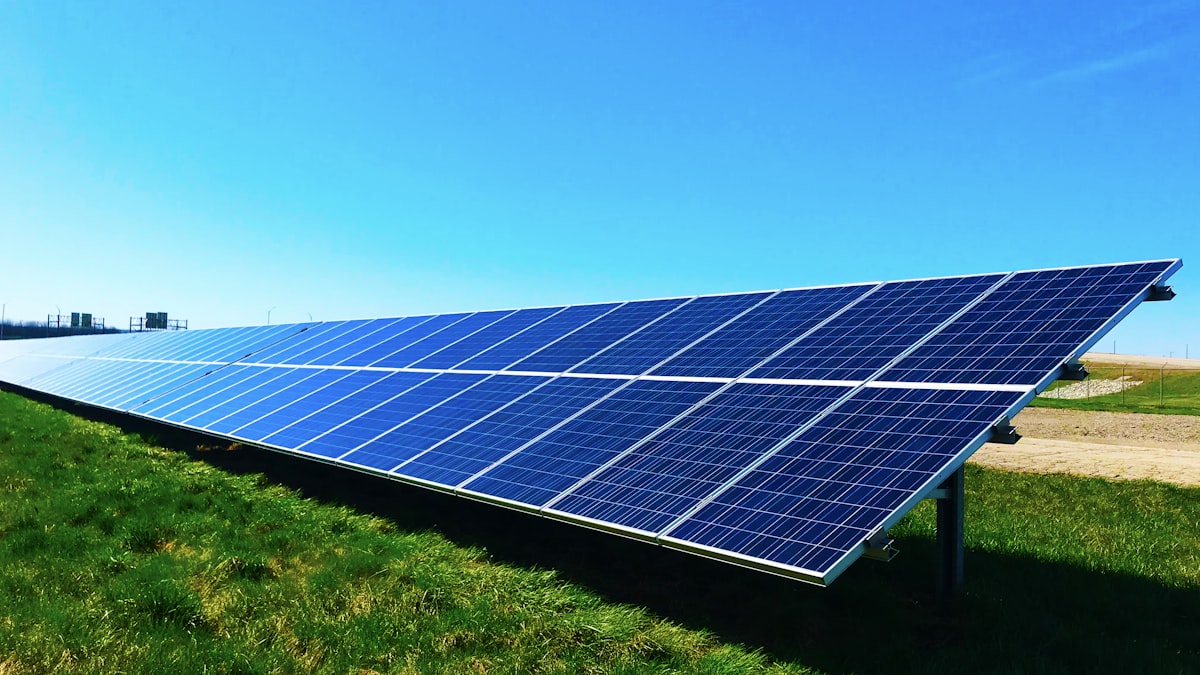
Solar power is increasingly viable for India offices, driven by falling panel costs (down 50% since 2020), strong solar irradiation (4.5-6.5 kWh/sq m/day across most of India), and significant tax benefits for commercial installations.
System Types
- Grid-tied (net metering): Solar panels feed power to the grid; excess generation earns credits. Most cost-effective but provides no backup during outages. Cost: INR 45,000-60,000 per kWp installed.
- Hybrid (grid-tied + battery): Combines solar with battery storage for partial backup capability. Cost: INR 80,000-1,20,000 per kWp installed.
- Off-grid: Standalone solar + battery system, completely independent. Rarely practical for offices due to high cost and space requirements.
Tax Benefits for Commercial Solar
Commercial solar installations are not eligible for the PM Surya Ghar residential subsidy. However, businesses benefit from two significant tax advantages:
- Accelerated depreciation: 40% depreciation in Year 1 under Section 32 of the Income Tax Act, effectively recovering 40% of the investment through tax savings immediately
- 100% deduction for renewable energy: The capital expenditure can qualify for deduction under Section 32AC/35AD in certain cases
For a private limited company with a 25% effective corporate tax rate, a INR 10,00,000 solar installation generates a first-year tax benefit of INR 1,00,000 through accelerated depreciation alone.
Solar ROI for a Typical Office
A 25 kWp rooftop solar installation for a medium office (sufficient for 30-40% of daytime power needs):
| Parameter | Value |
|---|---|
| Installation cost | INR 12,50,000 - 15,00,000 |
| Annual generation | 35,000 - 40,000 kWh |
| Annual savings (at INR 8-10/unit commercial tariff) | INR 2,80,000 - 4,00,000 |
| Year 1 tax benefit (accelerated depreciation) | INR 1,25,000 - 1,50,000 |
| Simple payback period | 3-4 years |
| System lifespan | 25 years |
City-Wise Power Reliability and Tariff Comparison
Power quality and cost vary significantly across Indian cities. This affects both your backup investment and ongoing operating costs.
| City | Commercial Tariff (INR/kWh) | Average Monthly Outages | Recommended Backup Strategy |
|---|---|---|---|
| Mumbai | 9-12 | 1-2 (Tata/Adani areas) | UPS only (DG optional) |
| Delhi-NCR | 7-10 | 3-5 | UPS + DG (CPCB IV+ only) |
| Bengaluru | 7-9 | 4-6 | UPS + DG + Solar recommended |
| Hyderabad | 7-8 | 2-4 | UPS + DG |
| Pune | 8-10 | 2-3 | UPS + Solar (good irradiation) |
| Chennai | 6-8 | 3-5 | UPS + DG |
Mumbai's Tata Power and Adani Electricity networks offer the highest reliability among Indian cities, with some commercial areas experiencing fewer than 15 hours of total annual downtime. However, Mumbai also has the highest commercial tariffs, making solar ROI particularly attractive.
For companies evaluating city options for their India office, the power infrastructure cost should be factored alongside rent, talent availability, and regulatory environment. Our guides for US companies and UK companies include location comparison frameworks that account for infrastructure factors.

Depreciation and Tax Treatment of Power Equipment
Power backup equipment qualifies for specific depreciation rates under the Income Tax Act, which affects the total cost of ownership:
| Asset Category | WDV Depreciation Rate | SLM Depreciation Rate |
|---|---|---|
| DG Set (plant and machinery) | 15% | 7.07% |
| UPS System (electrical installation) | 40% | 13.91% |
| Batteries (part of UPS) | 40% | 13.91% |
| Solar Panels (renewable energy) | 40% (accelerated) | 13.91% |
| Electrical wiring and distribution | 10% | 4.75% |
The 40% accelerated depreciation for solar panels and UPS systems means these assets recover a significant portion of their cost through tax savings in the early years. For a foreign direct investment company paying corporate tax at 25.17% (including surcharge and cess), a INR 10,00,000 UPS investment yields a first-year tax saving of INR 1,00,680 through depreciation alone.
Compliance Requirements for Power Infrastructure
Setting up power backup in your India office involves several regulatory touchpoints that foreign companies often overlook:
Electrical Inspector Approval
The Indian Electricity Act, 2003 and Central Electricity Authority (CEA) regulations require electrical installations above a certain capacity to be inspected and approved by the Chief Electrical Inspector. For offices, this typically applies when your total connected load exceeds 100 kVA or when you install a DG set above 100 kVA. The inspection costs INR 5,000 to INR 25,000 and must be renewed periodically.
State Pollution Control Board (SPCB) Clearances
DG set operation requires Consent to Establish (CTE) and Consent to Operate (CTO) from the relevant State Pollution Control Board. These are renewable permits — typically valid for 5 years — with annual compliance reporting on emissions, fuel consumption, and operating hours. In Delhi-NCR, the Commission for Air Quality Management (CAQM) has additional oversight.
Net Metering Application for Solar
Installing a grid-tied solar system requires a net metering agreement with your local electricity distribution company (DISCOM). The application process takes 30-90 days depending on the state, and approval is subject to transformer-level capacity limits (typically 40-60% of transformer capacity). States like Karnataka and Maharashtra have streamlined online portals, while others may require physical applications.
Insurance and Safety
Ensure your office insurance policy covers DG set liability, fuel storage risks, and electrical equipment breakdown. Standard commercial property insurance often excludes these unless specifically endorsed. Budget INR 15,000 to INR 50,000 per year for comprehensive equipment insurance covering your DG set, UPS batteries, and solar panels.
Total Cost of Ownership: A 5-Year View
Foreign companies should evaluate power backup as a 5-year total cost of ownership (TCO) rather than comparing upfront capital costs alone. Here is a TCO comparison for a 50-seat office in Bengaluru with a connected load of 65 kW and approximately 50 hours of annual power outages:
| Cost Component | Year 1 | Years 2-5 (Annual) | 5-Year Total |
|---|---|---|---|
| 62.5 kVA DG Set (CPCB IV+) | 10,00,000 | — | 10,00,000 |
| 20 kVA Online UPS + Batteries | 3,50,000 | — | 3,50,000 |
| Battery Replacement (Year 4) | — | 2,00,000 (Year 4) | 2,00,000 |
| 25 kWp Solar Rooftop | 13,50,000 | — | 13,50,000 |
| DG Fuel + AMC | 1,00,000 | 1,00,000 | 5,00,000 |
| UPS AMC | 15,000 | 15,000 | 75,000 |
| Solar Panel Cleaning + Maintenance | 15,000 | 15,000 | 75,000 |
| Insurance | 25,000 | 25,000 | 1,25,000 |
| SPCB Compliance | 15,000 | 10,000 | 55,000 |
Gross 5-Year TCO: INR 37,30,000 (approximately USD 44,700)
Against this, solar energy savings of INR 3,50,000 per year (INR 17,50,000 over 5 years) and accelerated depreciation tax benefits of approximately INR 4,00,000 reduce the net 5-Year TCO to approximately INR 15,80,000 (USD 18,960) — or about INR 3,16,000 per year for complete power security. This is typically 1-2% of total annual operating costs for a 50-seat office.
Key Takeaways
- Plan for all three backup layers — DG set for extended outages (15+ minutes), online UPS for seamless switchover (0 ms), and solar for long-term cost reduction and ESG compliance
- CPCB IV+ compliance is mandatory for all new DG sets up to 800 kW since July 2023, with 20-35% higher upfront costs but better fuel efficiency and lower emissions
- Delhi-NCR offices face DG set restrictions from October 2025 — standard commercial offices can only use DG sets during actual grid failures, not for load management
- Solar installations offer 3-4 year payback with 40% accelerated depreciation in Year 1, commercial tariff savings of INR 8-10 per unit, and a 25-year system lifespan
- Budget INR 5,00,000-25,00,000 for a complete power backup setup depending on office size, with ongoing costs of INR 1,00,000-3,00,000 per year for fuel, battery replacement, and maintenance
Power backup is one component of the overall hidden costs of running a company in India. For guidance on setting up your India entity with all infrastructure requirements planned from the start, explore our foreign subsidiary registration service or review your entity options with our branch office vs subsidiary comparison.
Need help with Real Estate & Office? Our team handles it.
India Entry StrategyFrequently Asked Questions
What size DG set does a 50-seat office need in India?
A 50-seat office typically has a connected load of 65-70 kW. After applying a diversity factor of 0.7 and adding 20% headroom for startup surges, you need a DG set rated at 60-75 kVA. This capacity handles workstations, air conditioning, lighting, and a small server room during grid outages.
Are diesel generators banned in Delhi-NCR?
From October 2025, Delhi-NCR has imposed a near-complete ban on non-essential DG set usage. Commercial offices can only use DG sets during actual grid failures — not for load management. Exempt categories include hospitals, defence installations, airports, data centres, and telecom infrastructure. IT and data services have a conditional exemption.
What is CPCB IV+ and does my DG set need to comply?
CPCB IV+ refers to the Central Pollution Control Board's Phase IV+ emission standards for diesel generators up to 800 kW, mandatory since July 2023. All new DG sets must include Diesel Oxidation Catalysts, Diesel Particulate Filters, and Selective Catalytic Reduction systems. Running a non-compliant set can result in fines up to INR 1,00,000 and imprisonment.
How much does an online UPS cost for an Indian office?
An online (double-conversion) UPS costs INR 35,000-60,000 for a 3 kVA unit (5-8 workstations) up to INR 5,00,000-8,00,000 for a 40 kVA unit (50 workstations plus server room). Major brands include APC by Schneider Electric, Vertiv, and Eaton. Budget an additional INR 1,00,000-3,00,000 for battery replacement every 3-4 years.
Can commercial offices get solar subsidy in India?
Commercial offices are NOT eligible for the PM Surya Ghar residential subsidy. However, businesses benefit from 40% accelerated depreciation in Year 1 under Section 32 of the Income Tax Act. For a company with a 25% tax rate, a INR 10,00,000 solar installation generates INR 1,00,000 in first-year tax savings through depreciation alone.
What is the payback period for rooftop solar on an Indian office?
A 25 kWp commercial rooftop solar installation costing INR 12,50,000-15,00,000 typically achieves payback in 3-4 years through annual energy savings of INR 2,80,000-4,00,000 at commercial tariffs of INR 8-10 per unit, plus first-year tax benefits from accelerated depreciation. The system has a lifespan of 25 years.
Which Indian city has the most reliable power supply for offices?
Mumbai offers the highest power reliability among major Indian cities, with Tata Power and Adani Electricity areas experiencing fewer than 15 hours of total annual downtime. However, Mumbai also has the highest commercial tariffs at INR 9-12 per kWh. For a balance of reliability and cost, Hyderabad and Pune are strong alternatives.