India's Packaging and Plastics Sector: Scale and Opportunity
Foreign investors can hold 100% of a plastics or packaging manufacturer in India under the automatic route, with no sectoral cap or government approval required — but any producer, importer, or brand owner of plastic packaging must also register on the CPCB's centralised EPR portal, take responsibility for 100% of the plastic packaging it places on the market, and meet a recycling target that escalates from 60% of that obligation in FY 2025-26 to 80% by FY 2027-28 (for rigid plastic packaging).
Packaging is one of the largest end-use segments of India's plastics industry, and demand continues to grow on the back of e-commerce, FMCG and food processing. The processing base is dominated by small and medium enterprises. For foreign investors, this fragmented landscape presents both an opportunity for consolidation and a reminder that India's plastics manufacturing ecosystem operates primarily at SME scale — not the large-integrated-facility model common in the US, Europe, or Japan.
Beyond FDI and EPR, Bureau of Indian Standards (BIS) certification requirements add a third layer of compliance that foreign manufacturers must navigate from day one.
FDI Policy for Plastics and Packaging Manufacturing
100% Automatic Route
The Consolidated FDI Policy (effective October 2020, updated via press notes through 2026) permits 100% FDI under the automatic route for manufacture of plastics, rubber, non-metallic mineral products, basic chemicals, and metal products. No prior approval from the Government of India or the government approval route is required.
The investment process follows the standard FEMA framework:
- Incorporate an Indian company — typically a private limited company — using the SPICe+ form on the MCA portal
- Remit capital from the foreign parent via banking channels
- File Form FC-GPR with the RBI within 30 days of share allotment
- File annual FLA returns with the RBI by July 15 each year
PLI and Manufacturing Incentives
While there is no dedicated Production-Linked Incentive (PLI) scheme for packaging plastics, foreign manufacturers can benefit from:
- State-level industrial incentives: Gujarat, Maharashtra, Rajasthan, Tamil Nadu, and Andhra Pradesh offer capital subsidies, stamp duty exemption, electricity duty waiver, and land at concessional rates for manufacturing units
- SEZ benefits: SEZ units still get duty-free imports of capital goods and raw materials and simplified customs procedures. The s.10AA income-tax holiday (100% exemption for the first 5 years, 50% for the next 5, and 50% of reinvested export profits for 5 more) is closed to new entrants — it applies only to units that commenced operations by 31 March 2021, and no new unit can claim it
- MSME registration: If the investment in plant and machinery does not exceed INR 125 crore and turnover is below INR 500 crore (limits revised with effect from April 1, 2025), the unit qualifies as an MSME, unlocking additional subsidies under the MSME Development Act
Extended Producer Responsibility (EPR): The Core Compliance Framework
What Is EPR?
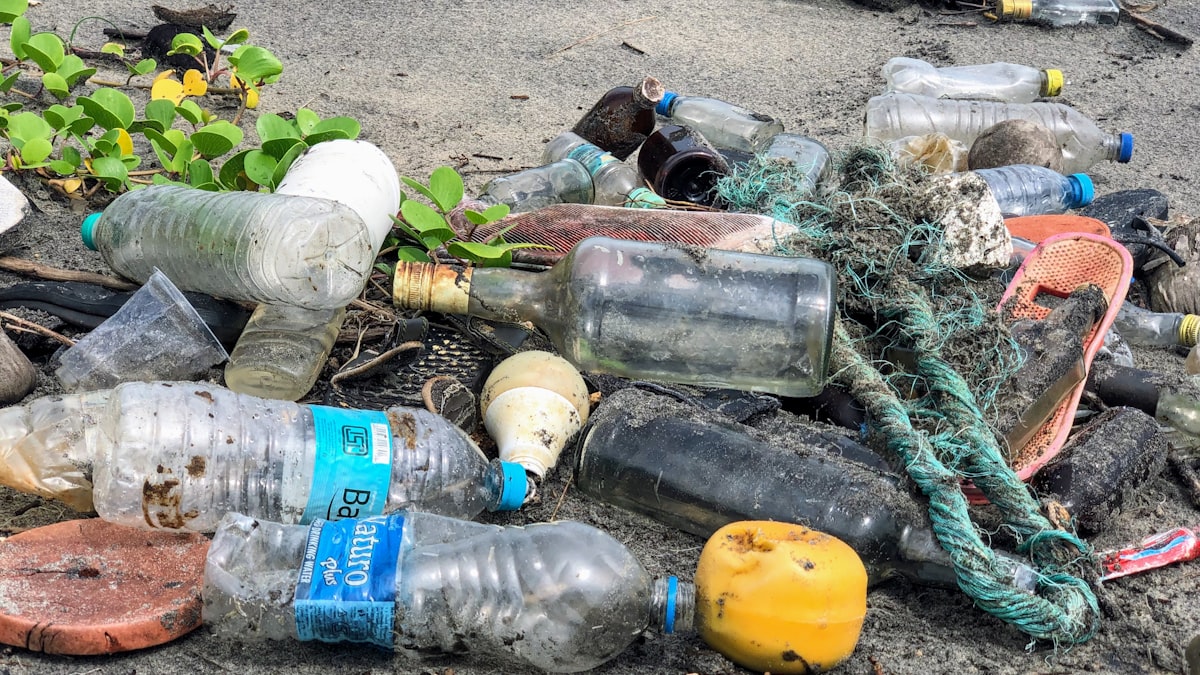
Extended Producer Responsibility mandates that producers, importers, and brand owners (PIBOs) of plastic packaging take responsibility for the entire lifecycle of their products — from production through collection, recycling, and disposal. India's EPR framework for plastic packaging was introduced through the Plastic Waste Management Rules, 2016, significantly strengthened by the 2022 amendment (which notified the Extended Producer Responsibility guidelines as Schedule II), refined again in 2024, and most recently amended by the Plastic Waste Management (Amendment) Rules, 2026.
The Ministry of Environment, Forest and Climate Change has signalled an extension of EPR obligations beyond plastics to other packaging materials such as paper, glass, and metal — but plastic packaging remains the primary focus and the only packaging category with an operative EPR registration route on the CPCB portal.
Who Must Register?
EPR registration on the CPCB's centralised EPR portal is mandatory for three categories of entities:
- Producers: Manufacturers of plastic packaging material (the raw packaging, not the end product)
- Importers: Entities importing plastic packaging material or products in plastic packaging into India
- Brand Owners: Companies that sell products in plastic packaging under their own brand name, even if they outsource the manufacturing
A foreign company that sets up a manufacturing facility in India producing plastic packaging materials is classified as a "Producer" and must register with the CPCB. If the same company also sells finished products in branded plastic packaging, it is additionally a "Brand Owner" and must register in that capacity as well.
EPR Targets and Obligations (2025-2029)
The EPR (collection) obligation itself has been 100% of the quantity of plastic packaging introduced in the market since FY 2023-24. On top of that, the framework prescribes escalating targets across three dimensions (Schedule II to the Plastic Waste Management Rules, 2016, as amended):
| Obligation Type | FY 2025-26 | FY 2026-27 | FY 2027-28 | FY 2028-29 |
|---|---|---|---|---|
| Recycling target, as share of EPR obligation (Category I & IV) | 60% | 70% | 80% | 80% |
| Recycled content (rigid packaging) | 30% | 40% | 50% | 60% |
| Reuse target (0.9-4.9 L containers) | 10% | 15% | 20% | 25% |
EPR Categories of Plastic Packaging
The CPCB classifies plastic packaging into four categories, each with distinct collection, recycling, and end-of-life targets:
- Category I: Rigid plastic packaging (PET bottles, HDPE containers, PP jars)
- Category II: Flexible plastic packaging (single-layer and multi-layer pouches, wraps, bags)
- Category III: Multi-layered plastic packaging (laminates with plastic + aluminium/paper)
- Category IV: Plastic sheets (or like) used for packaging, and carry bags, made of compostable plastics
Category II and III packaging — which includes most FMCG packaging, snack wrappers, and sachets — presents the greatest recycling challenge because the materials are technically difficult and economically unviable to recycle at current technology levels.
CPCB Registration Process and Compliance
Step-by-Step Registration
- Create an account on the CPCB centralised EPR portal at eprplastic.cpcb.gov.in
- Submit the registration application with company details, GSTN, manufacturing unit addresses, categories and quantities of plastic packaging produced or imported, and proposed EPR action plan
- Obtain EPR registration number — the number then feeds the marking obligations under rule 11 of the Plastic Waste Management Rules, 2016 described below
- File annual returns on the CPCB portal by June 30 of the following financial year
Marking and Labelling Requirements
Rule 11(1) of the Plastic Waste Management Rules, 2016 requires each plastic carry bag and multilayered packaging to carry printed information: the name and registration number of the manufacturer, and, in the case of carry bags, the thickness.
Rule 11(1A), inserted by the Plastic Waste Management (Amendment) Rules, 2025 (G.S.R. 73(E), 23 January 2025), gives a producer, importer or brand owner three alternative ways to convey that same information with effect from 1 July 2025:
- a barcode or Quick Response code printed on the plastic packaging
- the product information brochure
- a unique number issued under any law in force, where the rule 11(1) particulars have to be satisfied before that number is issued
An entity taking one of these routes must tell the CPCB which one it has adopted, and the CPCB publishes the list of such entities and updates it every quarter. Separately, rule 11(2), as substituted by the Plastic Waste Management (Amendment) Rules, 2026, requires recycled plastic packaging to conform to IS 14534:2023 and to carry the recycled-content label and mark, alongside any FSSAI marking that applies to food-contact packaging. These obligations apply to domestically manufactured and imported plastic packaging alike.
EPR Certificate Trading
The Extended Producer Responsibility guidelines notified in February 2022 (Schedule II to the Plastic Waste Management Rules) created an EPR certificate trading mechanism. Companies that exceed their collection and recycling obligations can generate EPR certificates, which can be purchased by companies that fall short of their targets. All transactions are recorded on the CPCB portal for auditability. This creates a market-based mechanism similar to carbon credit trading — companies with strong waste management infrastructure can monetise their surplus compliance.
Plastic Waste Management Rules: Operational Compliance
Prohibited Plastics
India has banned several categories of single-use plastics since July 1, 2022. The following items cannot be manufactured, sold, or used:
- Plastic sticks for earbuds, balloons, and flags
- Plastic cutlery (forks, spoons, knives, straws, trays)
- Plastic carry bags below 75 microns (banned from September 30, 2021) and below 120 microns (banned from December 31, 2022); plastic sheets used for packaging must be at least 50 microns thick
- Polystyrene for decorative purposes
- PVC banners below 100 microns
Foreign manufacturers must ensure that their product designs and packaging specifications comply with these thickness and material restrictions. Products that were previously packaged in thin-film plastics in other markets may require packaging redesign for the Indian market.
Waste Processing Obligations
Manufacturing units generating plastic waste must:
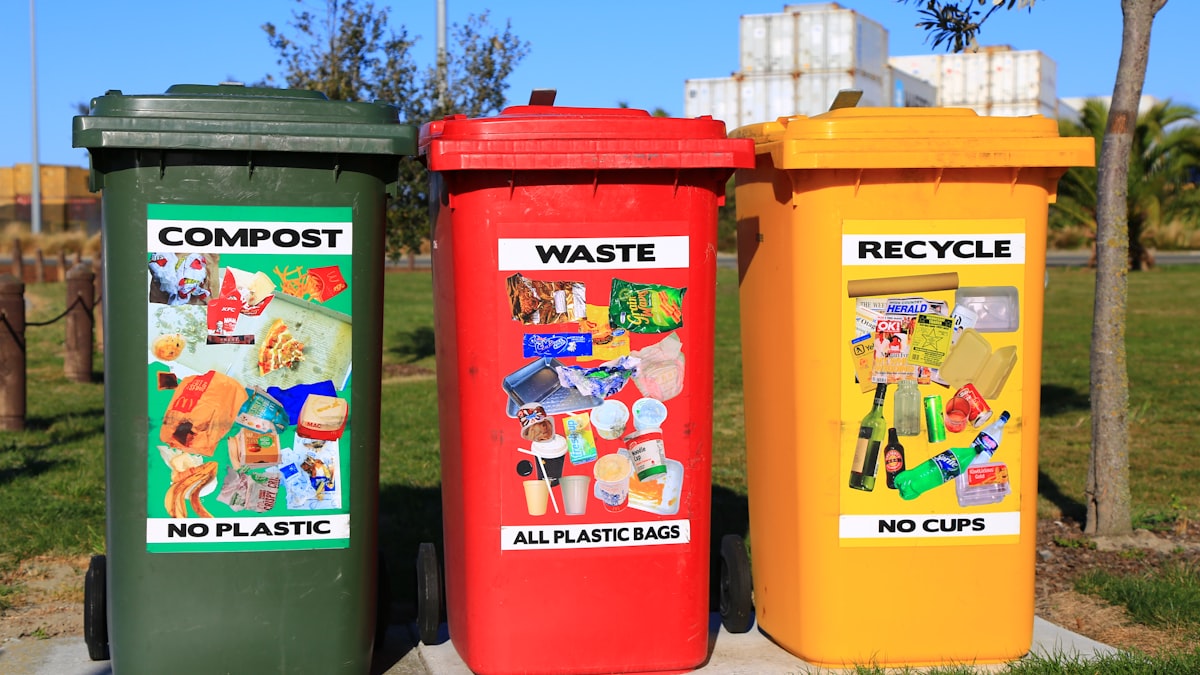
- Segregate plastic waste at source (recyclable vs. non-recyclable)
- Channel recyclable waste to registered recyclers
- Send non-recyclable waste to authorised cement kilns or waste-to-energy facilities for co-processing
- Maintain records of waste generation, disposal, and recycling for annual reporting
BIS Certification for Plastic Products
Mandatory Standards
Several categories of plastic products require mandatory BIS certification (ISI mark) under Quality Control Orders (QCOs) issued by the Government of India. The QCO list has expanded rapidly through 2025-26 and now covers over 600 product categories under compulsory certification. Plastic products brought under mandatory certification include, for example:
- PVC pipes and fittings (IS 4985, IS 7834)
- HDPE pipes (IS 4984, IS 14333)
QCO coverage changes frequently — always verify whether a specific product and its Indian Standard appear on the current BIS compulsory certification list before manufacturing or importing.
Certification Process for Foreign Manufacturers
Foreign manufacturers exporting plastic products to India must obtain BIS certification through the Foreign Manufacturers Certification Scheme (FMCS). The process involves:
- Application to BIS with product details, manufacturing process description, and test reports from a BIS-recognised laboratory
- Factory inspection by BIS officers at the foreign manufacturing facility
- Product testing at BIS-accredited labs in India or accredited international labs
- Grant of licence — the end-to-end FMCS process typically takes 6-9 months
- Annual renewal with periodic surveillance inspections
For Indian-manufactured products, the BIS ISI Mark Scheme (Scheme I) applies with a similar inspection and testing process, but typically faster than the FMCS route.
Environmental Clearances for Manufacturing Units
CPCB Industry Classification
Plastics manufacturing units are classified by the CPCB into four categories based on their pollution potential:
| Category | Examples | Clearance Required |
|---|---|---|
| Red | PVC manufacturing, plasticiser production, plastic recycling (large scale) | CTE + CTO, plus prior environmental clearance where the activity is listed in the EIA Notification, 2006 |
| Orange | Plastic moulding (large scale), lamination, plastic containers | CTE + CTO |
| Green | Small plastic products, assembly, packaging operations | CTE + CTO (simplified) |
| White | Office operations, trading, non-polluting activities | Self-certification |
Most plastic packaging manufacturers fall in the Orange or Green category. Red category classification applies primarily to raw polymer production and large-scale chemical processing. Colour categories follow the CPCB's classification directions and are applied by each State Pollution Control Board, so confirm the category for your own process with the board of the state you are building in.
Consent to Establish and Consent to Operate
Applications for CTE and CTO are filed with the State Pollution Control Board (SPCB) in the state where the manufacturing unit is located. Processing times vary significantly from state to state; states with online single-window systems, such as Gujarat, are generally the fastest.
Tax Considerations for Plastics Manufacturers
GST Rates on Plastic Products
GST rates on plastic products vary by product type:
| Product | HSN Chapter | GST Rate |
|---|---|---|
| Plastic raw materials (polymers, resins) | 39 | 18% |
| Plastic packaging materials | 3923 | 18% |
| Plastic pipes and fittings | 3917 | 18% |
Under the GST 2.0 rate rationalisation effective 22 September 2025, the 12% and 28% slabs were abolished; the plastics and packaging headings above sit in the 18% slab. Verify the current rate for your specific HSN heading on the CBIC portal, as several consumer-facing product lines changed slabs in that exercise.
Input tax credit is fully available on raw materials, capital goods, and input services, making GST a pass-through cost for manufacturers selling to registered businesses. However, for B2C sales, the 18% GST rate affects final consumer pricing.
Corporate Tax
Foreign-owned manufacturing companies incorporated in India are taxed as domestic companies. Under section 200 read with section 205(1) of the Income-tax Act, 2025 (section 115BAA of the Income-tax Act, 1961), the concessional corporate tax rate is 22% (effective rate 25.17% with surcharge and cess). Manufacturing companies incorporated after October 1, 2019 that commenced manufacturing operations on or before 31 March 2024 can opt for the 15% rate under section 201 (Table, Sl. No. 1) of the Income-tax Act, 2025 read with section 205(2) (section 115BAB of the Income-tax Act, 1961) (effective rate approximately 17.16%). This concessional window is closed to companies commencing manufacturing after that date.
Import Duties on Raw Materials
Imported plastic raw materials attract basic customs duty at rates that vary by polymer grade. Import of recycled plastic pellets for use as raw material may attract additional scrutiny under the Hazardous and Other Wastes (Management and Transboundary Movement) Rules, 2016 — requiring prior authorisation from the Ministry of Environment.
Investment Locations for Plastics Manufacturing
Key Industrial Clusters
India's plastics manufacturing is concentrated in several clusters that offer established supply chains, skilled labour, and proximity to end-markets:
- Gujarat (Ahmedabad-Rajkot-Jamnagar): India's largest plastics processing hub. Reliance Industries' Jamnagar-Dahej petrochemical corridor provides proximity to raw material supply
- Maharashtra (Mumbai-Pune-Nashik): Strong presence in packaging, automotive plastics, and consumer products. MIDC industrial zones offer developed infrastructure
- Tamil Nadu (Chennai-Hosur): Automotive plastics and engineering plastics cluster. SIPCOT industrial areas offer competitive land rates
- Delhi-NCR (Noida-Greater Noida-Gurugram): Consumer packaging and household plastics hub. Proximity to North India's large consumer market
SEZ and FTWZ Considerations
For export-oriented plastics manufacturers, setting up in a Special Economic Zone (SEZ) or Free Trade Warehousing Zone (FTWZ) offers customs duty exemption on imports and simplified customs procedures (the SEZ income-tax holiday under the former section 10AA is closed to new units). See our contract manufacturing vs own factory comparison for structuring options.
Compliance Calendar for Plastics Manufacturers
| Filing/Obligation | Deadline | Authority |
|---|---|---|
| GSTR-1 (monthly) | 11th of following month | GST Portal |
| GSTR-3B (monthly) | 20th of following month | GST Portal |
| TDS payment | 7th of following month | Income Tax |
| EPR annual return | June 30 | CPCB Portal |
| FLA Return (RBI) | July 15 | RBI FIRMS Portal |
| Annual return (MGT-7) | Within 60 days of AGM | MCA |
| Financial statements (AOC-4) | Within 30 days of AGM | MCA |
| Hazardous waste return | June 30 | SPCB |
For a complete overview of corporate compliance deadlines, see our 12 compliance deadlines foreign companies miss. Foreign companies evaluating India's manufacturing landscape should also review our FDI advisory services for sector-specific guidance.

Penalties for Non-Compliance
EPR Non-Compliance
Rule 19 of the Plastic Waste Management Rules, 2016 — inserted by the Plastic Waste Management (Amendment) Rules, 2025 — makes any person who contravenes those rules liable to a penalty under section 15 of the Environment (Protection) Act, 1986. Sections 15 to 17 of that Act were substituted by the Jan Vishwas (Amendment of Provisions) Act, 2023 with effect from 1 April 2024, replacing imprisonment with monetary penalties. Non-compliance with EPR obligations therefore attracts:
- Under section 15, a penalty of not less than INR 10,000 and up to INR 15 lakh for each contravention, plus a further INR 10,000 for every day the contravention continues
- Under section 15A, which bites where a company contravenes the Act itself, a penalty of not less than INR 1 lakh and up to INR 15 lakh, plus a further INR 1 lakh for every day it continues
- Penalties are imposed by an adjudicating officer appointed under section 15C, after a hearing and having regard to the population and the area affected by the contravention
- Environmental compensation levied by the CPCB for shortfalls against EPR targets
- Cancellation of EPR registration, effectively shutting down the business
BIS Non-Compliance
Manufacturing or selling products requiring mandatory BIS certification without a valid licence is an offence under the BIS Act, 2016, punishable with imprisonment of up to two years or with fines that start at INR 2 lakh for a first offence and, for repeat offences, start at INR 5 lakh and can extend to up to ten times the value of the goods. Additionally, non-compliant products can be seized and destroyed.
FEMA Non-Compliance
Late or non-filing of FC-GPR or FLA returns under FEMA is regularised first by paying the Late Submission Fee — INR 7,500 flat for the FLA return, or INR 7,500 plus 0.025% of the amount involved for each year of delay for FC-GPR — available for up to three years from the due date. Beyond that window the matter goes to compounding, with penalties of up to 3x the amount of the contravention and an additional daily penalty for continuing defaults.
Key Takeaways
- 100% FDI under the automatic route makes India's plastics and packaging sector fully accessible to foreign investors without government approval
- EPR registration with CPCB is mandatory for all producers, importers, and brand owners of plastic packaging — with escalating collection, recycling, and recycled content targets through 2029
- BIS certification is required for several categories of plastic products — foreign manufacturers must use the FMCS route, which typically takes 6-9 months
- Gujarat is India's largest plastics processing hub, with proximity to petrochemical raw material supply and online single-window clearances
- The concessional corporate tax rate is 22% (effective 25.17%) under section 200 read with section 205(1) of the Income-tax Act, 2025 (section 115BAA of the 1961 Act); the 15% new-manufacturing rate (effective 17.16%) is closed to companies that did not commence manufacturing by 31 March 2024
Need help with Manufacturing Sectors? Our team handles it.
FDI AdvisoryFrequently Asked Questions
Is 100% FDI allowed in plastics manufacturing in India?
Yes. Plastics and packaging manufacturing permits 100% FDI under the automatic route, meaning no government approval is required. Foreign investors can hold 100% equity in an Indian private limited company engaged in plastics manufacturing.
What is EPR registration and who needs it in India?
Extended Producer Responsibility (EPR) registration is mandatory for all producers, importers, and brand owners (PIBOs) of plastic packaging in India. Registration is done on the CPCB's centralised EPR portal at eprplastic.cpcb.gov.in. Companies must report quantities of plastic packaging produced or imported and meet escalating collection, recycling, and recycled content targets.
What are the EPR recycled content targets for plastic packaging in India?
Rigid plastic packaging must contain 30% recycled material in FY 2025-26, rising to 40% in FY 2026-27, 50% in FY 2027-28, and 60% in FY 2028-29. These targets apply to Category I packaging such as PET bottles, HDPE containers, and PP jars.
What are the penalties for EPR non-compliance in India?
Rule 19 of the Plastic Waste Management Rules, 2016 routes a contravention of those rules to section 15 of the Environment (Protection) Act, 1986: a penalty of not less than INR 10,000 and up to INR 15 lakh for each contravention, plus INR 10,000 for every day it continues. Section 15A, which applies where a company contravenes the Act itself, runs from INR 1 lakh to INR 15 lakh with a further INR 1 lakh for every continuing day. Sections 15 to 17 were substituted by the Jan Vishwas (Amendment of Provisions) Act, 2023 with effect from 1 April 2024, replacing imprisonment with monetary penalties. The CPCB can also levy environmental compensation for shortfalls against EPR targets, and serious or persistent violations can lead to cancellation of EPR registration.
Do plastic products need BIS certification in India?
Several categories of plastic products require mandatory BIS certification under Quality Control Orders, including several categories of plastic pipes and fittings; the QCO list changes frequently and should be checked for each product. Foreign manufacturers must use the Foreign Manufacturers Certification Scheme (FMCS), which typically takes 6-9 months.
What is the corporate tax rate for plastics manufacturing in India?
Foreign-owned manufacturing companies in India can opt for the concessional rate of 22% (effective 25.17%) under section 200 read with section 205(1) of the Income-tax Act, 2025 (section 115BAA of the Income-tax Act, 1961). New manufacturing companies incorporated after October 2019 that commenced manufacturing operations on or before 31 March 2024 could choose the 15% rate (effective 17.16%) under section 201 read with section 205(2) of the 2025 Act (section 115BAB of the 1961 Act). This window is now closed to new entrants.
Which single-use plastics are banned in India?
India banned plastic cutlery, earbuds with plastic sticks, plastic straws, and polystyrene for decoration from July 1, 2022. Plastic carry bags below 75 microns were banned from September 30, 2021, and below 120 microns from December 31, 2022; plastic sheets used for packaging must be at least 50 microns thick. Foreign manufacturers must ensure product packaging complies with these thickness requirements.