
Sole proprietorship vs private limited company starts from one fact: a sole proprietorship in India is not a separate legal entity — the owner IS the business, with unlimited personal liability for its debts. A Private Limited Company, by contrast, has a separate legal personality under Section 9 of the Companies Act 2013, with shareholders' liability limited to their share capital. This comparison covers both structures for foreign investors and NRIs.
Quick Comparison Table
| Criterion | Sole Proprietorship | Private Limited Company |
|---|---|---|
| Legal Status | Not a separate legal entity — the owner IS the business | Separate legal entity under Companies Act 2013 |
| Governing Law | No specific governing statute — regulated through tax registrations (PAN, GST, Shops & Establishments Act) | Companies Act 2013 |
| FDI Applicability | Not covered under DPIIT FDI Policy — FDI into proprietorship is not a recognized investment route | Fully covered — 100% FDI under automatic route in most sectors |
| Liability | Unlimited — owner's personal assets at risk | Limited to share capital — personal assets protected |
| Taxation | Taxed as individual — slab rates up to 30% (plus surcharge + cess) | 22% under section 200 read with section 205(1) of the Income-tax Act, 2025 (section 115BAA of the Income-tax Act, 1961) or 25-30% standard corporate rate |
| Compliance | Minimal — income tax return, GST returns (if applicable), profession tax | 8-12 filings per year with MCA, IT Department, GST |
| Bank Account | In proprietor's name with trade name — some banks hesitate for foreigners | In company's name — standard process |
| Fundraising | Cannot issue equity — only personal loans or proprietor's capital | Equity, preference shares, debentures, convertible instruments |
| Transferability | Cannot be sold as a going concern easily — assets transfer individually | Shares can be transferred — ownership changes without disrupting the business |
| Perpetual Succession | No — dies with the owner or on cessation of business | Yes — company continues regardless of shareholder changes |
| Credibility | Low with banks, clients, and government agencies | High — recognized and preferred structure for business dealings |
| Registration Time | 1-2 days (GST registration + bank account) | 7-15 business days (SPICe+ incorporation) |
Can a Foreign National Run a Sole Proprietorship in India?
This is the threshold question, and the answer is complicated. Indian law does not explicitly prohibit a foreign national from operating a sole proprietorship. However:
- The DPIIT FDI Policy does not recognize sole proprietorships as an FDI investment vehicle. Foreign direct investment must flow into an Indian company, LLP, or partnership firm (under specific conditions). A proprietorship does not fit any of these categories.
- A foreign national needs a valid Indian visa that permits business activity. A Business Visa allows participation in business activities but is meant for foreign nationals representing foreign companies. An Employment Visa is tied to a specific employer. Neither cleanly permits operating an independent proprietorship.
- RBI regulations under FEMA govern how foreign capital enters India. There is no FEMA pathway for a foreign national to invest in a sole proprietorship — no FC-GPR form, no downstream investment reporting mechanism.
In practice, some NRIs (who hold Indian passports or PIO/OCI cards) operate sole proprietorships in India. They can get PAN cards, register for GST, and open bank accounts as Indian-origin individuals. But a foreign national without Indian citizenship or OCI status will face barriers at every step.
Bottom Line for Foreigners
If you are a foreign national (non-NRI, non-OCI), the sole proprietorship is effectively not an option. The Private Limited Company is the standard and legally recognized route for foreign business ownership in India.

Liability — The Critical Difference
A sole proprietor has unlimited personal liability. If the business incurs debt, faces a lawsuit, or owes taxes — the proprietor's personal savings, property, and other assets are at risk. There is no legal separation between the person and the business.
A Private Limited Company has a separate legal personality under Section 9 of the Companies Act 2013. The company owns its assets, signs its contracts, and bears its liabilities. Shareholders' liability is limited to their unpaid share capital. If the company fails, creditors cannot pursue the shareholders' personal assets (except in cases of fraud or piercing the corporate veil under Section 339).
For a foreign investor putting capital into India — a country where you may not be present day-to-day — limited liability is not optional. It is a risk management necessity.
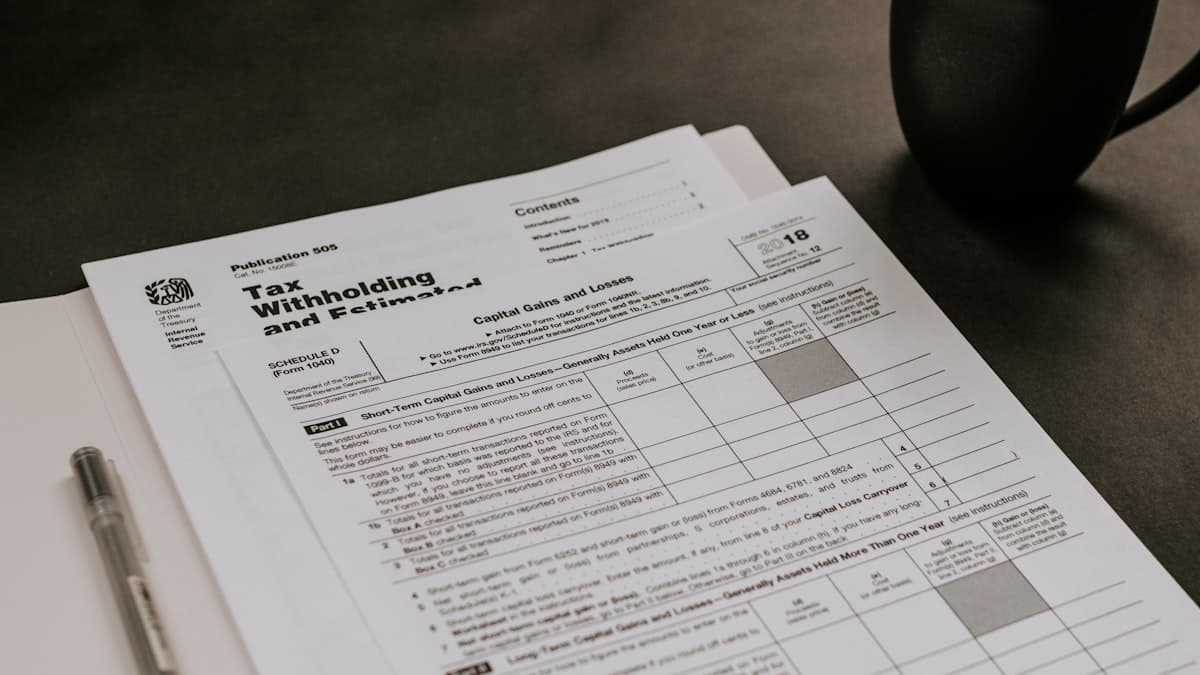
Tax Treatment
A sole proprietor is taxed as an individual under the Income Tax Act 1961. Under the new tax regime (applicable from FY 2025-26):
- Income up to INR 3 lakh: Nil
- INR 3-7 lakh: 5%
- INR 7-10 lakh: 10%
- INR 10-12 lakh: 15%
- INR 12-15 lakh: 20%
- Above INR 15 lakh: 30%
Plus surcharge (10-37% depending on income level) and 4% health and education cess.
A Private Limited Company opting into the concessional regime under section 200 pays 22% flat (effective rate approximately 25.17% after surcharge and cess). For profitable businesses, the corporate rate is almost always lower than the individual rate at the top bracket.
And there is a structural advantage: a company can retain profits and reinvest them without triggering personal tax. A sole proprietor is taxed on all business income in the year it is earned, regardless of whether the money is withdrawn or reinvested.
Banking and Credibility
Opening a business bank account as a sole proprietor requires the bank to accept your GST registration certificate or Shops and Establishments Act license as proof of business existence. Some banks are reluctant to open accounts for foreign sole proprietors because the documentation does not fit their standard KYC framework for non-resident individuals.
A Private Limited Company gets a Certificate of Incorporation from the ROC, a PAN card, and a TAN — all standard documents that every bank recognizes. Current account opening for a Pvt Ltd company is a standard process at any scheduled commercial bank.
Beyond banking, vendors, clients, and government agencies in India take Private Limited Companies more seriously. Government tenders, enterprise client onboarding, and partnership discussions all favor the corporate structure. A sole proprietorship may be viewed as less credible for significant business relationships.

Growth and Exit
A sole proprietorship cannot bring in equity investors. It cannot issue shares. It cannot create an ESOP plan. Growth capital comes from the proprietor's own pocket or from loans (where the proprietor's personal credit is at stake).
A Private Limited Company can raise equity from angel investors, VCs, or strategic partners. It can issue ESOPs to attract talent. It can be acquired through a share purchase. It can eventually list on the stock exchange (after converting to Public Limited).
Exiting a sole proprietorship means closing the business and selling individual assets. Exiting a Private Limited Company means selling shares — the business continues, employees stay, contracts remain in force. The buyer pays for a going concern, not a pile of assets.

When Sole Proprietorship Works
For an NRI (with OCI/PIO status) who:
- Is testing a small business idea in India (consulting, freelancing)
- Expects annual revenue under INR 20 lakh (below GST registration threshold)
- Does not need to raise capital
- Wants zero compliance overhead
- Plans to convert to a company if the business grows
Even in this scenario, the NRI should understand that converting from a proprietorship to a company later involves transferring all assets, contracts, and registrations — it is not a simple name change. Starting with the right structure saves that migration cost.
Which Should You Choose?
Choose Sole Proprietorship if:
- You are an NRI/OCI holder
- You are testing a very small business idea
- Revenue will be minimal in year one
- You accept unlimited personal liability
Choose Private Limited Company if:
- You are a foreign national (non-NRI) — it is your only real option
- You plan to receive FDI-route investment
- You want limited liability protection
- You expect to grow, hire, or raise capital
- You need banking and commercial credibility in India
For nearly every foreign investor entering India, the Private Limited Company is the correct starting point. The sole proprietorship has a place — but that place is extremely narrow for anyone with international operations.
Need to register your India entity? Contact Beacon Filing — we handle company incorporation for foreign founders from start to finish.